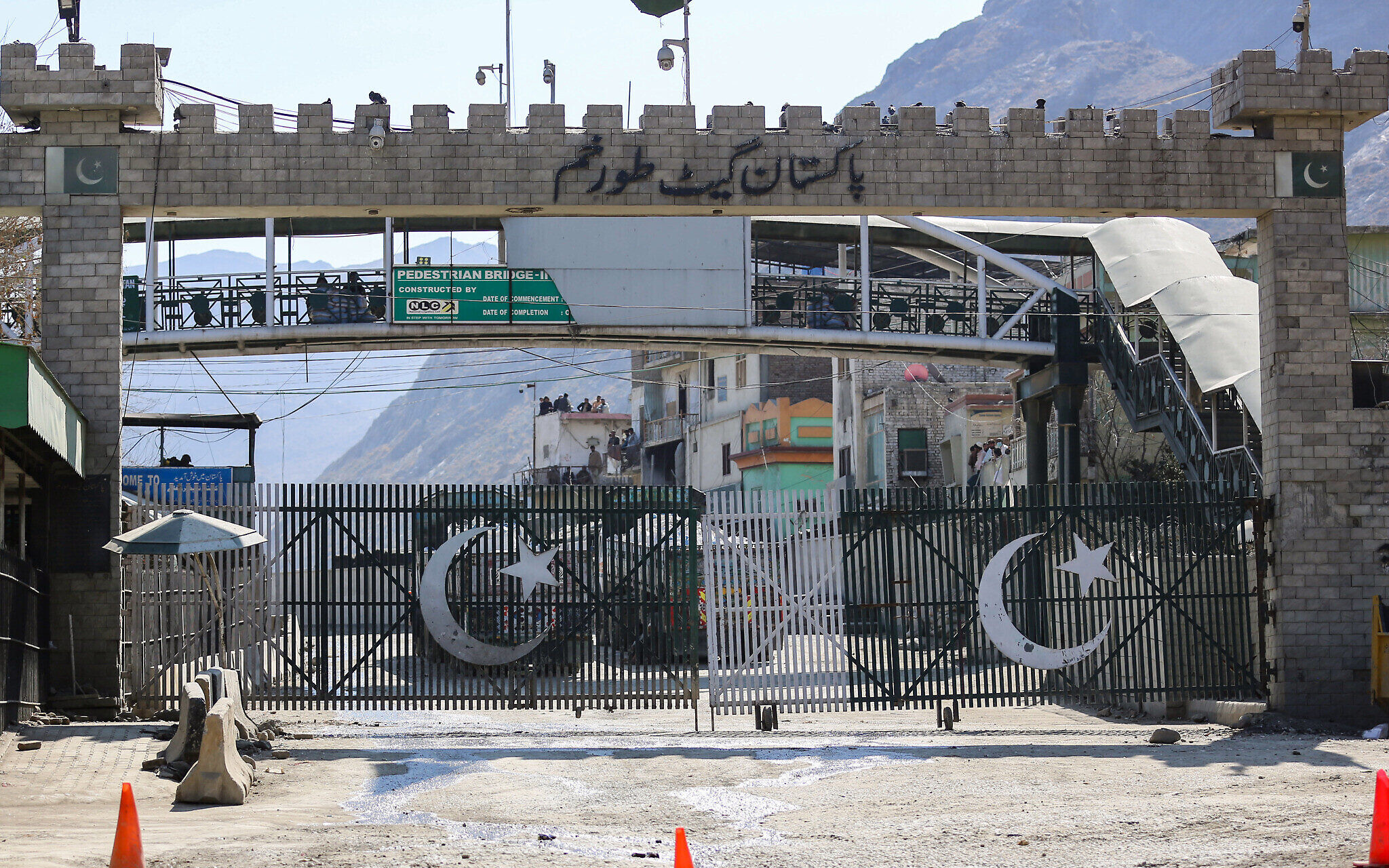
The 35-day closure of the Torkham border has left thousands jobless across Pakistan’s northwest. The shutdown followed attacks on Pakistani security posts in mid-October. Traders now warn of economic collapse, rising crime, and worsening poverty.
Pakistan closed all major crossings with Afghanistan after the Taliban attacks on October 11 and 12. The move halted movement at Torkham, Kharlachi, Ghulam Khan, Angoor Adda, and Chaman. Since then, long queues of trucks have stretched across Jamrud and Landi Kotal. Drivers say they wait for days as perishable goods risk complete spoilage.
Read more: 2,635 more Afghan nationals return via Torkham border
Business leaders report severe economic distress in border towns. Landi Kotal Bazaar President Yadullah Shinwari says daily earnings have collapsed from Rs30,000 to less than Rs2,000. He notes that markets remain empty and workers have lost their only income source. He urges Islamabad and Kabul to resolve tensions through dialogue and ease human suffering.
Labour groups echo similar concerns as unemployment rises. The Torkham Labour Union warns that jobless youth are turning toward crime and illegal work. Union President Zakir Shinwari says more than 1,500 registered labourers are affected, along with thousands of daily-wage workers. Customs officials add that 150 clearance offices and 800 workers now sit idle. They estimate daily export losses of up to $2 million and massive import delays.
Read more: Afghanistan seeks Central Asian trade to cut reliance on Pakistan
The closure has also caused sharp price hikes in Afghan fruits and vegetables across Pakistan. Authorities note that Torkham alone once handled nearly 10,000 people and more than 500 vehicles each day. Khyber Pakhtunkhwa Chief Minister Sohail Afridi calls for stronger cooperation with the federal government to rebuild ties with Afghanistan. Trade leaders warn that prolonged tensions may trigger wider industrial shutdowns and deepen economic damage for both countries.