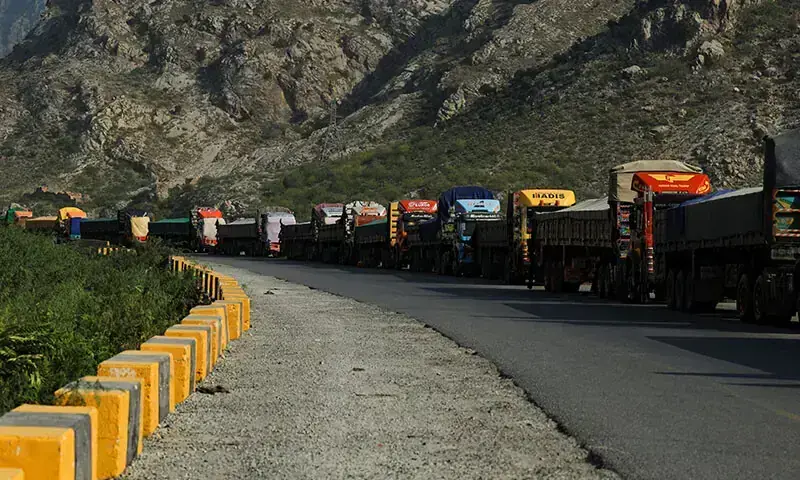
Afghanistan is attempting to deepen trade ties with Central Asian nations as it works to reduce its long-standing economic dependence on Pakistan. The push comes amid deteriorating relations between Kabul and Islamabad, marked by deadly cross-border clashes and the prolonged closure of key trade routes. Afghan traders say the month-long shutdown of border crossings has already caused losses of around $200 million.
Taliban leaders have urged Afghan businesses to seek “reliable trade alternatives” in countries such as Uzbekistan, Kazakhstan, Turkmenistan, Kyrgyzstan and Tajikistan. They argue Pakistan has repeatedly used trade as “political pressure,” forcing Kabul to diversify its economic corridors. However, experts warn that geography, high transport costs and the Taliban’s lack of international recognition will severely limit the feasibility of shifting large-scale trade northward.
Read More: Pakistan’s Role in Central Asian Trade
Central Asian markets are landlocked and rely on long overland routes, making logistics more expensive and complicated for Afghanistan. Many agricultural exports face high tariffs and limited storage capacity, while unfinished railway networks hinder trade expansion. Analysts note that customs revenue remains a lifeline for the Taliban government, making tariff reductions — necessary for boosting regional trade — difficult to implement.
Despite these barriers, trade between Afghanistan and Central Asian states has grown to nearly $1.7 billion. Yet Pakistan continues to offer the most efficient and cost-effective access to seaports and South Asian markets. Afghan traders say no northern route can currently match Pakistan’s proximity, infrastructure and affordability. Repeated skirmishes at Torkham and Chaman, however, threaten this dependence and disrupt regional commerce.
Read More: Pakistan’s trade with Central Asia hits $2.41bn in FY25
Meanwhile, Uzbekistan’s President Shavkat Mirziyoyev has proposed forming a new regional bloc, the “Community of Central Asia,” to strengthen economic, security and environmental cooperation. While the initiative signals growing interest in regional integration, analysts say Afghanistan’s economic future will still rely heavily on maintaining stable and open transit routes with Pakistan.