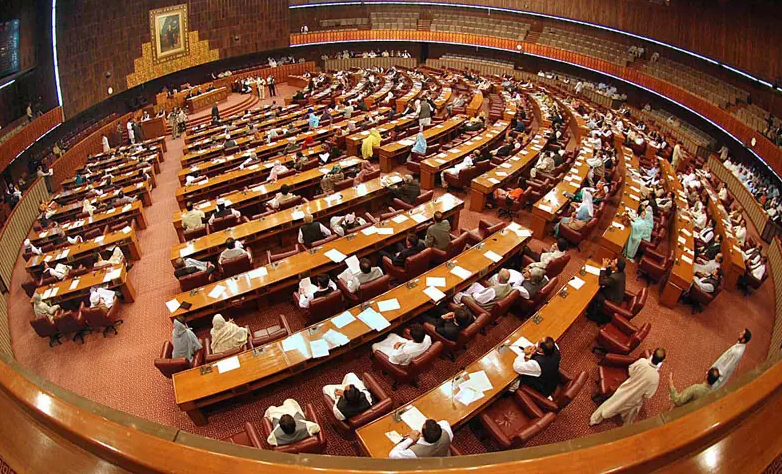
ISLAMABAD – The Senate on Thursday approved the revised 27th Constitutional Amendment Bill 2025 with a two-thirds majority, despite strong opposition protests.
The bill, reintroduced by Law Minister Azam Nazeer Tarar, includes major constitutional and judicial reforms. It marks one of the most significant legislative developments in recent months.
The amendment returned to the Senate after being passed earlier by both houses, following revisions made by the National Assembly. PTI Senator Ali Zafar noted that the Senate was voting on the bill for a second time, requiring at least 64 votes.
He also highlighted that PTI’s Saifullah Abro and a JUI-F senator had supported the amendment earlier, going against their party line. Despite vocal resistance, the government secured the required majority.
The National Assembly approved the bill a day earlier with 234 votes, surpassing the 224 needed for a two-thirds majority. Opposition lawmakers protested fiercely, tearing copies of the bill and staging a walkout from the house.
Read more: Govt succeeds as NA passes 27th Amendment amid Opp walkout
However, the government held firm control, allowing the legislation to move forward smoothly. The Jamiat Ulema-e-Islam (F) was the only major party to vote against the bill.
The 27th Amendment introduces eight key provisions, including a major change to Clause 2 of Article 6. It now states that acts of high treason cannot be validated by any court. Moreover, the term “constitutional court” has been officially added alongside the High Court and Supreme Court, broadening judicial reference in the Constitution. These adjustments aim to strengthen constitutional accountability and restrict any future attempts to legitimize unconstitutional actions.
Read more: 27th constitutional amendment challenged in Sindh High Court
Additionally, the amendment clarifies the role of the Chief Justice of Pakistan. The current Chief Justice will retain the title until completing his tenure. Afterward, the senior-most judge between the Chief Justice of the Supreme Court and the Chief Justice of the Federal Constitutional Court will assume the position.
Meanwhile, the federal cabinet is set to meet later today to align existing laws with the new constitutional provisions, marking another step toward implementing the amendment.