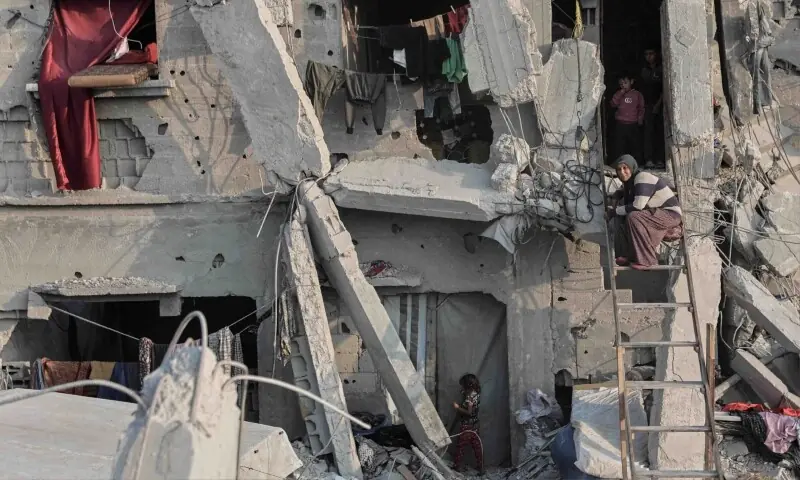
WASHINGTON: US President Donald Trump said on Thursday that an International Stabilisation Force (ISF), coordinated by the United States, would deploy to Gaza “very soon” as part of a broader post-war governance plan aimed at maintaining security and reconstruction efforts in the enclave.
The multinational force — expected to include troops from Egypt, Qatar, Turkiye, and other Muslim-majority countries — forms a central component of Washington’s post-conflict roadmap. The initiative, officials say, was instrumental in achieving the fragile ceasefire between Israel and Hamas announced on October 10, though the humanitarian crisis in Gaza continues.
Read More: Jordan, Germany call for UN Mandate for Gaza stabilization force
“It’s going to be very soon. And Gaza is working out very well,” Trump said during a White House event with Central Asian leaders. “We’ve had countries volunteer if there’s a problem with Hamas.”
According to US officials, the ISF will train and support vetted Palestinian police, secure Gaza’s border areas, and prevent the smuggling of weapons into the territory. The force will operate in coordination with Egypt and Jordan, focusing primarily on stabilization and governance rather than combat operations.
To formalize the arrangement, Washington has circulated a draft UN Security Council resolution seeking approval for the deployment. The draft, shared by US envoy Mike Waltz, was sent to the 10 elected Council members — including Pakistan — and several regional partners.
Read More: Israel’s top diplomat says Turkish troops will have no role in Gaza force
Diplomatic sources said many Muslim countries have expressed conditional support, insisting that participation would require a clear UN mandate, a non-combat role, and coordination with Palestinian authorities.
“It is a draft that will be negotiated and evolve,” a senior diplomat from a Muslim bloc country told Dawn, noting ongoing consultations among Council members.
Meanwhile, Azerbaijan clarified that it would not send peacekeepers unless fighting fully ceases. “We do not want to put our troops in danger. This can only happen if military action is completely stopped,” an Azerbaijani foreign ministry source told Reuters, adding that such a move would also require parliamentary approval.