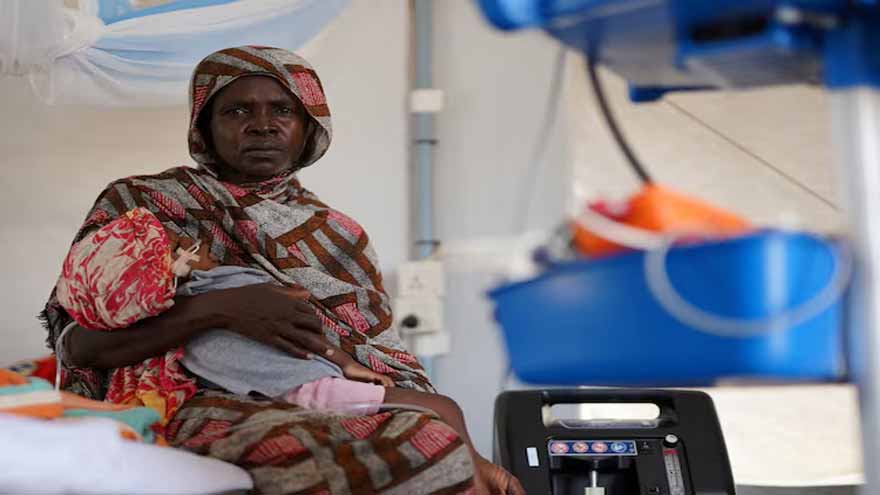
GENEVA: Some children fleeing the Sudanese city of al-Fashir are arriving at humanitarian camps in north Darfur in such critical condition that treatment may not save them, according to the Norwegian Refugee Council (NRC). Aid workers reported that many are severely dehydrated and unable to speak after enduring harsh desert-like conditions during their journey to Tawila.
Survivors described relying on animal feed and rainwater to survive. Mathilde Vu from the NRC warned that the humanitarian response may be insufficient, saying, “You have children who’ve been so malnourished, so famished during this past few months in al-Fashir that even with treatment, maybe they won’t survive.” Since al-Fashir fell to the paramilitary Rapid Support Forces (RSF) two weeks ago, up to 10,000 people have arrived in Tawila, which was already hosting more than 600,000 internally displaced persons.
Read More: Hundreds killed in alleged RSF massacre
The UN reports that about 82,000 people have fled al-Fashir and surrounding areas since October 26, while an estimated 200,000 may still be trapped inside the city. Al-Fashir, previously the last stronghold of the Sudanese army in western Darfur, fell after an 18-month siege, during which witnesses reported mass killings and widespread famine. The RSF denies abuses and claims to have facilitated humanitarian aid.
Overcrowding in camps and limited access to basic supplies such as water and soap have compounded the crisis. The NRC described incoming arrivals in Tawila as traumatized and in a “disturbing” condition. Meanwhile, the RSF agreed to a ceasefire proposal on Thursday, though the Sudanese army has yet to respond.
Read More: Sudden RSF attacks kill 1,500 civilians in Sudan’s Darfur
The UN Human Rights Council has announced an emergency session to address the situation in al-Fashir. The ongoing war between the Sudanese army and the RSF, which began in April 2023, has killed tens of thousands, displaced millions, and triggered widespread hunger across Sudan.