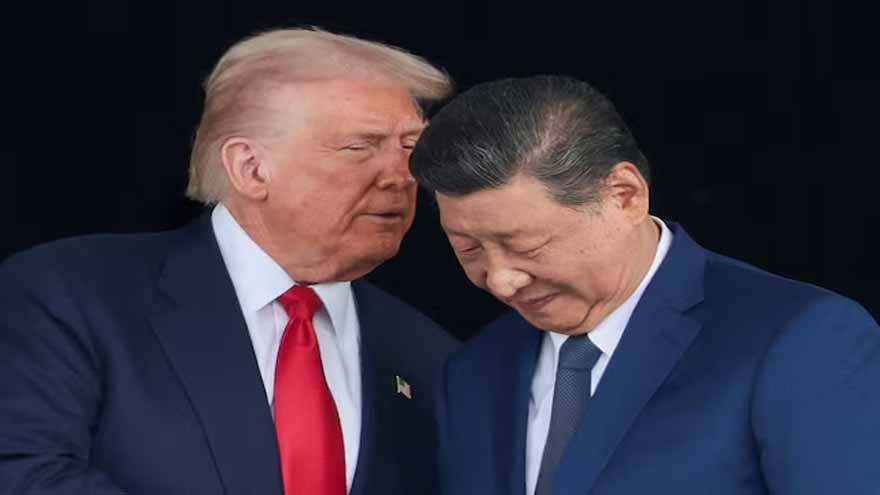
HONG KONG/WASHINGTON: US President Donald Trump reportedly appealed to Chinese President Xi Jinping to consider freeing jailed Hong Kong media tycoon Jimmy Lai during their meeting in South Korea last week. According to sources familiar with the talks, Trump expressed concern for Lai’s health and well-being amid his lengthy trial on national security charges, though no specific deal was discussed. The conversation lasted less than five minutes.
Trump suggested that releasing Lai would be beneficial for US-China relations and China’s international image. Lai, the founder of the now-closed pro-democracy Apple Daily newspaper, has pleaded not guilty to charges of conspiracy to collude with foreign forces and conspiracy to publish seditious material. His case is widely seen as emblematic of Beijing’s crackdown on rights and freedoms in Hong Kong following the 2019 pro-democracy protests.
Read More: Meeting South Korea, Trump could eye new chance with North
Chinese officials have rejected any interference in the case. Liu Pengyu, spokesperson for China’s embassy in Washington, stressed that Lai’s actions “gravely undermined Hong Kong’s prosperity and stability,” while Chinese Foreign Ministry spokesperson Mao Ning labeled Lai a key participant in “anti-China riots.” Both emphasized that Hong Kong’s legal process must proceed without external influence.
Lai, a British citizen, has been held in solitary confinement for over 1,700 days and suffers from heart issues. His family and human rights groups have repeatedly raised concerns about his health, with his son Sebastien Lai praising Trump for advocating on his father’s behalf. Lai currently awaits a verdict at Lai Chi Kok prison, where he could face life imprisonment if convicted.
Read More: Trump strikes $350B trade deal with South Korea
The Trump-Xi meeting, largely focused on trade, rare earth shipments, and fentanyl-related chemical exports, reportedly did not cover tensions over Taiwan. While Trump highlighted the discussions as a success, Lai’s case remains a sensitive point between Washington and Beijing, illustrating ongoing tensions over Hong Kong’s autonomy and human rights issues.