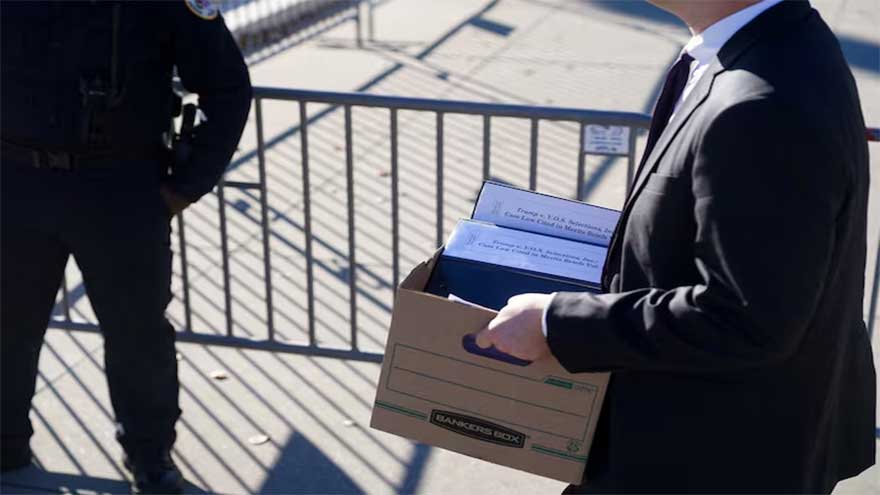
WASHINGTON – The US Supreme Court on Wednesday cast doubt on former President Donald Trump’s authority to impose sweeping global tariffs under the 1977 International Emergency Economic Powers Act (IEEPA), raising the possibility that the levies could be struck down.
During oral arguments, justices questioned whether the IEEPA — which allows regulation of imports during national emergencies — grants the president power to impose broad tariffs. Legal experts said most justices, except Samuel Alito and Clarence Thomas, appeared skeptical of Trump’s legal justification.
Read More: Trump orders tariffs on dozens of countries in push to reshape
If the court rules against the administration, trade analysts predict Trump could turn to alternative trade laws, such as the Trade Expansion Act of 1962 or the Trade Act of 1974, to reintroduce duties. However, businesses fear that prolonged uncertainty will continue to cloud the trade environment, delaying investment decisions and economic stability.
The issue of refunding over $100 billion in tariffs already collected remains complex. Justice Amy Coney Barrett warned that refund administration “could be a mess,” while lawyers argued that future collections might be halted without automatic reimbursements. A final ruling is not expected before early 2026, leaving US companies and global markets in limbo.
Read More: US court rules Trump’s global tariffs illegal
Economists also warned that a decision against Trump could create short-term instability in trade policy, potentially pressuring the Federal Reserve to adjust interest rates to offset economic drag.