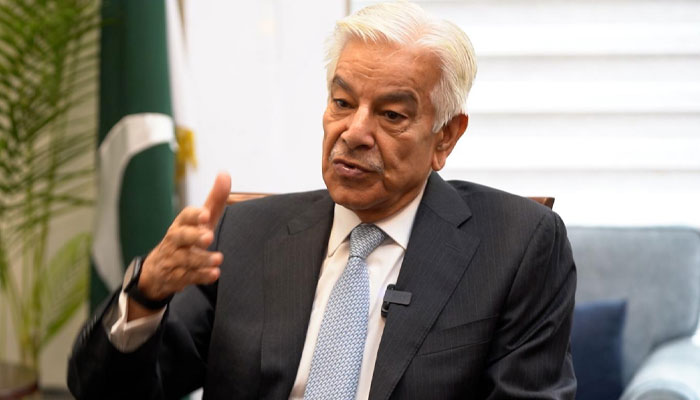
Pakistan’s Defense Minister Khawaja Asif warned that any violation of the country’s borders will receive a strong response. He said Pakistan is prepared to act even inside Afghanistan if required. Asif made the remarks amid ongoing tensions along the Pakistan-Afghanistan border and recent clashes involving militant groups. He emphasized that Pakistan will protect its sovereignty at all costs.
Speaking at Parliament House, Asif said discussions with the Afghan Taliban concluded recently. Mediators also witnessed Kabul’s intentions, he added. Asif claimed that Afghanistan’s actions revealed internal disagreements and a lack of seriousness in following agreements. He stressed that the Taliban’s approach risks regional stability. Pakistan remains cautious but firm in its stance.
Read more: Test Pakistan and pay the price, Khawaja Asif warns Afghan Taliban
Asif strongly criticized the Taliban, warning that they will face consequences for testing Pakistan’s patience. He said Afghanistan will pay a heavy price if it continues hostile actions. The minister also expressed concern that the Taliban are pushing Afghanistan backward politically and institutionally. He added that Afghanistan currently fails to meet the responsibilities of a functioning state.
The minister stated that if Afghan territory is used to support terrorism, Pakistan will respond decisively. He reiterated that Pakistan will defend its borders and retaliate against any violations. Asif warned that Pakistan might even operate inside Afghanistan if necessary to protect its security. The message highlighted Pakistan’s readiness to act without delay.
Read more: Khawaja Asif warns: Failed talks could spark Pakistan-Afghanistan war
Asif concluded that Kabul resists accountability and refuses to provide written guarantees. He said verbal assurances alone are insufficient and cannot replace proper border management. Pakistan expects Afghanistan to adhere to agreements to maintain peace and regional stability. The minister’s comments underscore Islamabad’s determination to safeguard its national security interests.