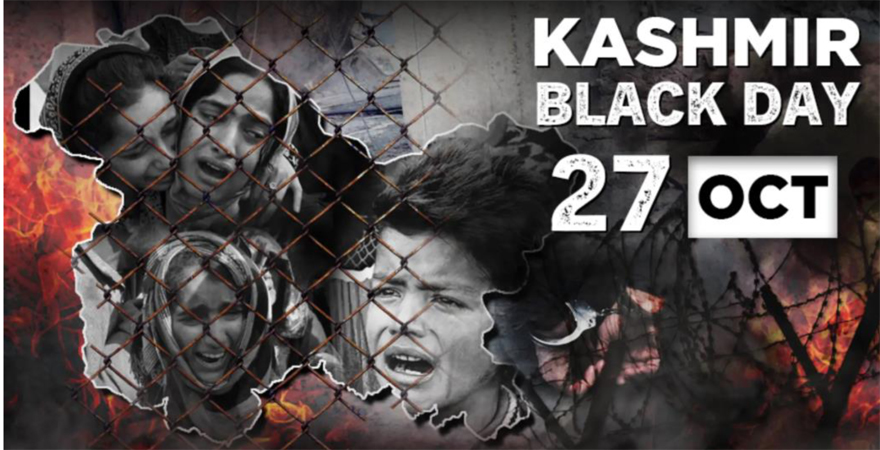
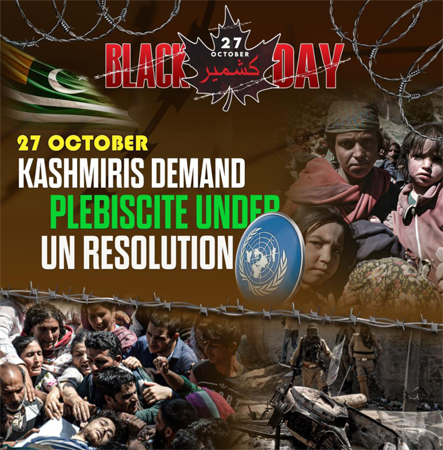
 Kashmiris solemnly observe October 27, 1947, as Black Day globally! It marks the beginning of India’s unlawful occupation of Jammu and Kashmir. What began with a single airlift of Indian troops to Srinagar has transformed into one of the world’s most protracted and brutal military occupations. For 78 years, the valley has endured repression, demographic manipulation, and unparalleled human rights violations – all perpetuated under the cloak of fascism and the shadow of draconian laws.
Historical Context
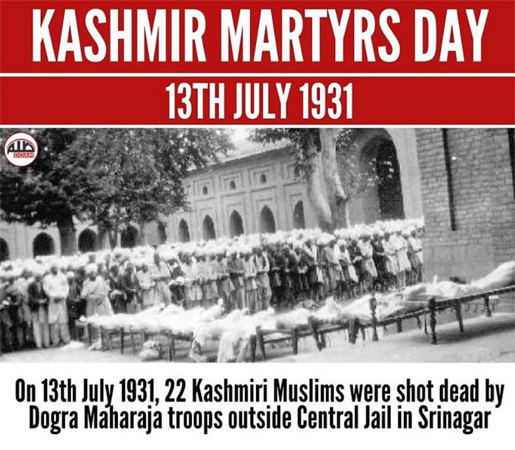
Before 1947, the princely state of Jammu and Kashmir stood as a mosaic of diverse cultures, languages, and ethnicities. Despite being a Muslim-majority region (More than 80 percent Muslim population) it was ruled by the Dogra dynasty, a Hindu elite installed under British patronage after 1846. The Dogra rulers maintained power through heavy taxation, suppression of dissent, and systematic discrimination against Muslims. The uprising of July 13, 1931 in Srinagar, which is considered as Kashmir’s Martyrs Day, when22 unarmed protesters were killed by the Maharaja’s forces, became the symbol of Kashmiri resistance and desire for freedom.
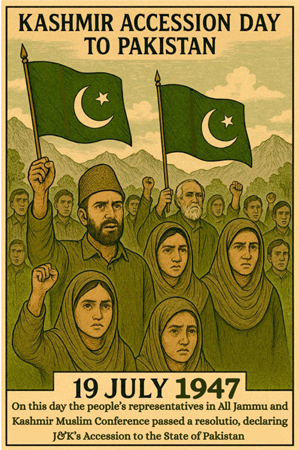
Maharaja Hari Singh, the last Dogra ruler, sought to maintain his independence amid the British withdrawal from the subcontinent. When Pakistan and India emerged as independent states in August 1947, he hesitated to join either, hoping to remain neutral – even as his Muslim subjects looked toward Pakistan for cultural, economic, and religious affinity. On July 19, 1947, the genuine representatives of the Kashmiri people, meeting under the banner of the All Jammu and Kashmir Muslim Conference, passed a historic resolution for the state’s accession to Pakistan, citing shared faith, geography, and economic links. However, the Maharaja’s administration soon unleashed a campaign of violence against Muslim communities, particularly in Jammu, where tens of thousands were massacred or displaced.
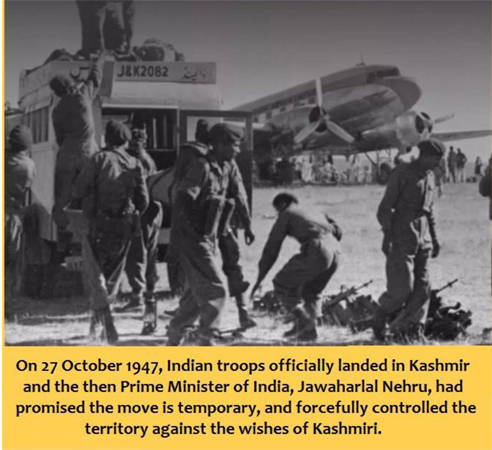
In response, tribal volunteers from Pakistan’s frontier regions entered Kashmir in late October 1947 to protect their Muslim brethren from these atrocities. India later distorted this intervention as a “foreign invasion,” using it as justification for its military entry. On October 27, 1947, Indian troops were airlifted into Srinagar after the Maharaja allegedly signed the Instrument of Accession with India – a document whose authenticity remains deeply contested.
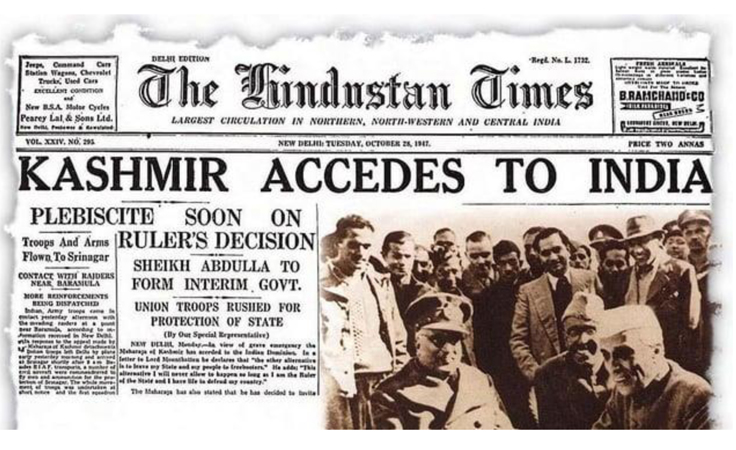
That day marked the beginning of India’s illegal occupation of Jammu and Kashmir, executed before any plebiscite or public consent. Ironically, it was India’s Prime Minister Jawaharlal Nehru himself who took the issue to the United Nations in early 1948, affirming his commitment that the people of Kashmir would decide their future through a referendum.
The Accession Controversy
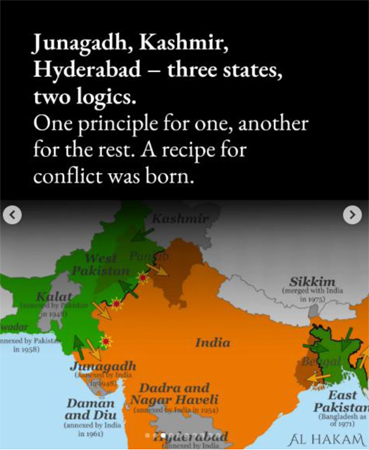
The legality of Kashmir’s accession has long been questioned by historians, jurists, and the international community. Under the Partition Plan of 1947, princely states were to join either Pakistan or India based on geographic contiguity and the will of their people. Most Muslim-majority regions adjacent to Pakistan such as Hyderabad and Junagadh (Hindu majority region which was ruled by a Muslim Nawab who decided to accede to Pakistan) were integrated into India through military intervention and manipulated plebiscites, yet India refused to allow a similar process in Kashmir, where the demographic reality clearly favored Pakistan.
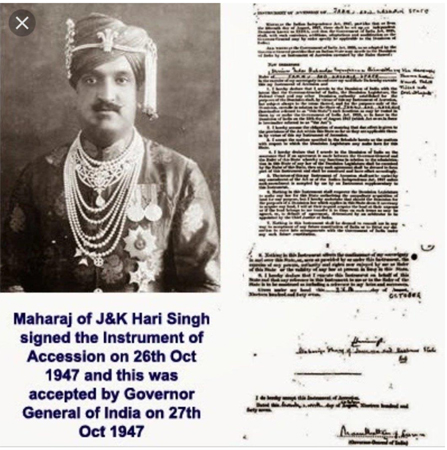
The Instrument of Accession allegedly signed by Hari Singh was made under duress as Indian troops were already being mobilized. Moreover, the Maharaja had already lost effective control over his territory, rendering the accession legally questionable under international law. While India insists the accession was final and irrevocable, Pakistan maintains it was conditional and provisional, subject to ratification through UN-supervised plebiscite. The fact that India itself approached the United Nations and pledged to honor the Kashmiri people’s choice exposes the hypocrisy of its later stance.
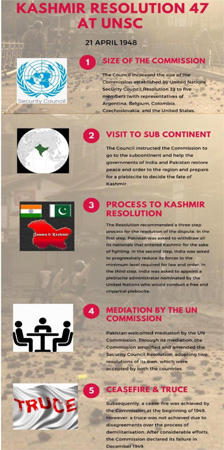
United Nations & the Betrayed Plebiscite
The United Nations Security Council (UNSC) intervened in 1948 and passed multiple resolutions calling for a ceasefire and a plebiscite to allow Kashmiris to decide between India and Pakistan. Resolution 47 explicitly laid out the framework for demilitarization followed by a referendum under UN supervision.
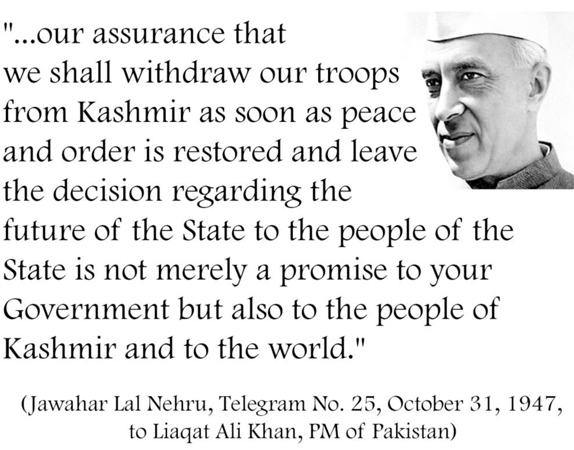
Both nations accepted the resolution, but India later backtracked, adding preconditions and manipulating narratives to indefinitely delay the process.
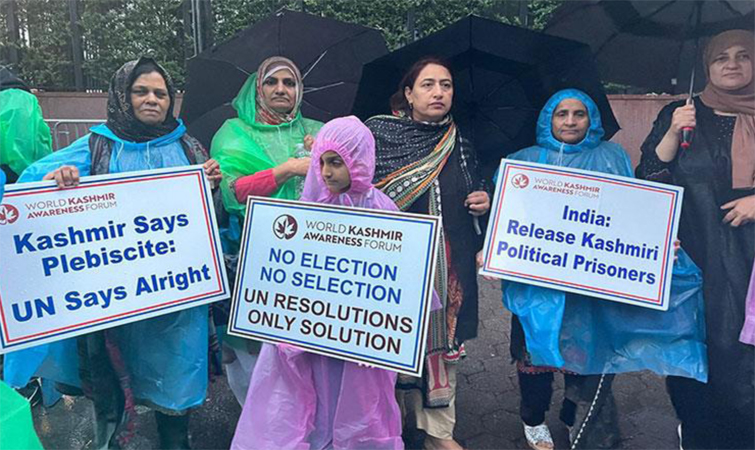
Over the decades, India has rejected all international mediation, asserting that Kashmir is its “integral part,” even though its own leaders once recognized it as a disputed territory. The denial of the plebiscite has had devastating consequences: perpetual militarization, cycles of violence, economic isolation, and a generational loss of faith in justice. For the people of Kashmir, the unfulfilled promise of self-determination remains the deepest wound of partition.
Article 370 & 35A
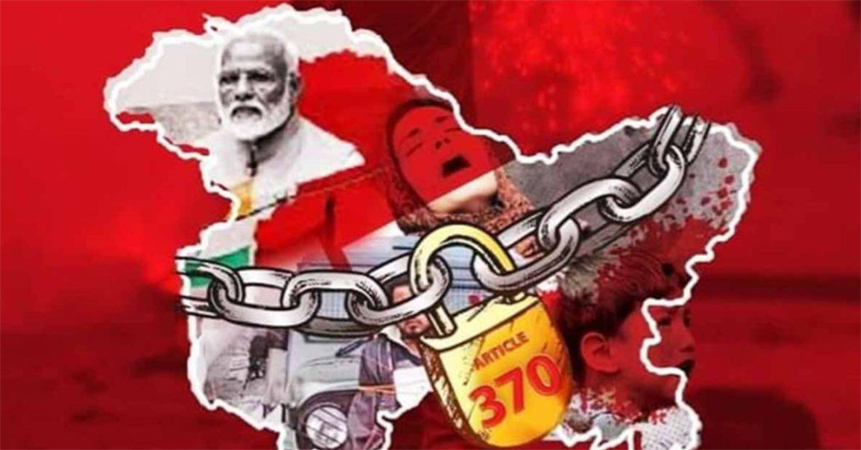
Following the initial accession, India sought to pacify Kashmiri sentiments by granting the state special status under Article 370 of its Constitution, which allowed Jammu and Kashmir to have its own flag, constitution, and autonomy over all matters except defence, foreign affairs, and communications. Article 35A further protected the local demographic structure by restricting property rights and employment to permanent residents.
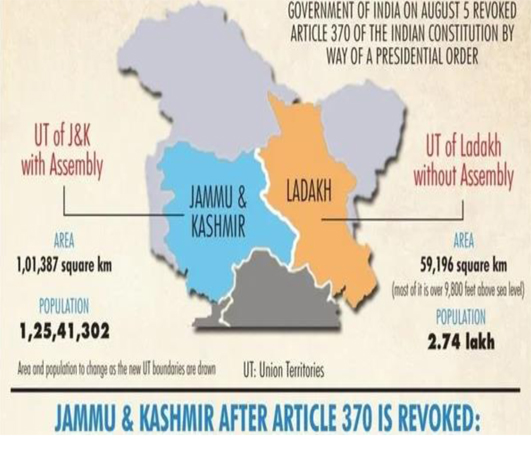
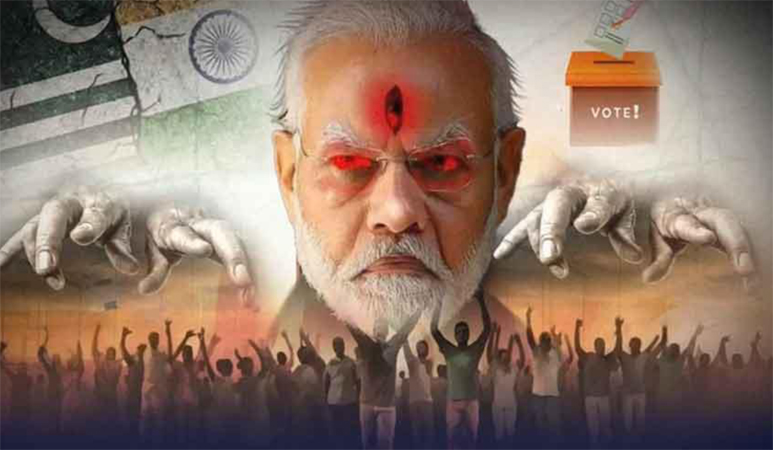
However, this arrangement steadily eroded over time, and on August 5, 2019, the Modi regime unilaterally abrogated Articles 370 and 35A, bifurcating the state into two union territories – Jammu & Kashmir and Ladakh – without consulting its people or legislature. This move violated both India’s constitutional commitments and the spirit of the UN resolutions. The aftermath was marked by mass arrests, communication blackouts, media censorship, and the detention of thousands of political leaders, journalists, and civil society activists. The abrogation was not just a constitutional betrayal but an attempt at demographic engineering – to turn the Muslim majority state into a Hindu-dominated region through settlement laws and land transfers.
The Ladakh Paradox
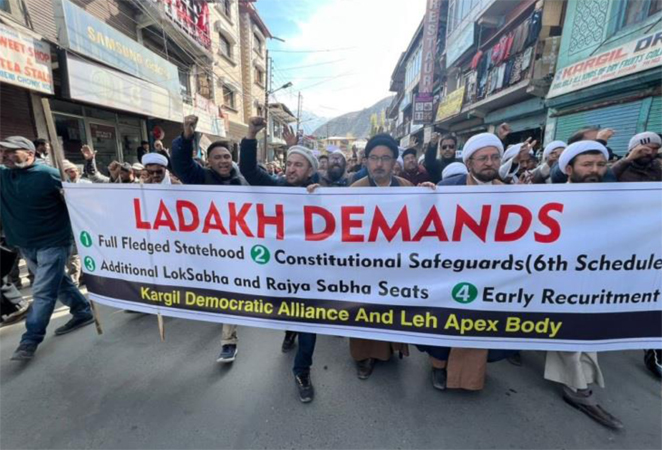
Ironically, the Modi government’s move to revoke autonomy has now sparked unrest in Ladakh, the Buddhist-majority region separated from Jammu and Kashmir in 2019.
Far from celebrating integration, the people of Ladakh have launched a sustained agitation for statehood and constitutional protection under the Sixth Schedule. The Kargil Democratic Alliance (KDA) and the Leh Apex Body (LAB) have four key demands: restoration of Ladakh’s statehood, inclusion under the Sixth Schedule of the Indian Constitution to protect tribal rights, an increase in Lok Sabha representation from one to two seats, and allocation of representation for Ladakh in the Rajya Sabha.
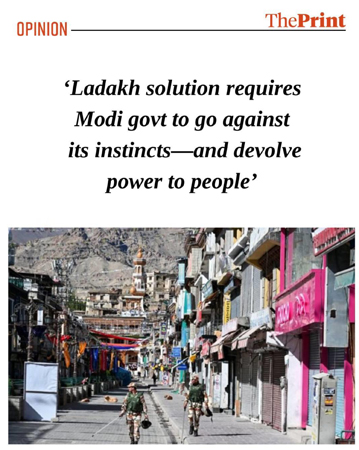
This agitation exposes the contradictions of Modi’s “New India” narrative – while Kashmiris are silenced for demanding autonomy, even pro-India regions like Ladakh are now disillusioned with the central government’s overreach. Congress leader Amitabh Dubey wrote in his article in ‘The Print’, “The Modi government is back to its usual playbook, blaming external forces and the Congress party to deflect attention from the fact that the Ladakh crisis is of its own making. The main argument is that Ladakh-with its distinct culture, fragile ecology, and predominantly tribal population-should have the authority to make its own decisions on matters such as land, water, health, sanitation, and culture, much like the autonomy granted to tribal areas in many northeastern states by the Sixth Schedule. The Modi government’s belated concessions don’t address the movement’s core demands.”
Human Rights & Modi’s Fascist Crackdown
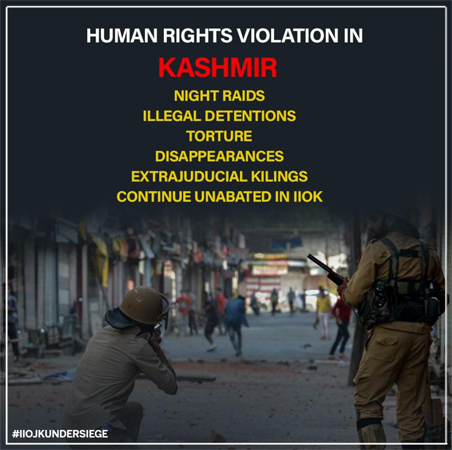
Under Narendra Modi’s Hindutva regime, repression in IIOJK has reached unprecedented levels. The Armed Forces (Special Powers) Act (AFSPA), Public Safety Act (PSA), and Unlawful Activities Prevention Act (UAPA) have turned Kashmir into a vast open prison where arbitrary detention, torture, custodial deaths, and collective punishment are routine.
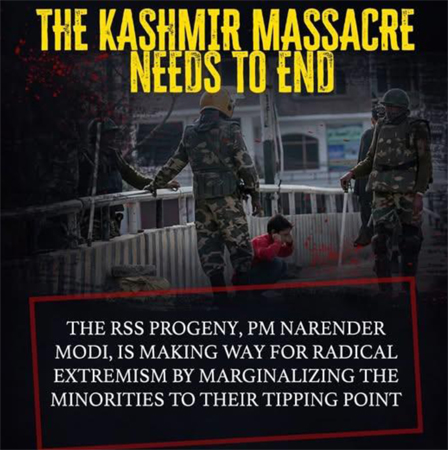
Thousands of civilians, including minors, have been jailed without trial. Religious leaders, journalists, and human rights defenders have been harassed or silenced. Indian forces have demolished homes, confiscated properties, and targeted families of suspected militants. Internet shutdowns have crippled communication, education, and trade. Modi’s fascist crackdown on Muslims in Kashmir mirrors the broader Islamophobic politics of the BJP across India, where minorities face systematic discrimination, lynchings, and exclusion. In Kashmir, this ideology translates into occupation, control, and cultural erasure. Despite repeated calls from the UN, Amnesty International, and Human Rights Watch, India continues to deny access to international observers, perpetuating impunity under the guise of national security.
Final Words
October 27 remains the darkest day in Kashmir’s history – the day when promises of justice were replaced by the boots of occupation. For 78 years, India has shifted narratives, ignored UN resolutions, and suppressed Kashmiri voices with bullets and bans. Yet, the spirit of resistance endures. Every Black Day reminds the world that no amount of coercion can erase the truth of a people’s will. Until the UN-mandated plebiscite is held and the autonomy and dignity of Kashmiris restored, peace in South Asia will remain an unfulfilled dream – shadowed by the betrayal that began on October 27, 1947.