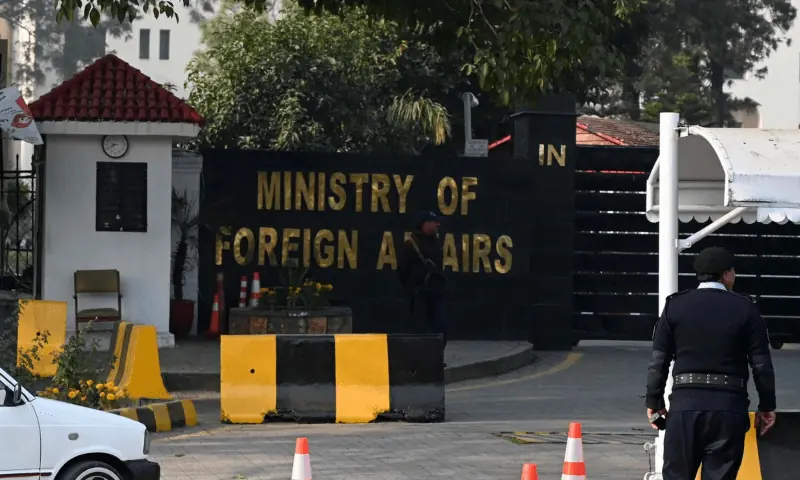
ISLAMABAD – Amid escalating tensions along the Pak-Afghan border, the Foreign Office (FO) confirmed on Saturday that a high-level Pakistani delegation, led by Defence Minister Khawaja Asif, is holding talks with an Afghan delegation in Doha, Qatar to address cross-border terrorism and restore regional stability.
According to the FO, “The talks will focus on immediate measures to end cross-border terrorism against Pakistan emanating from Afghanistan and to restore peace and stability along the Pak-Afghan border.” The statement added that Pakistan does not seek escalation, but urged the Afghan Taliban authorities to “honour their commitments to the international community” and take verifiable action against terrorist networks targeting Pakistan. “Pakistan appreciates the mediation efforts of Qatar and hopes these discussions contribute to peace and stability in the region,” the FO said.
A high-level delegation from Pakistan, led by our Minister of Defence, will hold discussions with representatives of the Afghan Taliban in Doha today. The talks will focus on immediate measures to end cross-border terrorism against Pakistan emanating from Afghanistan and restore…
— Ministry of Foreign Affairs – Pakistan (@ForeignOfficePk) October 18, 2025
Earlier, Taliban spokesman Zabiullah Mujahid confirmed that the Afghan delegation, led by Defence Minister Mullah Muhammad Yaqub Mujahid, had departed for Doha. Reports suggest the team also includes intelligence chief Mullah Wasiq.
The Doha talks follow renewed hostilities on Friday, when security sources said Pakistan conducted precision strikes on terrorist hideouts in Afghanistan’s Urgun and Barmal districts of Paktika province and the Angoor Adda region. The strikes reportedly targeted militants from the outlawed Hafiz Gul Bahadur group, allegedly killing several fighters.
Read More: Pakistan Exempts 57 Items from Certificate of Origin for Trade with Iran
The attacks came shortly after a suicide and gun attack on a military installation in North Waziristan, and just hours after Islamabad and Kabul extended a two-day ceasefire. Meanwhile, the Afghanistan Cricket Board (ACB) announced it was withdrawing from the upcoming T20 tri-nation series in Pakistan after alleging that three Afghan cricketers were killed in the strikes — a claim Pakistan has not officially commented on.
Friday night’s exchanges cast uncertainty over both the ceasefire and the planned Doha dialogue. However, security officials confirmed that “the ceasefire has been mutually extended by both sides until the conclusion of the Doha talks.” Although the 48-hour truce had been largely observed, initial plans for dialogue were delayed due to logistical hurdles and hesitation within the Taliban leadership to engage, sources said.
Read More: Pakistan and Turkey Sign Major Offshore Energy Deal
At a weekly media briefing earlier in the day, outgoing FO spokesman Shafqat Ali Khan warned that Afghanistan had become a “central breeding ground for global terrorism.” He cautioned the international community against complacency: “We do not have to wait for a major global disaster before taking remedial action. This fire will spread. It must be stopped.”
Qatar, alongside Saudi Arabia, played a key role in persuading both sides to halt hostilities and host the ongoing talks aimed at de-escalating one of the most serious flare-ups between Pakistan and Afghanistan in recent years.