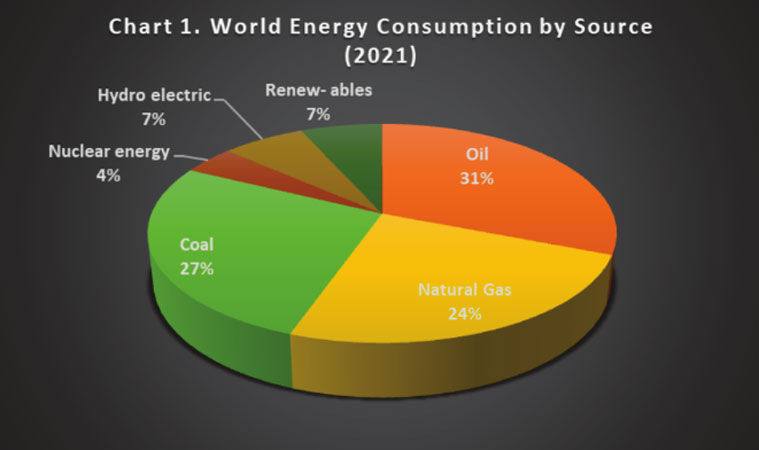
 Pakistan should accelerate the shift from imported coal to indigenous Thar lignite not as an ideological posture but as pragmatic economic policy. The numbers are compelling: studies show that greater use of local coal can lower electricity generation costs and shave as much as PKR 3 per unit off tariffs, while reducing import bills by roughly $800 million a year, savings that are need of the hour to strengthen the balance of payments and ease domestic price pressures.
The strategic case is equally plain. Sindh’s Thar deposits, estimated at about 175.5 billion tonnes, represent a long-duration fuel endowment capable of supporting very large baseload capacity over decades. Reliably tapped, that resource would insulate Pakistan’s power system from the volatility of international coal markets, free foreign exchange for more productive imports, and provide the predictable baseload needed while renewables scale up.
Importantly, the domestic transition is not theoretical, it is already producing measurable gains. Recent reporting shows that local coal’s share of thermal generation rose sharply by March 2025, contributing roughly 17 percent of generation, and helped push average fuel costs down to about Rs12.2 per unit from Rs16.8 a year earlier. Provincial estimates cited in the reports put cumulative foreign-exchange savings from increased local-coal use in the order of more than $1 billion. These figures demonstrate that with the right commercial arrangements, domestic lignite can cut costs materially in practice, not just on paper.
That said, turning reserves into low-cost, low-risk supply requires an integrated programme – not a single measure. The technical reality is that Thar lignite has higher moisture and different combustion characteristics than many imported coals, which affects handling and boiler performance. Transport remains a bottleneck: bulk movement by road is expensive and inefficient at scale, so rail connectivity is essential. Legacy plants, designed for different fuel specifications, often require retrofits or replacement with higher-efficiency designs to realise the full economic and environmental benefits of local fuel.
There is growing momentum regarding the emphasis pertaining to the use of local coal. The Jamshoro Power Company Limited (JPCL) project, originally conceived before 2013, includes two 660 MW units that were initially designed to operate with 80% imported coal and 20% local coal. K-Electric is actively working on converting one 660 MW project to run entirely on local coal, with the goal of providing affordable energy to Karachi and reducing the government’s subsidy burden.
Policy-makers should therefore prioritise pragmatic, sequenced interventions that create a predictable market while addressing those constraints. A dedicated rail link from the Thar block to major thermal hubs is a cost-effective public good as it secures low-cost delivery, encourages mine scale-up, and lowers unit transport costs that otherwise eat into the generation advantage of local coal. Modernising generation capacity – favouring supercritical and ultra-supercritical designs where feasible and deploying circulating fluidised bed combustion and drying/blending technologies for lignite – raises thermal efficiency and reduces emissions per megawatt-hour. Complementary measures such as phased blending requirements, clear off-take arrangements and concessional financing for rail and plant upgrades will reduce investor risk and mobilise private capital. Pakistan Institute of Development Economics (PIDE) policy analysis underlines these same priorities, arguing that coordinated infrastructure, technology and market-signal reforms are essential to scale domestic coal use responsibly.
Environmental safeguards must be non-negotiable. Critics are right to insist on robust monitoring and mitigation measures, and these should be integrated into every financing and approval decision. Deploying modern emission-control systems, continuous emissions monitoring, dust suppression at mines and best-practice rehabilitation are practical, proven measures that materially reduce the local and global footprint of coal use. The policy challenge is to require these standards as a condition of approval and financing, rather than to allow uncontrolled expansion that courts political and social backlash.
Viewed honestly, Thar coal should be one pillar in a diversified energy strategy as it can provide affordable baseload and fiscal headroom in the near term while the country accelerates renewables, storage and grid modernisation. The evidence to date shows that local coal can already lower costs and save foreign exchange, and the technical toolkit exists to manage emissions and operational challenges. What remains is the political will to sequence investments correctly, guarantee predictable demand signals and insist on environmental performance.
If the aim is greater energy security and fiscal stability, the policy prescription is clear: fast-track rail connectivity, adopt phased blending targets to guarantee demand and offer targeted incentives and concessional financing for plant modernisation. Done with discipline and oversight, responsibly developed Thar coal can convert a geological asset into national advantage by lowering costs, reducing import dependence and buying Pakistan time to build a cleaner, more resilient energy system.
The writer is an industry expert and policy analyst based in Islamabad