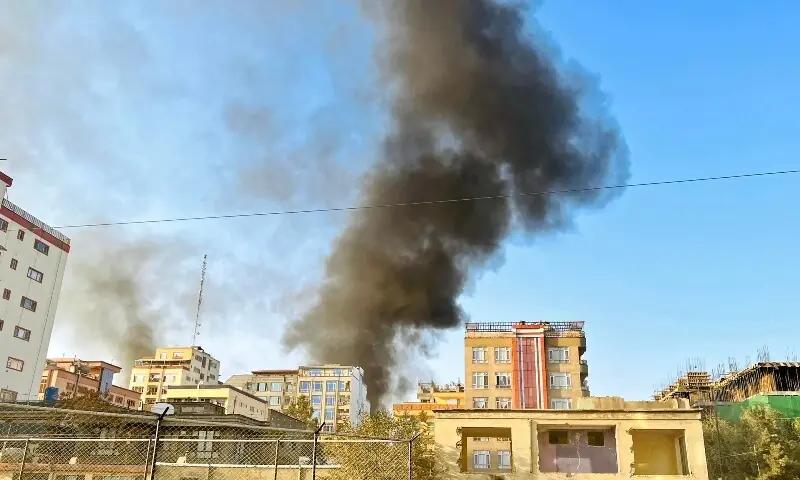
ISLAMABAD – Pakistan and Afghanistan on Wednesday agreed to a temporary ceasefire after a new wave of cross-border clashes threatened to spiral into full-scale conflict.
According to Pakistan’s Foreign Office, the 48-hour ceasefire took effect at 6pm local time and was implemented at the Taliban’s request “with mutual consent.” Both sides have pledged to work toward a “positive resolution” through constructive dialogue.
Read More: No Compromise on Hostage Return, Says Israeli PM
Taliban spokesman Zabihullah Mujahid, however, posted a slightly different account on social media, saying the ceasefire began at 5:30pm Kabul time “at the request and insistence of the Pakistani side” and would remain in effect unless violated.
Deputy Prime Minister/Foreign Minister Senator Mohammad Ishaq Dar @MIshaqDar50 received a message from H.E. Dr. M. Abdulaziz Al-Khulaifi @Dr_Al_Khulaifi, Minister of State for Foreign Affairs of Qatar, regarding the regional situation.
Dr. Al-Khulaifi appreciated Pakistan’s… pic.twitter.com/7cwJJj6x3W
— Ministry of Foreign Affairs – Pakistan (@ForeignOfficePk) October 15, 2025
Diplomatic sources told reporters that Qatar played a mediating role in brokering the truce. Soon after the announcement, Qatar’s Minister of State for Foreign Affairs Dr Abdulaziz Al-Khulaifi praised Pakistan’s “constructive engagement” in efforts to stabilize the region.
The ceasefire follows deadly clashes that erupted along the Chaman border late Tuesday when Taliban fighters launched coordinated attacks on Pakistani posts using mortars and heavy weapons.
Read More: Trump Says Israel May Reenter Gaza If Ceasefire Fails
Pakistani troops retaliated with air and artillery strikes, targeting suspected militant camps in Kandahar and Spin Boldak. Officials said at least 20 Taliban fighters were killed, while local Afghan sources reported eight deaths and several injuries.
Additional fighting was reported in Kurram district, where Pakistan’s military claimed to have killed 25–30 Taliban and TTP militants and destroyed multiple posts and armored vehicles. Authorities in Chaman declared an emergency in hospitals and closed schools after the clashes injured several civilians, including women and children.
Read More: Israeli Defense Chief Orders New War Plan Against Hamas
Defence Minister Khawaja Asif expressed doubts about the ceasefire’s durability, accusing the Afghan Taliban of acting as a “proxy for India.” Speaking to Geo News, he warned that Pakistan would respond “decisively” if the truce was violated. “We do not want war, but if we are attacked, we will respond in kind,” he said.
Officials confirmed that over 23 Pakistani soldiers were martyred in earlier cross-border attacks since October 11, while Pakistan’s retaliatory strikes have reportedly killed nearly 200 Taliban fighters over the past week.
Read More: U.S. Warns Hamas to Disarm Immediately or Else
Analysts caution that the truce may only provide short-term relief unless backed by structured talks and third-party monitoring. The crisis reflects the deterioration of Pakistan-Taliban relations, which have soured since Kabul’s refusal to curb Tehreek-i-Taliban Pakistan (TTP) sanctuaries on Afghan soil.
A Pakistani diplomat said the focus now is on “disengagement details and firm assurances regarding dismantling cross-border terrorist hideouts.” For Islamabad, the escalating conflict is not just about border control — it underscores a deeper strategic rift with a regime once seen as its ally.