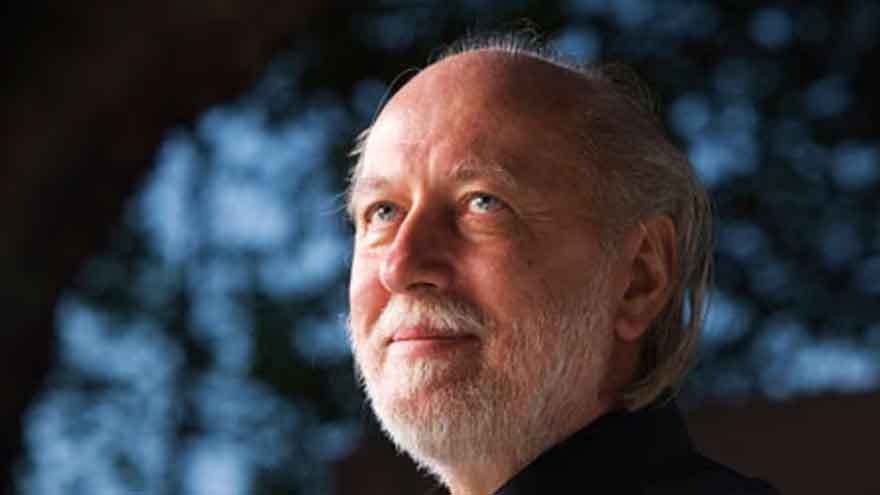
STOCKHOLM — Hungarian novelist László Krasznahorkai, celebrated for his bleakly poetic and anarchic narratives, has been awarded the 2025 Nobel Prize in Literature for what the Swedish Academy called a body of work that upholds the power of art amid “apocalyptic terror.” The 71-year-old author, whose novels often unfold in single, dizzying sentences, was praised by the judges as “a great epic writer characterized by absurdism and grotesque excess.”
Krasznahorkai is the first Hungarian Nobel laureate in literature since Imre Kertész (2002), joining a lineage that includes Ernest Hemingway, Toni Morrison, and Kazuo Ishiguro. “I am calm and very nervous,” he told Radio Sweden. “This is the first day in my life when I got a Nobel Prize. I don’t know what’s coming in the future.”
Read More: Trump’s Push for Nobel Peace Prize 2025 Winner Set to Be Announced
The late American critic Susan Sontag once hailed Krasznahorkai as the “contemporary master of the Apocalypse.” His fiction—dense, darkly humorous, and philosophical—echoes Kafka and Beckett in exploring the absurd tragicomedy of existence.
Zsuzsanna Varga, Hungarian literature scholar at the University of Glasgow, said his books examine “the utter hopelessness of human existence,” yet remain “incredibly funny.” She famously called his long, recursive sentences the “Hotel California of literature — once you enter, you can never leave.”
Read More: Israeli Government Approves Gaza Ceasefire and Hostage Deal
Varga recommends newcomers start with “Satantango” (1985), Krasznahorkai’s haunting debut about the last residents of a collapsing collective farm — a grim parable of decay that set the tone for his later work.
He went on to produce over 20 books, including:
-
“The Melancholy of Resistance” — a surreal tale of a town invaded by a traveling circus and a stuffed whale.
-
“Baron Wenckheim’s Homecoming” — a sprawling, darkly comic saga of a disgraced aristocrat’s return.
-
“Herscht 07769” (2021) — a 400-page, single-sentence novel written as letters to then-Chancellor Angela Merkel.
Several of these works were adapted into acclaimed films by Hungarian auteur Béla Tarr, whose stark black-and-white style mirrors Krasznahorkai’s desolate vision.
The author’s global wanderings also inspired books such as “A Mountain to the North, a Lake to the South, Paths to the West, a River to the East” (2003), drawing from his experiences in China and Japan.