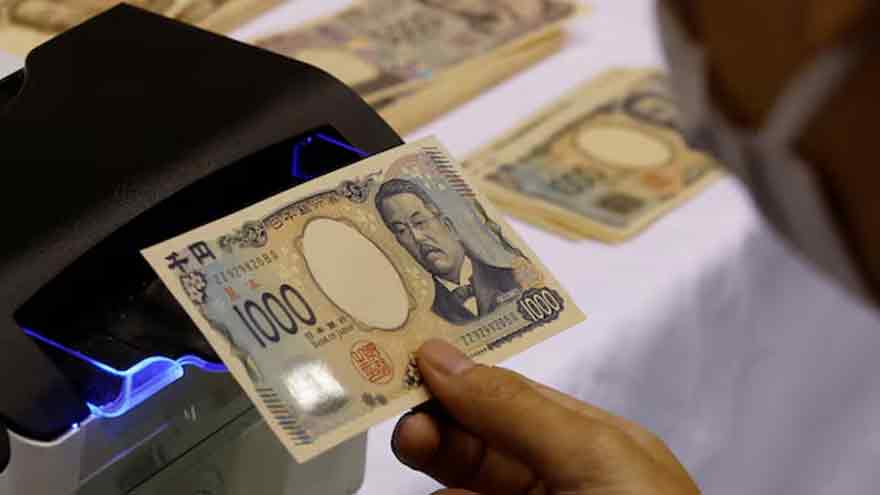
SINGAPORE – The Japanese yen steadied on Friday but was on track for its steepest weekly drop in a year, as fading hopes for a near-term rate hike weighed on the currency. Meanwhile, the euro hovered near two-month lows amid France’s deepening political crisis, boosting the U.S. dollar to a one-year high.
The yen inched up 0.2% to 152.7 per U.S. dollar but remained near its weakest level since mid-February. It has fallen 3.5% this week, marking its biggest weekly loss since October 2024.
Read More: US Currency Swap Deal Supports Argentina Amid Crisis
Analysts attribute the yen’s slide to mounting concerns that the Bank of Japan (BOJ) may hold off on further interest rate hikes following Sanae Takaichi’s victory to lead Japan’s ruling party. Takaichi’s dovish fiscal stance has raised doubts about the BOJ’s willingness to tighten policy in the near term.
Japanese Finance Minister Katsunobu Kato voiced concern over the yen’s rapid depreciation, calling for vigilance against “excessive volatility.” Traders now see only a 45% chance of a rate hike at the BOJ’s December meeting and fully price in a 25-basis-point increase by March.
In Europe, the euro was last at $1.1570, heading for a 1.5% weekly loss—its sharpest in 11 months. Political turmoil in France, following the resignation of Prime Minister Sébastien Lecornu, has rattled investor confidence and made budget negotiations increasingly difficult.
Read More: U.S. Approves Advanced AIM‑120 Missile Sales Including Pakistan
“The turmoil in France has undermined euro sentiment, while volatility remains high as traders adjust to shifting central bank expectations,” said Kieran Williams, head of Asia FX at InTouch Capital Markets.
The U.S. dollar index held firm at 99.33, near a two-month high, supported by investor caution and safe-haven demand. “There’s still skepticism the dollar can break above 100, but short-covering has strengthened its momentum,” said Chris Weston of Pepperstone.
Elsewhere, the Australian dollar was slightly higher at $0.6565, while sterling traded at $1.331, down 1% for the week. The New Zealand dollar hovered at $0.5755, near a six-month low after a rate cut by the central bank earlier this week.
Read More: New York Attorney General Indicted in Trump Dispute
With the U.S. government shutdown ongoing and limited economic data available, investors are focusing on comments from Federal Reserve officials. New York Fed President John Williams indicated comfort with another rate cut, though some policymakers remain wary of persistent inflation.
Markets are currently pricing in a 95% chance of a 25-bp Fed rate cut in October, with an 80% probability of another cut in December, according to the CME FedWatch Tool.