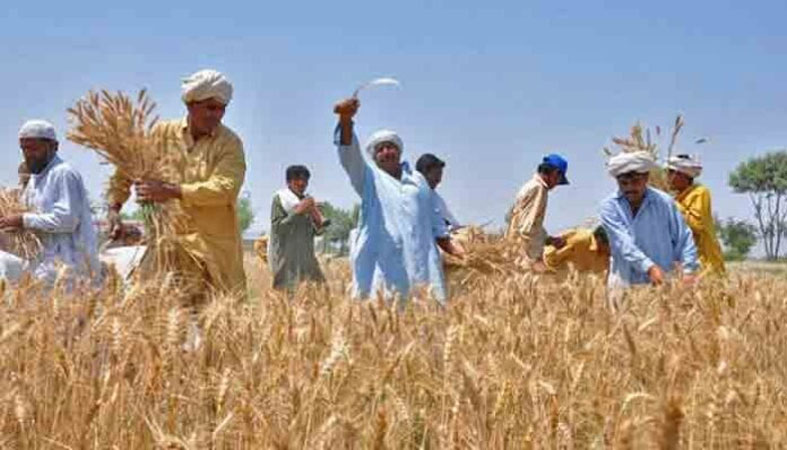
 Agriculture is the backbone of Pakistan’s economy. The prosperity of our farmers directly determines the strength of this foundation. A nation that neglects its farmers risks undermining its own economic future. The Pakistan Peoples Party (PPP) has always understood this truth more deeply than anyone else – and it is this understanding that has consistently shaped our policies.
Whenever the history of pro-farmer initiatives is written, the PPP’s role stands out prominently. From the era of Shaheed Zulfikar Ali Bhutto to Chairman Bilawal Bhutto Zardari today, our commitment has remained steadfast: to empower those who feed the nation.
A Revolutionary Package for Wheat Growers
In line with this vision, the Sindh government has announced an unprecedented Wheat Growers Support Program – a Rs55.9 billion package aimed at supporting small farmers and revitalising wheat production across the province.
Under this initiative, more than 400,000 small-scale farmers will benefit. Those who own 25 acres of land or less will receive one bag of DAP fertilizer worth Rs14,000 and two bags of urea fertilizer worth Rs8,400. Verified farmers will receive DAP by November 2025 and urea after January 2026.
This initiative, undertaken on the direct instructions of Chairman Bilawal Bhutto Zardari, reflects our government’s unwavering resolve to strengthen food security and lower production costs for farmers. It is not merely a subsidy – it is a long-overdue recognition of the role farmers play in sustaining Pakistan’s economy.
The Sindh government believes that when the farmer is secure, the entire nation stands on firm ground.
Responding to a National Challenge
This policy decision was made against the backdrop of a troubling reality: Pakistan is once again importing wheat worth billions of rupees. If this money had been channelled into supporting our own farmers, wheat shortages would never have occurred.
It is worth recalling that during the Musharraf era, Pakistan was a wheat-importing country. Yet, under the presidency of Asif Ali Zardari and the PPP’s farmer-friendly policies, Pakistan became a wheat exporter. Unfortunately, we are now facing a repeat of the earlier crisis.
The Sindh government decided that enough was enough. We could not afford to let our farmers lose faith in cultivation. That is why a bold and practical decision was taken – to provide direct financial support through this Rs55.9 billion package.
Under our wheat cultivation policy, Sindh will grow wheat on 2.262 million acres of land. Farmers will receive a subsidy of Rs24,700 per acre. No other province in Pakistan is extending such direct assistance to its growers. This has been made possible through Chairman Bilawal Bhutto Zardari’s special directives, ensuring that small and medium farmers receive immediate and tangible relief.
Direct Relief, Transparent Mechanisms, Real Impact
Transparency and fairness are at the heart of this program. All subsidies and facilities will be delivered directly to the farmers – without the interference of any third party or middleman.
The provision of DAP and urea fertilizers will significantly reduce production costs, which in turn will help stabilize wheat prices for consumers. The ripple effect of this program will extend beyond the fields – revitalizing related industries, stimulating rural markets, and generating new employment opportunities.
To ensure complete transparency, registration is being carried out through the Benazir Hari Card database, national identity cards, and land revenue records. Monitoring and supervision committees have been established at the provincial, district, and village levels.
Every year, Sindh sets a support price to encourage wheat cultivation. Without it, wheat is bought at Rs2,500 per 40 kilograms, but the government fixed the rate at Rs4,000 per 40 kilograms. When the IMF advised us not to fix a support price, it became clear that many farmers might abandon large-scale wheat cultivation. Without adequate price protection, their production costs could not be recovered. Recognising this threat, the Sindh government intervened – not just to protect farmers, but to safeguard national food security.
A Legacy of Commitment: From Bhutto to Bilawal
The PPP’s commitment to farmers is not a recent phenomenon. It is a cornerstone of our political identity. From Zulfikar Ali Bhutto’s land reforms – which aimed to dismantle feudal exploitation and make farmers landowners – to successive PPP governments that raised support prices for wheat, sugarcane, and cotton, the vision has remained consistent.
We have provided electricity subsidies for tube wells, ensured easier access to agricultural credit, and supported mechanisation and modern irrigation systems.
Chairman Bilawal Bhutto Zardari has carried this legacy forward with renewed energy and modern thinking. The PPP’s manifesto clearly outlines a roadmap: subsidies on fertilizer, diesel, and seeds to reduce costs; timely announcement of minimum support prices to prevent exploitation; modern irrigation techniques to address water scarcity; and accessible credit so that even small farmers can benefit.
The Farmer’s Prosperity Is Pakistan’s Prosperity
These initiatives demonstrate that the PPP and the Sindh government are not driven by slogans – we are guided by a vision of sustainable, equitable growth. When we support farmers, we support Pakistan’s future.
A strong rural economy will not only uplift millions but will also strengthen national food security. Our policies reaffirm a simple truth: Pakistan cannot prosper until its farmers prosper.
It is now the shared responsibility of the state, society, and every citizen to acknowledge the farmer’s hard work and grant him the dignity and respect he rightfully deserves. The Sindh government, under the leadership of Chairman Bilawal Bhutto Zardari, will continue to stand by its farmers – because when the farmer thrives, Pakistan thrives.
The writer is a lawmaker and spokesperson for the government of Sindh