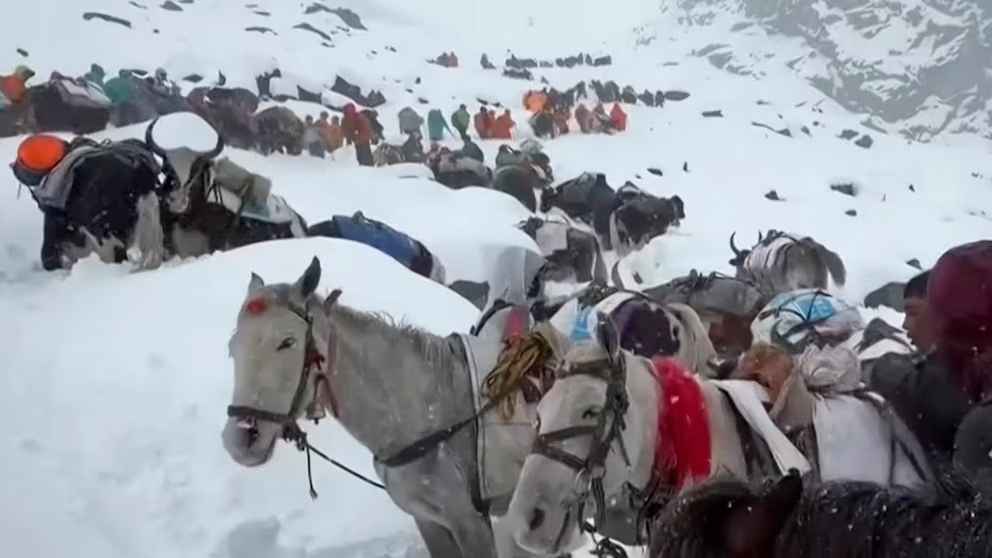
A powerful snowstorm has stranded hundreds of hikers on Mount Everest’s slopes in Tibet during China’s weeklong national holiday, prompting a large-scale rescue mission by authorities. The severe weather hit tourist camps at an altitude of more than 4,900 meters, making conditions extremely difficult for those caught in the storm. Heavy snowfall buried tents and blocked trails, leaving several hikers without shelter or access to safety.
Officials confirmed that around 350 hikers managed to reach a safe meeting point in Tingri County, while rescuers are still in contact with another 200 individuals trapped higher up the mountain. Hundreds of rescue workers have been deployed to clear paths through thick snow, using both manpower and animals to transport stranded tourists down the treacherous terrain. Videos from the scene showed long lines of rescuers and villagers navigating steep, snow-covered trails with horses and oxen.
Read more : China delivers 90 tonnes of supplies as monsoon relief assistance
The storm struck at a time when thousands of people were traveling across China for the national holiday, increasing the number of tourists in high-altitude areas. Rescue efforts have been slowed by subzero temperatures and unstable weather conditions, though authorities said operations would continue until every hiker is safely brought down. So far, no fatalities have been reported in the Everest region.
However, in another mountainous area of Qinghai province, one hiker tragically died from hypothermia and altitude sickness, while 137 others were rescued from dangerous conditions. The challenging terrain, continuous snowfall, and unpredictable weather have complicated rescue operations in both regions, officials said. Emergency teams continue to provide food, medical assistance, and warm clothing to evacuees.
Read more : ‘We stand by China in good and bad times,’ says President Zardari
Mount Everest, known in China as Mount Qomolangma, straddles the border between China and Nepal. While climbers attempt to scale it from both sides, the stranded tourists were located at a lower camp separate from the professional climbers’ base. The region, already prone to natural disasters, experienced a deadly earthquake earlier this year that claimed more than 120 lives, adding to the area’s ongoing challenges.