LVIV, Ukraine — NATO member Poland scrambled fighter jets early Sunday after Russia launched a fresh wave of airstrikes across Ukraine, with missiles and drones raining down on the Lviv region, just miles from the Polish border.
Poland’s Operational Command confirmed that both Polish and allied aircraft were in the air to ensure national air safety, while ground-based air defence systems were placed on the highest alert. “Polish and allied aircraft are operating in our airspace, while radar reconnaissance and air defences have been brought to full readiness,” the command said on X (formerly Twitter).
The heightened alert follows a series of drone incursions and airspace violations across Europe. In September, Poland shot down a suspected Russian drone, while similar sightings in Copenhagen and Munich caused widespread aviation disruptions.
Lithuania also temporarily closed Vilnius airport overnight after reports of multiple unidentified balloons drifting toward the capital.
Flight tracking data from Flightradar24 showed commercial planes rerouting around Lublin and Rzeszow, airports near the Ukrainian border, although Reuters could not independently verify the closures.
Read More: Indonesia School Collapse: Death Toll Rises to 36, Dozens Still Missing in East Java Tragedy
All of Ukraine Under Attack Warning
Ukraine’s Air Force issued nationwide air raid alerts overnight, warning of missile and drone barrages, particularly targeting the Lviv region.
Lviv Mayor Andriy Sadovyi reported that the city’s air defence systems were heavily engaged, fending off successive waves of drones and missiles.
As of 7:30 a.m. (0430 GMT), parts of the city were without power, and public transport was suspended. “It’s dangerous to go outside,” Sadovyi cautioned residents via Telegram.
Reuters witnesses described the sounds of explosions and air defence fire echoing from multiple directions throughout the night.

Casualties and Damage Across Ukraine
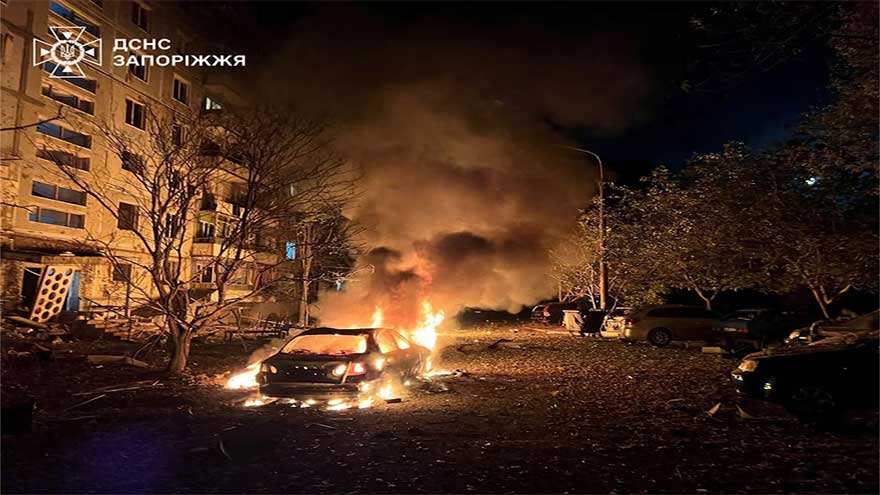
In Zaporizhian, further south, a Russian strike late Saturday killed one person and injured nine, according to Regional Governor Ivan Fedorov. “Apartment blocks and private houses were damaged, cars burned, and windows shattered,” Fedorov said.
More than 73,000 customers were left without electricity following the strikes. The nearby Zaporizhzhia Nuclear Power Plant, Europe’s largest, remains cut off from external power since September 23, heightening fears of a potential nuclear incident.
The UN’s nuclear watchdog has urged Kyiv and Moscow to show “political will” to prevent disaster around the occupied plant.
Background: Intensifying Air War
Russia and Ukraine have ramped up aerial attacks on critical infrastructure, targeting energy and transport facilities as the war grinds on. There has been no immediate comment from Moscow on the latest strikes, but analysts warn that cross-border tension could rise sharply if Russian missiles or drones violate NATO airspace again.