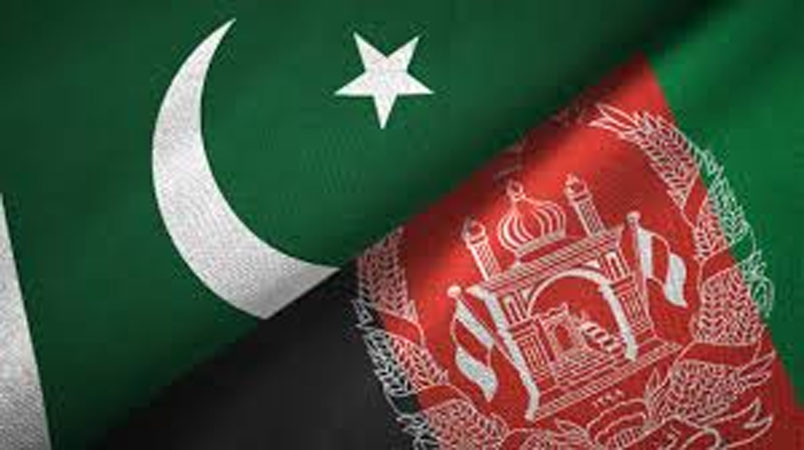
 Speakers at the Pak-Afghan Dialogue 2025 emphasized that the future of Pakistan and Afghanistan should be shaped not by weapons but by ideas, mutual trust and people-centric policies.
The high-level dialogue brought together political leaders, diplomats, academics and civil society members from both countries, who unanimously called for deeper cooperation in education, culture, economy, and counter-extremism efforts.
Coordinator to the Prime Minister on Commerce Rana Ihsaan Afzal highlighted the shared history, civilization, and cultural ties between the two nations, referring to common landmarks such as the Silk Road and the Khyber Pass. “Our people have exchanged values, poetry, and ideas for centuries. It is now time to invest in education, language, culture, literature, music, and healthcare collaboration,” he said. He proposed the establishment of cultural exchange offices to institutionalize these ties.
Chairperson and President of the South Asian Strategic Stability Institute (SASSI) University, Dr. Maria Sultan, stressed the importance of regional economic integration through projects like the China-Pakistan Economic Corridor (CPEC) and the Turkmenistan-Afghanistan-Pakistan-India (TAPI) pipeline.
In her presentation, she said Pakistan’s main concern was the weapons left behind in Afghanistan after the US withdrawal from the country.
She noted that over $7 billion worth of weapons remain unaccounted for, posing a serious threat to Pakistan’s border security.
“Pakistan’s biggest issue is that Afghan soil must not be used for terrorism in Pakistan,” she warned, urging international coordination to track and destroy the missing military equipment.
Afghan Member of Parliament Fawzia Koofi acknowledged Pakistan’s efforts in supporting a stable and prosperous Afghanistan. “Our destinies are linked. We must promote a narrative of common goals and mutual trust,” she stated. She also raised concerns about the lack of internet access across Afghanistan, which she described as a basic necessity in today’s world.
Former Pakistani Ambassador to Afghanistan, Abrar Hussain, emphasized the brotherly ties between the two nations, noting that shared values far outweigh the differences. “Since the 1990s, Pakistan has supported peace initiatives and hosted millions of Afghan refugees regardless of ethnicity or sect,” he said. “It’s time to build bridges and ensure our soils are not used against each other.”
Professor Dr Rasool Bakhsh Rais called for a forward-looking approach. “We must learn from past mistakes and move on. Once Afghanistan forms an inclusive government, its relations with Pakistan will evolve into something more stable and productive,” he said.