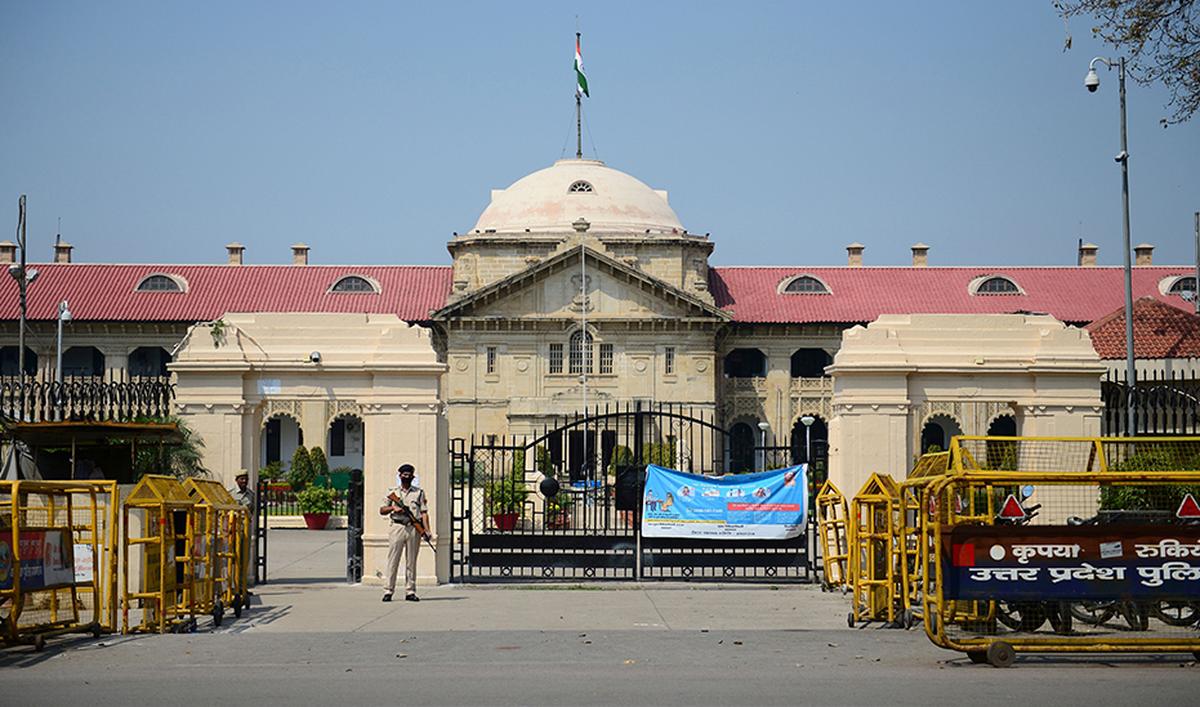
The Allahabad High Court, once known for its legacy of great jurists including Jawaharlal Nehru, is now in the news for a very different reason — an overwhelming backlog of cases.
With more than one million cases pending, it is one of the most burdened courts in India. From property disputes to criminal trials, thousands of people in Uttar Pradesh are stuck in legal limbo for decades.
Take the example of Babu Ram Rajput, 73, a retired government worker. He bought land in 1992, but a legal challenge left his case unresolved for over 30 years. “I just hope my case is decided while I’m still alive,” he says.
The court has a sanctioned strength of 160 judges, but seats are rarely filled. Each judge faces hundreds — sometimes over 1,000 cases a day — giving less than a minute per case. Urgent matters like bail or eviction stays are heard first, while older cases keep getting pushed down the list. Delays in police investigations, repeated adjournments, and poor infrastructure make things worse. Retired judge Amar Saran says the backlog has forced judges into a “cut-grass approach” — issuing short, standard orders just to move files forward.
In April, the court ruled on a rape and murder case that had been pending for 40 years. By then, four of the five convicts had already died. The court admitted it regretted not ruling earlier. Earlier this year, lawyers even filed a petition calling the court paralysed by the shortage of judges. The Supreme Court has also raised alarm, saying the Allahabad High Court’s listing system has completely collapsed.
For people in Uttar Pradesh, the wait is not just long — it is exhausting. The court is based in Prayagraj, but citizens travel from across the state, sometimes hundreds of kilometres, often on short notice. Mr Rajput, who travels 200km from Kanpur for hearings, says: “Many times my case isn’t even heard because other matters take up the whole day.”
The Allahabad High Court’s crisis reflects the wider shortage of judges in India’s judiciary, where millions of cases remain stuck for decades. Until more judges are appointed and reforms are made, justice will remain painfully out of reach for many