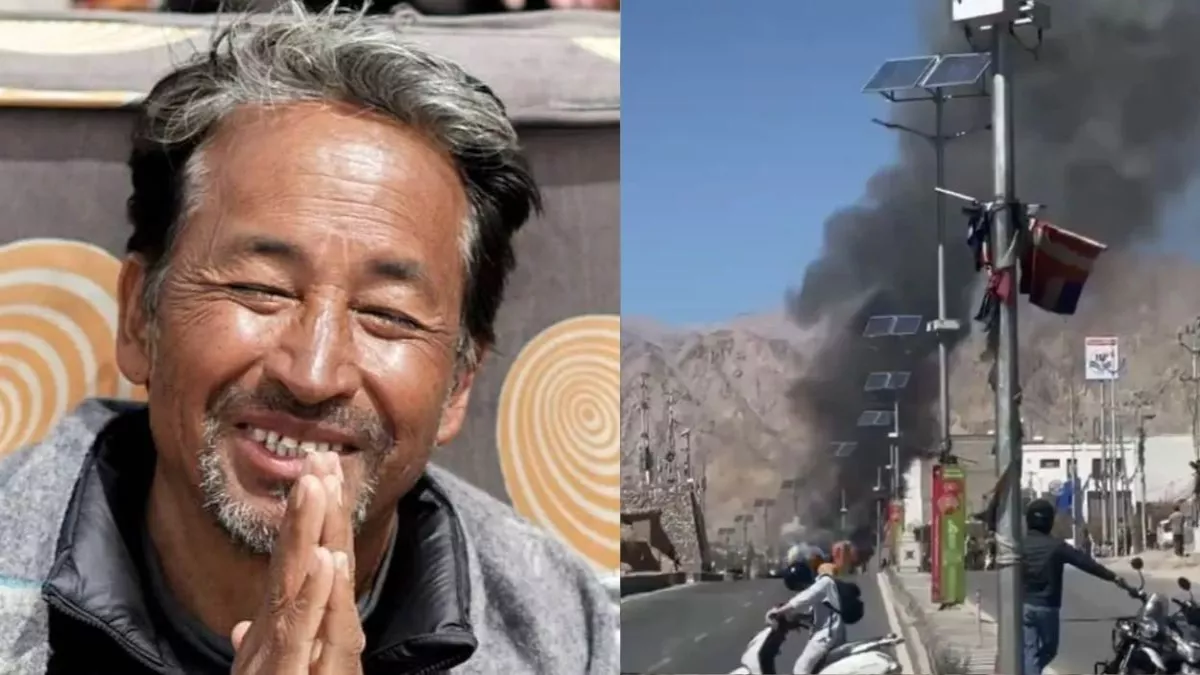
LADAKH — The Himalayan region of Ladakh, already at the center of India-China border tensions, witnessed its bloodiest day on Wednesday when youth-led protests against the Modi government turned violent. At least four protesters were killed and dozens injured after clashes in Leh, the regional capital, as demonstrators set fire to the local office of Prime Minister Narendra Modi’s Bhartiya Janata Party (BJP).
For six years, Ladakhi’s have staged peaceful marches and hunger strikes demanding statehood and constitutional safeguards under India’s Sixth Schedule, which would grant autonomy to the region’s Indigenous population. But on Wednesday, disillusioned Gen Z protesters broke away from peaceful demonstrators, storming government offices and clashing with police.
“This was an outburst of youth, a kind of Gen-Z revolution,” said educator Sonam Wangchuk, who has been leading hunger strikes. Protest leaders said the violence erupted after two elderly activists were hospitalized following two weeks without food, sparking a call for a shutdown.
The Indian home ministry confirmed police opened fire on protesters, calling them an “unruly mob” incited by Wangchuk’s references to Arab Spring–style movements. Wangchuk denied encouraging violence, though he had warned youth anger could boil over.
Ladakh’s demand for statehood stems from the Modi government’s 2019 decision to revoke Jammu and Kashmir’s autonomy and downgrade Ladakh into a federally governed territory without its own legislature. Residents argue the move stripped them of democratic rights and left youth, 26.5% of whom are unemployed despite high literacy rates, without opportunities.
“This is the recipe of social unrest: keep youth unemployed and then snatch their democratic rights,” Wangchuk warned.
The protests carry wider implications. Ladakh borders China along the Line of Actual Control, where Indian and Chinese troops clashed in 2020. Analysts say the region’s strategic importance makes the unrest particularly troubling for New Delhi.
“The government’s 2019 decision is returning to haunt India,” said political analyst Siddiq Wahid. “For decades Kashmir was the center of discontent. Now Ladakh has been pushed to that edge too.”