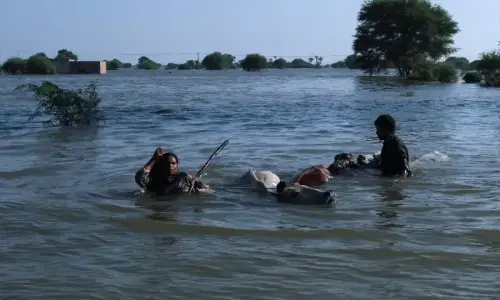
The flood threat in Pakistan remains severe as rivers continue to swell, forcing evacuations and devastating communities. Punjab is facing massive displacements as the Sutlej, Ravi, and Chenab rivers overflow, submerging thousands of villages. Authorities confirmed over 4.2 million people have been affected, with nearly half already relocated. Relief operations are stretched thin across multiple districts.
At Panjnad Headworks, flows crossed 668,000 cusecs, prompting urgent evacuations in Alipur. A protective dyke in Shujabad collapsed again, worsening the crisis. Sindh’s Guddu and Sukkur barrages are also recording medium floods with flows exceeding 400,000 cusecs. Officials confirmed thousands have fled homes in Muzaffargarh, Jalalpur Pirwala, and Khanewal as crops and villages disappeared under water.
Rescue operations are ongoing, but tragedies continue. Boats carrying evacuees capsized in Bahawalnagar and Jalalpur Pirwala, leaving children among the missing. In Muzaffargarh, three teenagers fell into floodwaters, killing one. Officials reported more than 362,000 people evacuated by rescue boats in recent days. Relief camps, medical units, and veterinary teams have been set up to support displaced families.
Authorities are also bracing for more challenges downstream. Mangla Dam is nearly full, while Tarbela has reached capacity, increasing pressure on Sindh and Balochistan. The NDMA chairman said Pakistan is facing the last monsoon spell, and water levels may stabilize in coming days. Still, Balochistan has been hit with new rains, raising fears of flash floods and spillways being opened at Hub Dam.
Rescue teams and heavy machinery are positioned in Nasirabad and other border districts of Balochistan. Officials assured that embankments will not be breached without approval from both Sindh and Balochistan governments. Yet, the flood threat remains critical, with over 79 lives already lost and millions at risk if waters rise further.