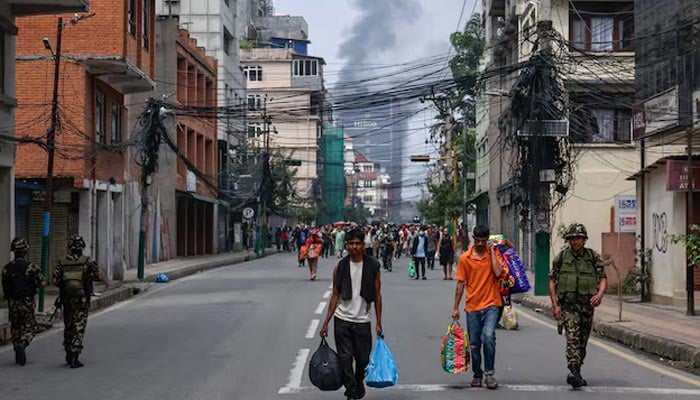
Nepal’s army resumed crucial talks with young “Gen Z” protesters on Thursday to decide a new interim leader after violent demonstrations forced the prime minister to resign. Army spokesperson Raja Ram Basnet confirmed that initial discussions had started and would continue throughout the day. Soldiers patrolled Kathmandu’s quiet streets to prevent further unrest following the country’s worst protests in years. The demonstrations erupted after a social media ban angered thousands of young Nepalis.
The protests turned deadly as police fired tear gas and rubber bullets to disperse crowds, leaving 30 people dead and 1,033 injured, according to Nepal’s health ministry. Authorities rolled back the social media ban after 19 initial deaths, but public anger continued to grow. Prohibitory orders remain in Kathmandu and nearby areas for most of the day to maintain order. Meanwhile, airport officials confirmed that international flights are operating as scheduled despite the tense situation.
The movement, widely known as the “Gen Z” protests, has been led by young Nepalis frustrated with government corruption and the lack of economic opportunities. Their anger has brought unprecedented pressure on the country’s political establishment. Protesters have called for former Chief Justice Sushila Karki to serve as the interim prime minister. Karki confirmed her willingness to accept the role after being approached by demonstrators seeking credible leadership.
Several government buildings and private properties were set ablaze during the unrest, including the supreme court, ministers’ residences, and former Prime Minister Oli’s private home. In Pokhara, a popular tourist destination, multiple hotels were torched, while the Hilton hotel in Kathmandu was also damaged. Business owners have urged the government to restore calm quickly, fearing long-term economic harm to Nepal’s tourism industry.
The army has assured citizens it is working to stabilize the situation and avoid further bloodshed. Officials emphasized that open dialogue is essential to resolving the crisis peacefully and ensuring a smooth political transition. The ongoing negotiations between the protesters and the military are seen as critical for Nepal’s democratic stability. Political analysts warned that failure to reach an agreement could prolong unrest and deepen public distrust in government institutions.