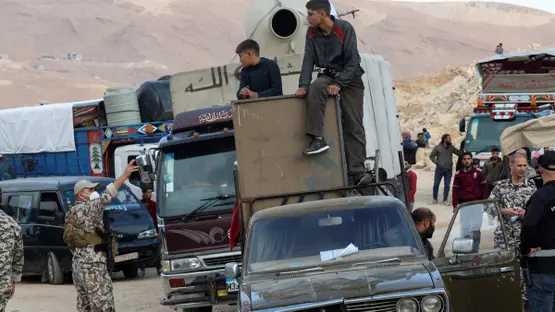
More than 200,000 Syrian refugees have returned home from Lebanon this year after the fall of longtime ruler Bashar al-Assad, the United Nations confirmed on Tuesday. The Syrian civil war, which began in 2011 following Assad’s brutal crackdown on anti-government protests, forced millions of people to flee their homes, leaving half of Syria’s population displaced internally or abroad. However, the ouster of Assad by Islamist forces on December 8 sparked renewed hope among refugees, pushing many families to take the risk of going back.
Lebanese authorities recently introduced a plan to encourage voluntary returns by offering $100 in financial assistance and waiving fines for those who agreed not to return as asylum seekers. This initiative has led to a growing wave of Syrians heading back to their cities, particularly Hama, Homs, and Aleppo, although the majority of refugees remain in Lebanon where humanitarian needs are rising. Despite these measures, living conditions remain tough for those still residing in refugee camps as international aid budgets continue to shrink.
Kelly Clements, deputy high commissioner at the UN refugee agency (UNHCR), stated that the number of returnees was “increasing very quickly” but emphasized that the UNHCR was not actively encouraging returns. She stressed that it was a personal choice for each family to make based on their circumstances, since some regions in Syria were peaceful while others remained unsafe. Meanwhile, Lebanese officials estimate that their country still hosts around 1.5 million Syrian refugees, with the UN registering more than 755,000.
UNHCR has been providing support to returnees in the form of small housing repairs, limited cash assistance, and essential relief supplies, though large-scale reconstruction projects remain beyond its financial capacity. Around 80 percent of Syrian homes were damaged during the war, with one in three families needing urgent shelter assistance. Furthermore, the UNHCR revealed that its 2025 plan had only received one-fifth of the funding required, making it increasingly difficult to address the overwhelming needs of displaced families.
Since Assad’s ouster, more than two million Syrians, including both refugees and internally displaced people, have gone back to their areas of origin, according to the UN. However, the crisis is far from over as an estimated 13.5 million Syrians remain displaced either within the country or abroad. The new authorities now face the enormous challenge of rebuilding a shattered economy and repairing destroyed infrastructure, while most citizens continue to live below the poverty line.