The U.S. labor market is facing deep strain as more than 1.2 million immigrants vanished from the workforce between January and July, according to preliminary Census Bureau data analyzed by Pew Research Center. Experts warn this sudden decline is disrupting farms, construction sites, and service industries that heavily depend on immigrant labor. With immigrants making up nearly one-fifth of America’s workforce, the fallout is expected to ripple across food supply chains, housing projects, and even health care systems nationwide.
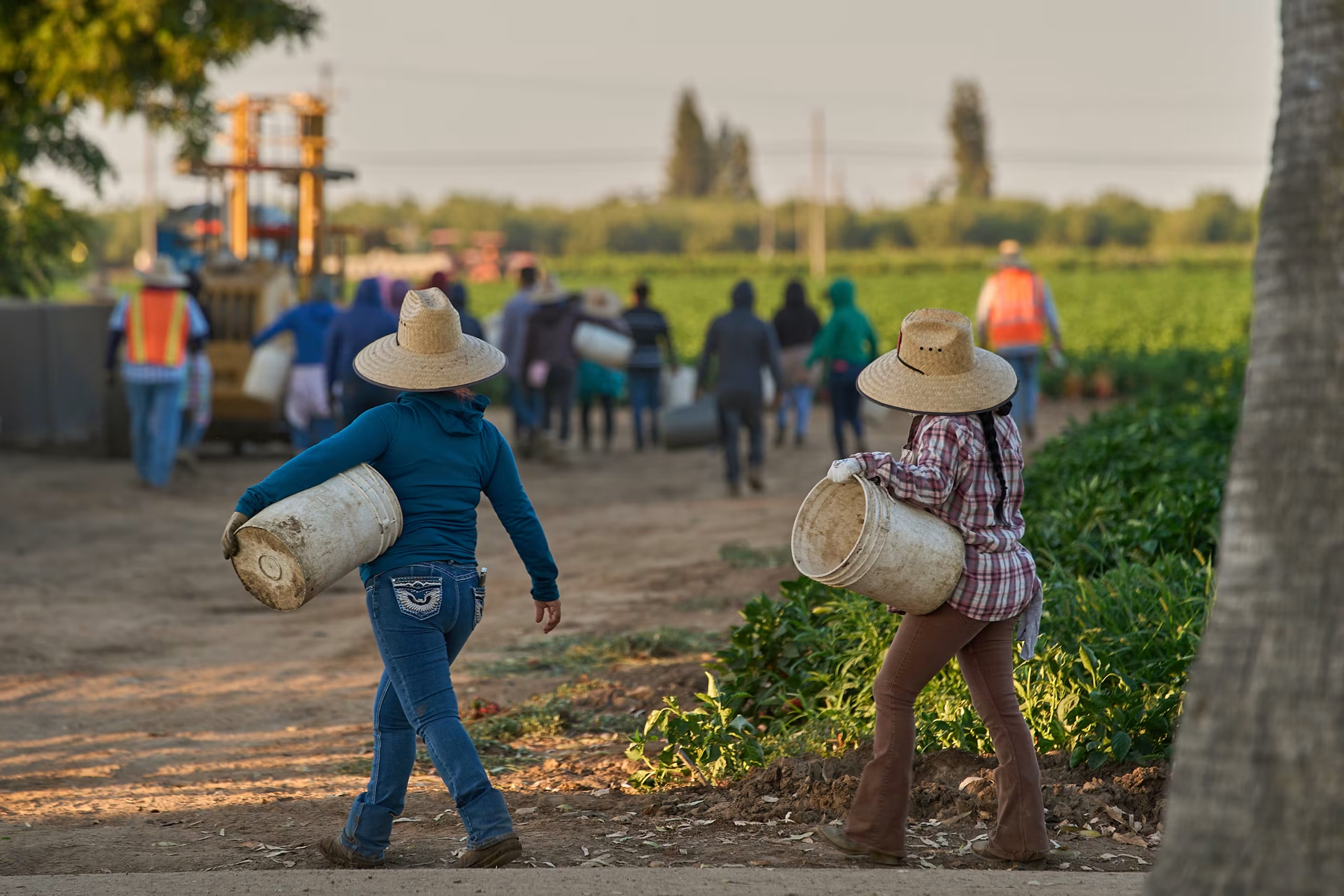
Farmers in California’s Central Valley are already feeling the shock as immigration enforcement actions have disrupted their harvest seasons. Workers describe living in fear of being stopped, questioned, or detained by U.S. Immigration Control and Enforcement officers during routine commutes or at their job sites. Families like Lidia’s, who has spent more than two decades in the country, fear deportation despite having established roots and raising children born in the United States. This climate of uncertainty is leaving entire communities anxious about their future.
The agricultural sector has been among the hardest hit, with crops reportedly left to rot due to labor shortages caused by farmworker arrests and workplace raids. In Texas, corn and cotton producers worry that fewer available hands will bring harvest delays and greater losses. Advocacy groups note that raids in May during peak melon season left watermelons and cantaloupes unharvested, devastating farmers financially. At the same time, smaller labor crews have slowed production, creating bottlenecks across the industry that threaten to push food prices higher.
Construction sites across major U.S. metropolitan areas are also stalling under the weight of reduced immigrant participation. Data shows steep job losses in regions like Riverside, San Bernardino, and Los Angeles, where thousands of positions disappeared within months. Contractors report they want to hire but cannot find enough workers, with many pointing to tougher immigration enforcement as a major disruption to labor supplies. Without immigrant workers, many projects now sit unfinished, undermining local economies and slowing growth in housing and infrastructure development.
The impact goes beyond farms and construction, stretching into essential health care services where immigrants make up a large portion of home health aides. Labor advocates warn millions of aging Americans may soon struggle to find caregivers if immigration crackdowns continue at the current pace. Union leaders argue that shortages in caregiving, food production, and construction highlight the country’s deep reliance on immigrant workers. They caution that harsher immigration enforcement may create crises in industries critical to both public well-being and the nation’s economy.
As the decline in immigrant workers continues, experts highlight the long-term risks for U.S. job growth, inflation, and overall economic stability. Historically, immigrants have accounted for half of new job growth, filling roles often overlooked by American-born workers. Yet under tightened policies, the inflow of new workers has nearly stopped, shrinking the nation’s labor supply at a crucial moment. Unless adjustments are made, economists warn, the shortage could worsen existing labor gaps, driving up costs while slowing the nation’s economic recovery.