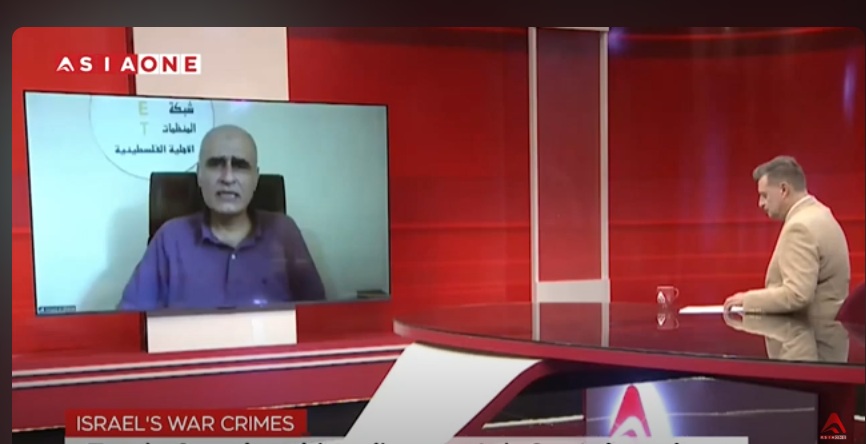
A dramatic moment unfolded on international television Monday when a live Asia One News report from Gaza was violently interrupted by a series of powerful Israeli airstrikes. The correspondent was midway through a broadcast when thunderous blasts shook the ground, startling the news crew and forcing them to take cover. Viewers around the world witnessed the explosions in real time, underscoring the grave danger facing civilians, aid workers, and journalists in the region.
The Israeli Defense Forces (IDF) quickly confirmed that it had carried out the strikes during the broadcast, describing the operation as a “precision strike” aimed at Hamas facilities, including weapons storage and production sites. According to an IDF spokesperson, the strikes were launched in response to what officials described as an “imminent threat” from militants in Gaza. Israeli authorities insisted that every effort was made to minimize civilian casualties, stressing that the targets were carefully selected.
However, the scale of the bombardment and its timing—coinciding with a live television broadcast—sparked alarm and raised questions about the risk of a wider conflict. Images of explosions erupting behind a working journalist have since circulated globally, amplifying calls for de-escalation.
Palestinian health officials reported casualties soon after the strikes, with paramedics rushing to reach people buried under rubble. Emergency services struggled to keep up with the rising number of wounded, while hospitals, already at breaking point due to months of shortages, warned they could not cope with the surge of injured patients. Aid organizations operating in Gaza said the latest violence has further worsened humanitarian conditions, leaving families displaced, basic supplies running out, and electricity cut across many neighborhoods.
The live disruption of Asia One’s coverage has intensified diplomatic concern. United Nations officials, along with leaders from Europe, the Middle East, and beyond, have urged both Israel and Palestinian groups to step back from escalation. The UN Secretary-General issued a statement calling for “immediate restraint and dialogue,” warning that continued airstrikes and retaliation could drag the region into a much larger crisis.
This latest strike is part of a familiar cycle of confrontation in Gaza, but its broadcast in real time on Asia One has magnified its impact on the global stage. Analysts say the images will likely add pressure on both sides, as well as on international mediators, to avoid a rapid slide into all-out conflict.
Asia One News has pledged to continue its coverage despite the dangers faced by its team on the ground. “Our duty is to bring the world the reality of what is happening here,” the network said in a statement, praising the bravery of its correspondent and crew. The channel promised ongoing updates as the situation develops, stressing the importance of keeping the world informed during such volatile times.
As the bombs fall and rescue workers dig through rubble, Gaza’s population—already burdened by years of blockade, shortages, and repeated wars—remains at the heart of the crisis. The live interruption of Asia One’s broadcast has made clear to millions of viewers worldwide the immediacy and intensity of the conflict, leaving the international community anxiously watching, hoping for calm, yet bracing for what could become a far-reaching regional confrontation.