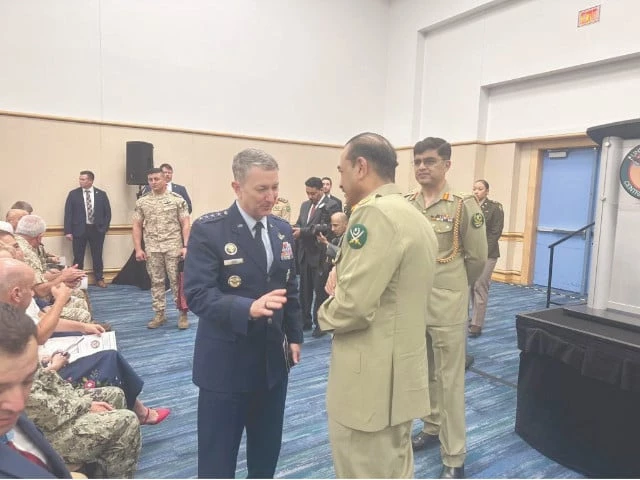
Field Marshal Syed Asim Munir praised US President Donald Trump for helping prevent several wars, including brokering a ceasefire between Pakistan and India in May. The army chief, on an official visit to the United States, held meetings with senior American political and military leaders as well as members of the Pakistani diaspora. He described overseas Pakistanis as a “brain gain” rather than a brain drain, noting their global connections and professional expertise could accelerate Pakistan’s growth. Munir urged expatriates to invest resources and mentorship in Pakistan, saying national progress depends on strong international partnerships. He highlighted that 64% of Pakistan’s population is under thirty, offering a major advantage for future development. The COAS stressed that an expected Pakistan–US trade deal could boost investor confidence, create jobs, and open economic opportunities across multiple sectors.
On security matters, Munir stated that Pakistan shows no tolerance for terrorists and will relentlessly pursue them to ensure justice and protect citizens from violent threats. He voiced concern over India’s Research and Analysis Wing allegedly being involved in acts of terrorism, calling such actions a serious threat to regional peace. The army chief warned that Pakistan would respond swiftly and decisively to any Indian aggression, reaffirming the military’s full readiness to defend sovereignty. He reiterated that Jammu and Kashmir is an internationally recognised dispute, not an internal Indian matter, echoing Quaid-i-Azam Muhammad Ali Jinnah’s description of it as Pakistan’s “jugular vein.” During his visit, Munir attended Centcom leadership change ceremonies in Tampa and praised outgoing commanders for strengthening bilateral military cooperation.
Munir also met US Chairman of the Joint Chiefs of Staff General Dan Caine to discuss professional matters and invited him to visit Pakistan. On the sidelines, he held talks with defence chiefs from friendly nations to deepen military cooperation, build trust, and explore joint training opportunities. Observers note that renewed military-to-military contacts could open doors for broader cooperation in regional security, intelligence sharing, and counterterrorism efforts, improving crisis coordination. He expressed confidence in continued collaboration under the new Centcom leadership and emphasised the need for closer exchanges and programmes. Munir urged overseas Pakistanis to remain optimistic about their country’s future and to play an active role in attracting investment.
He observed a shift in Washington’s approach, saying the current US administration appears more open to engaging Pakistan on trade and security matters. Munir added that many US officials now view Pakistan as a willing partner, countering earlier perceptions that strained ties. He cautioned that tensions with regional partners could undermine stability and stressed the importance of regular dialogue to avoid misunderstandings. The COAS encouraged both countries to focus on common challenges such as terrorism, climate change, economic instability, and humanitarian crises. He also called for a balanced US perspective on regional actors, arguing that constructive engagement with Pakistan supports long-term stability.
The visit comes just two months after Munir’s high-profile meetings with Trump and senior US officials, signalling a potential recalibration in Islamabad–Washington relations. Analysts believe the warming ties are partly due to growing American dissatisfaction with India’s diplomatic stance, which some US officials view as arrogant and less receptive to concerns. Munir’s engagements underscore Pakistan’s intent to strengthen military and economic cooperation with the United States while maintaining readiness to respond to regional security challenges. Both sides appear committed to keeping communication channels open, which could pave the way for enduring peace and mutual prosperity.