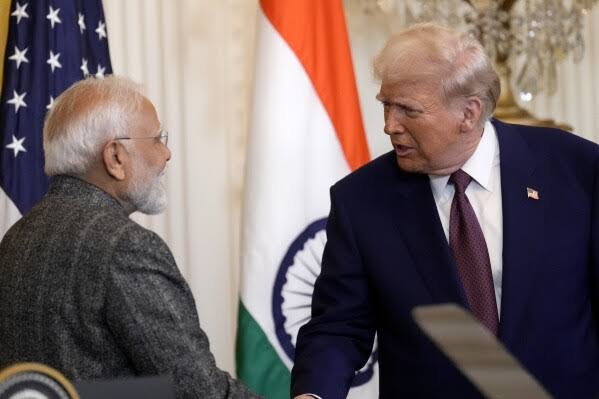
A tense phone call over the Pakistan–India ceasefire has reportedly fueled the breakdown in relations between Indian Prime Minister Narendra Modi and former U.S. President Donald Trump. Bloomberg reported that the 35-minute call took place during June’s G7 summit in Canada, where Modi rejected Trump’s repeated claims of brokering peace. Modi insisted the ceasefire was arranged directly between India and Pakistan through military channels.
The strain deepened when Trump invited Pakistan’s Army Chief, General Asim Munir, to the White House soon after the conflict. Indian officials said the move was seen as legitimizing Pakistan’s military, which New Delhi accuses of backing militant groups. Fearing Trump might push for a Modi–Munir meeting, Modi declined an invitation to stop at the White House and proceeded with a scheduled visit to Croatia instead.
Relations worsened as Trump later imposed a 25% tariff on Indian goods, citing New Delhi’s Russian oil imports. The new duties, effective in three weeks, could raise tariffs on some Indian exports to as high as 50%, making them among the steepest on any U.S. trading partner. Trade talks between the two countries had already stalled over U.S. demands for greater access to India’s agricultural and dairy markets.
In his first public remarks since the tariffs, Modi vowed not to compromise on protecting India’s farmers, dairy industry, and fishermen. He acknowledged there may be a “personal price” for his stance but said he was prepared to pay it. The agricultural sector remains a powerful political force in India, influencing government trade policies.
The United States remains India’s largest trading partner, with $87.4 billion worth of Indian goods shipped to the U.S. in 2024. But with Washington and New Delhi now at odds, analysts warn the fallout from the phone call and subsequent trade clash could mark a turning point in bilateral ties, even as both nations face rising competition from China.