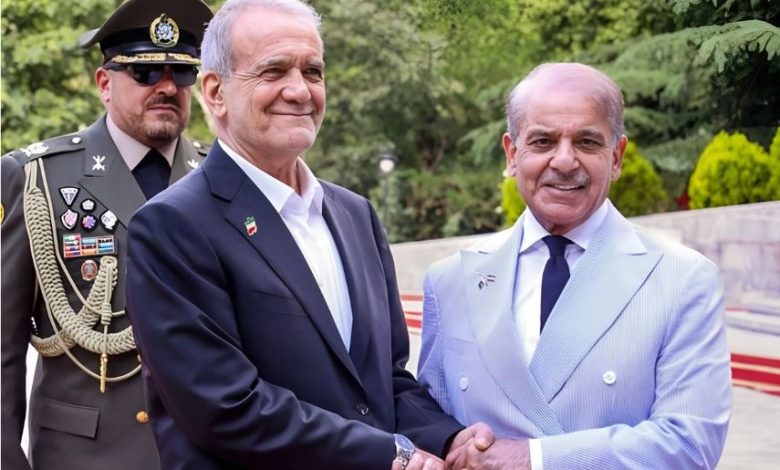
Iran’s President Masoud Pezeshkian is arriving in Islamabad today for a two-day state visit, marking his first official trip to Pakistan since assuming office. The visit comes at the invitation of Prime Minister Shehbaz Sharif and aims to strengthen the brotherly ties between the two neighbouring nations. President Pezeshkian will be accompanied by a high-level delegation, including Iranian Foreign Minister Seyyed Abbas Araghchi and several senior ministers.
During his stay, President Pezeshkian is scheduled to meet President Asif Ali Zardari and hold delegation-level talks with Prime Minister Shehbaz Sharif. These meetings are expected to focus on enhancing bilateral trade, improving border cooperation, and boosting economic collaboration. In addition, the visit will provide both countries an opportunity to discuss key regional developments and further solidify political and cultural ties.
According to Iranian Political Adviser Mehdi Sanai, the president will also engage with cultural and business leaders during his visit. He emphasized that Iran and Pakistan share strong relations that span across political, economic, religious, and cultural sectors. Moreover, discussions will likely explore ways to increase bilateral trade from the current $3 billion and promote cross-border economic growth.
Notably, this marks the second visit by an Iranian president to Pakistan in less than two years. In April 2024, late President Ebrahim Raisi visited the country just weeks before his tragic death in a helicopter crash. That visit, too, focused on trade, peace efforts in Gaza, and regional connectivity, laying the groundwork for ongoing cooperation between the two nations.
Earlier this year, Prime Minister Shehbaz also travelled to Iran in May, where he met Supreme Leader Ayatollah Ali Khamenei and President Pezeshkian. Their talks included discussions on regional peace, trade, and expressing gratitude for Iran’s support during Pakistan’s conflict with India. Pezeshkian’s current visit is expected to build on that momentum and push for deeper strategic ties.