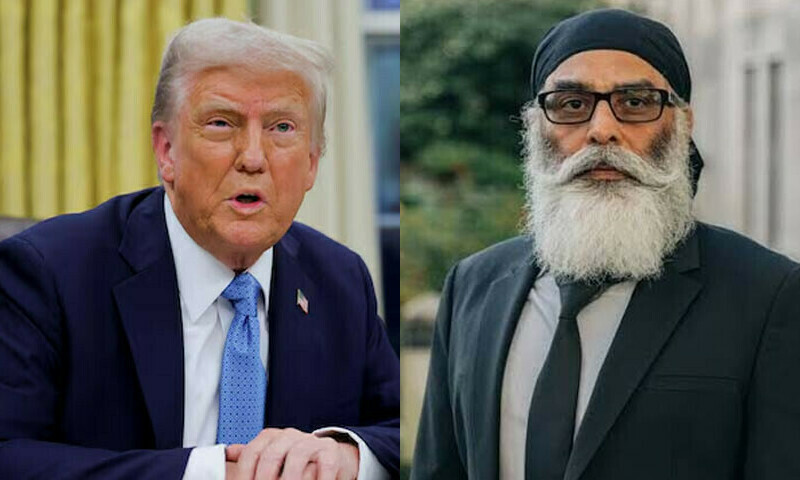
U.S. President Donald Trump has delivered a major diplomatic blow to India by writing a letter to Gurpatwant Singh Pannun, leader of the pro-Khalistan group “Sikhs for Justice.” In the letter, Trump reaffirmed his commitment to defending the rights and security of American citizens, while promoting U.S. values above all. The letter has triggered significant political and diplomatic reactions just weeks before a Khalistan referendum scheduled for August 17 in Washington.
Pannun, a vocal advocate for a separate Sikh homeland, shared Trump’s letter on social media platform X. The letter highlights Trump’s America-first stance, stating that “when America is safe, the world is safer.” Trump also emphasized he would never stop fighting for the rights of U.S. citizens. His remarks have been widely interpreted as indirect support for the pro-Khalistan movement, sparking debate in political and international circles.
BREAKING NEWS
President Trump’s Letter to SFJ General Counsel:
AMERICA WILL DEFEND ITS VALUES, ITS PEOPLE.
Ahead of August 17 Khalistan Referendum Voting in Washington DC — President Trump responds to
SFJ’s campaign with the White House to:— CHECK Modi’s assassination… pic.twitter.com/EARodQaZfW
— Gurpatwant Singh Pannun (@SFJGenCounsel) July 28, 2025
The timing of the letter adds weight to its implications. With the Khalistan referendum just weeks away, this message is seen as highly symbolic and potentially influential. Trump’s letter also covers key policy points on trade, tariffs, defense spending, and the safeguarding of core American values. These themes align with his long-standing political message during past campaigns.
This is particularly troubling for India, where the Modi government has labeled Pannun a terrorist since 2020. Trump’s gesture, therefore, is being viewed in India as a serious diplomatic setback. Despite India’s continued efforts to suppress the Khalistan movement globally, this incident underscores the movement’s growing international attention and legitimacy.
Lastly, the letter adds to a history of strained U.S.-India diplomatic moments under Trump. He has previously claimed to mediate ceasefires between Pakistan and India on 27 occasions, often without India’s consent. This latest move could escalate tensions further, as India sees it as a direct challenge to its internal policy and global image.