
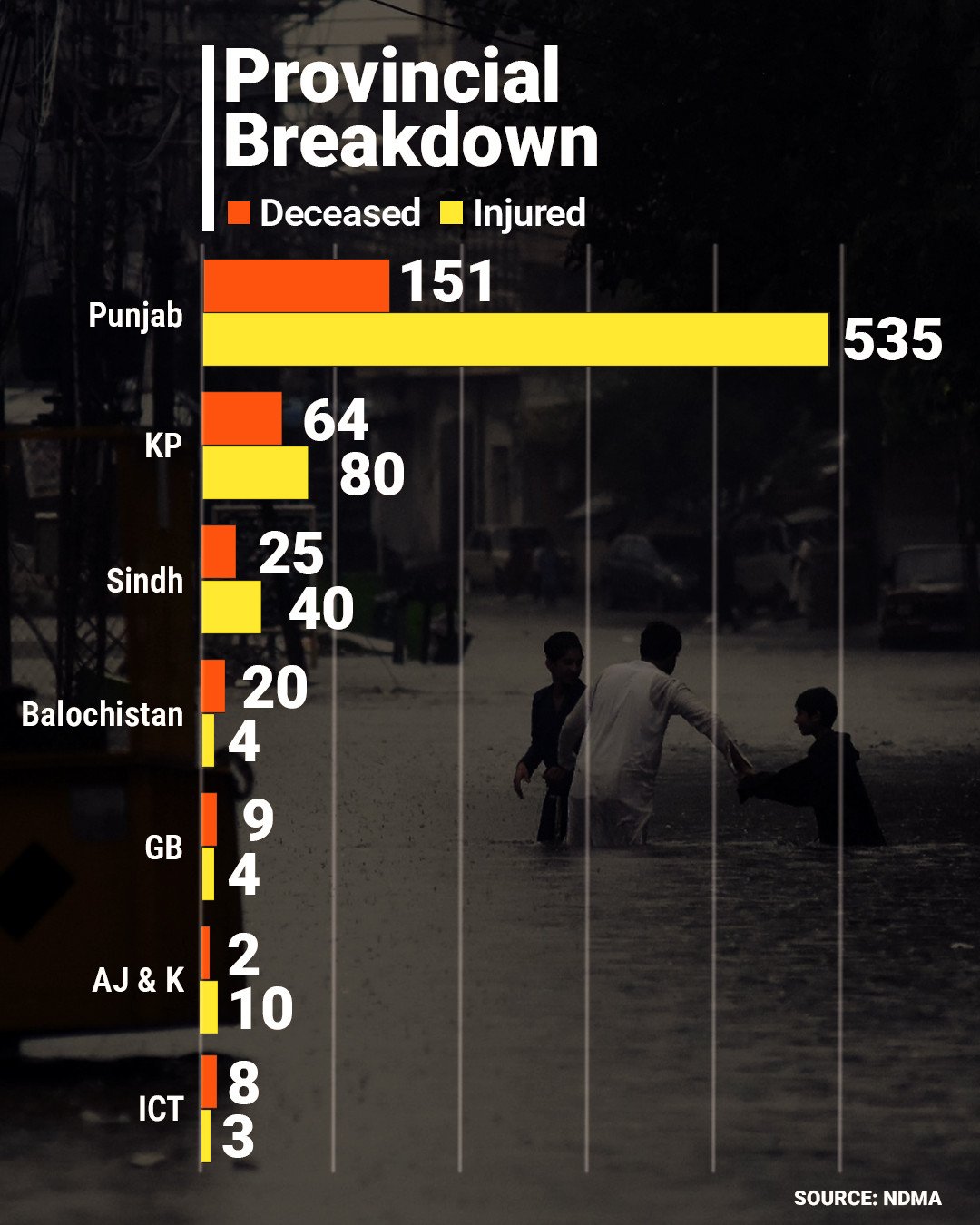
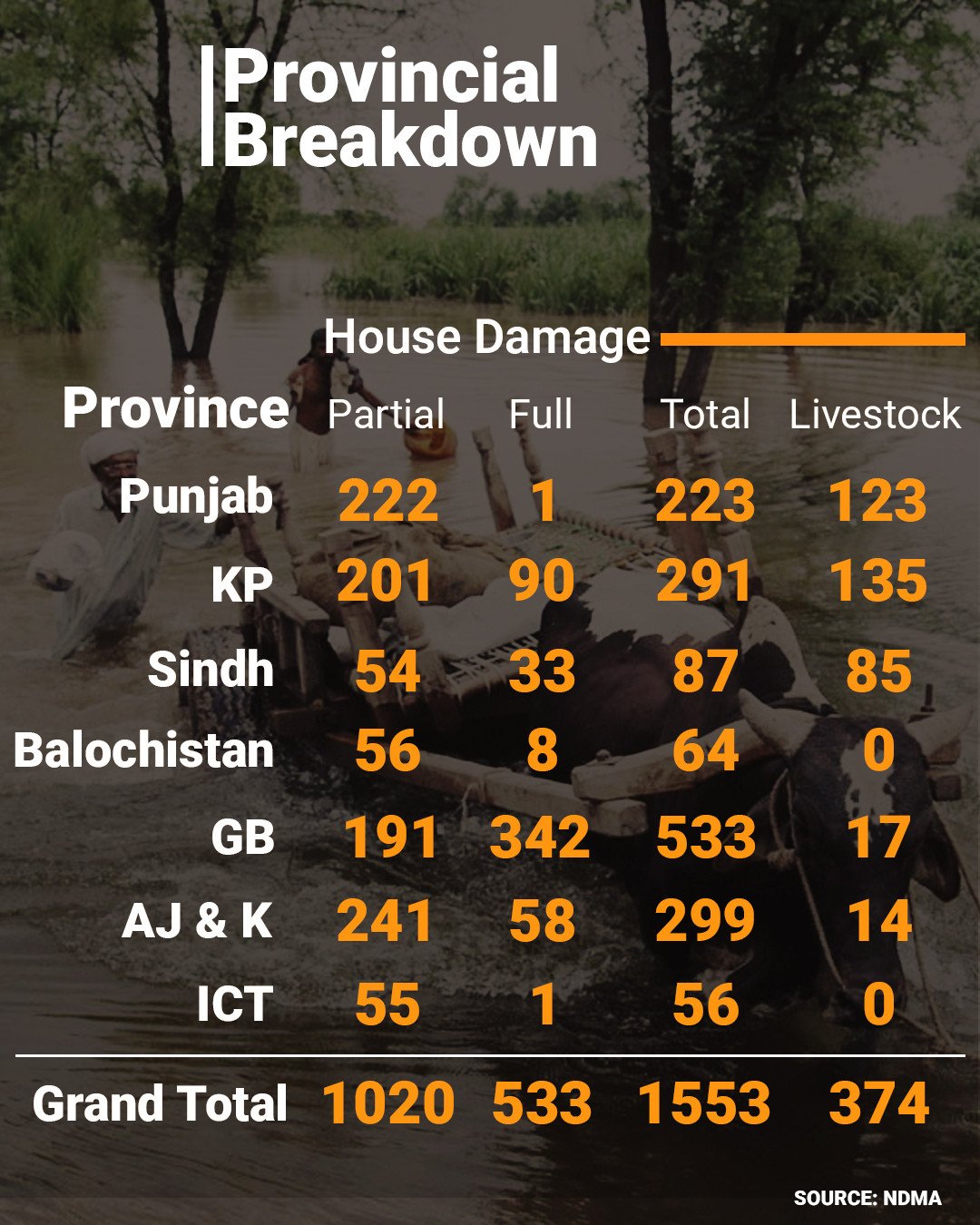
The monsoon floods that began on June 26 have taken a heavy toll on Pakistan, claiming at least 279 lives and injuring 676 people, according to the National Disaster Management Authority (NDMA). Seasonal rains caused widespread damage, destroying 1,553 homes and killing 374 livestock. Punjab remains the worst-hit province with 151 deaths and 535 injuries, followed by Khyber Pakhtunkhwa (K-P), which recorded 64 fatalities and 80 injured.
Meanwhile, Gilgit-Baltistan faced the most extensive destruction to property, with 533 houses either damaged or completely destroyed. Azad Jammu and Kashmir (AJ&K) reported 299 damaged homes, while K-P and Punjab faced damage to 291 and 223 houses, respectively. Livestock losses were also highest in K-P and Punjab, which lost 135 and 123 animals, respectively, to the disaster.
So far, rescue teams have carried out 148 relief operations across different regions. Punjab alone conducted 128 of these missions, while the remaining operations took place in K-P, Sindh, and other areas. However, no rescue activities were reported in AJ&K. Despite the challenging situation, authorities continue working round the clock to manage the crisis.
In addition to current losses, the NDMA has issued fresh flood alerts for parts of Gilgit-Baltistan and AJ&K, warning of heavy rainfall through Thursday. Areas such as Gilgit, Skardu, Hunza, Shigar, Muzaffarabad, Neelum Valley, and Bagh are expected to experience intense downpours, raising the risk of flash floods and landslides in hilly terrain.
Chitral Valley, including towns like Buni and Reshun, may see rising river levels due to a mix of rainfall and glacial melt. Urban flooding could also hit Muzaffarabad and Bagh. In response, the NDMA has directed all provincial and local authorities to stay alert, keep rescue equipment ready, and take all possible preventive measures.
To avoid further disaster, the NDMA is urging Provincial Disaster Management Authorities (PDMAs) and local administrations to respond quickly to emerging threats. Timely action, preparedness, and coordination among departments are now crucial as the country continues to face the brunt of extreme weather.