A New Political Divide: Time, Not Just Ideology
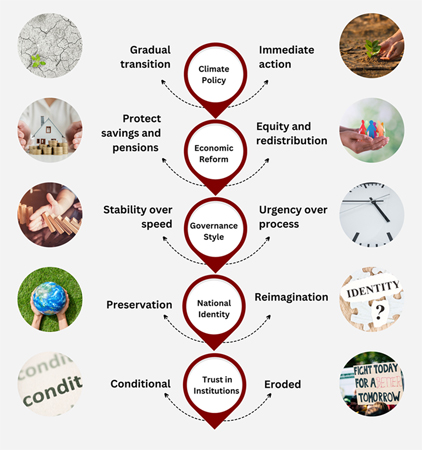
Around the world, democracies are fracturing – not just between left and right, or liberal and conservative, but between generations shaped by different experiences of time. Older generations, grounded in memory, are turning toward preservation and protection. Younger generations, driven by anticipation and fear of what lies ahead, are demanding urgent and sweeping change.
This divide is no longer theoretical. It is shaping revolutions, elections, and the breakdown of political consensus – tearing at the heart of democratic governance
 These divergent timelines lead to political paralysis. One side sees change as threat.
The other sees delay as disaster
Populism and Anarchism: Two Faces of Democratic Breakdown
Case Study: Pakistan – A Nation Between Two Fires
Pakistan is a live example of this time-based rupture. Older generations, shaped by national trauma, war, and military rule, support strongman politics and institutional continuity. Youth, alienated by a corrupt status quo and lack of opportunity, increasingly reject all mainstream parties and are drawn toward symbolic figures, street action, or digital activism.
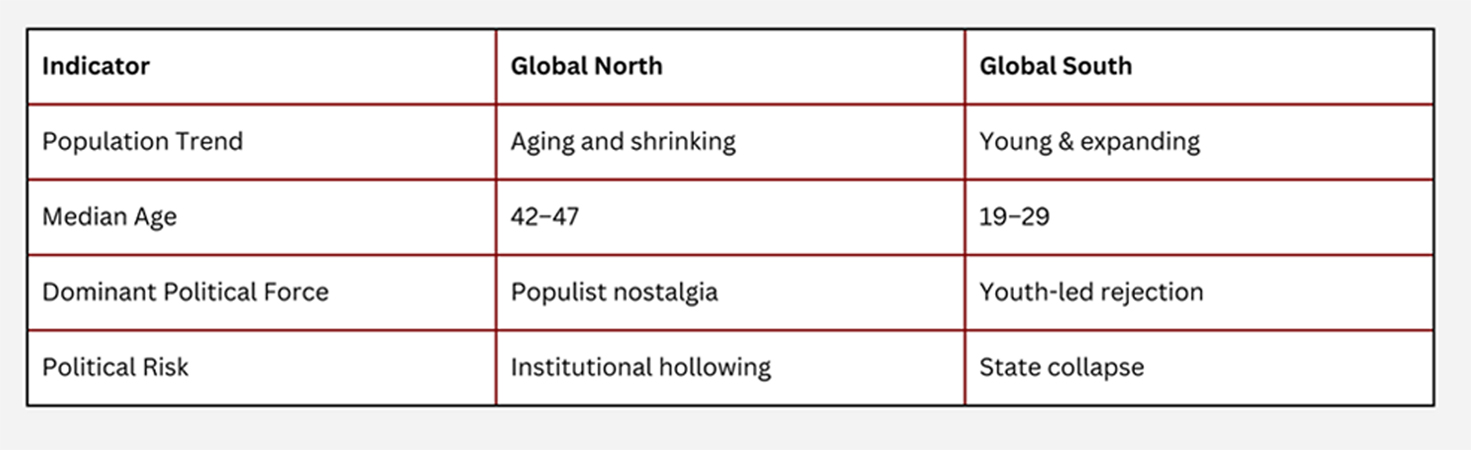
In much of the Global North, aging populations are turning toward populism, clinging to nostalgic visions of national identity and cultural certainty. Former US President Donald Trump’s “Make America Great Again” is a clear example – a backward-looking promise to restore a mythical era of order and strength. Populism offers comfort through imagined memory.
In the Global South, where populations are younger and growing, a different reaction is emerging: anarchism – the widespread rejection of existing political systems. Former Pakistani Prime Minister Imran Khan’s call for a “New Pakistan” began as reform but evolved into a movement marked by anti institutional rage and street-driven confrontation. For many young people in these countries, the state is not failing – it has already failed.
Both reactions destabilize democracy. Populism corrodes it from
within. Anarchism risks dismantling it entirely.
Demographics Drive the Divide
This generational rift is not random. It is rooted in demographic trajectories.
In the Global North, populations are aging and shrinking. Older citizens make up a growing share of voters, and their political instincts lean toward preservation. In contrast, the Global South is experiencing a youth bulge. In countries like Nigeria, India, Egypt, and Pakistan, over half the population is under 30. But with broken institutions, high unemployment, and climate instability, this youth majority often finds itself shut out of formal politics – fueling frustration, protest, and rebellion.
Final Word: Democracy Between Two Clocks
Democracy is being pulled apart by two timelines. One is moving backward, toward imagined greatness. The other is rushing forward, desperate for reinvention. Neither alone can sustain democratic legitimacy.
n The past cannot govern the future.
n The future cannot erase the past.
n And democracy cannot survive unless it reconciles both –
before it loses them entirely
The demographic time bomb is not in the future. It is already reshaping politics

Pakistan’s democracy is caught between a generation seeking order and one rejecting it.
One romanticizes the past. The other sees no future in the present.
The Real Crisis: Time Becomes Ungovernable
What we are witnessing is not just polarization, but temporal fragmentation. Democratic systems were designed to balance competing ideologies – not competing perceptions of time. Today, memory-driven electorates demand stability and preservation, while future-oriented youth call for reinvention.
The result is gridlock, radicalization, and institutional decay.
Unless democracies evolve to govern across generations, the system itself becomes unviable.
These divergent timelines lead to political paralysis. One side sees change as threat.
The other sees delay as disaster
A Cross Generational Democratic Compact
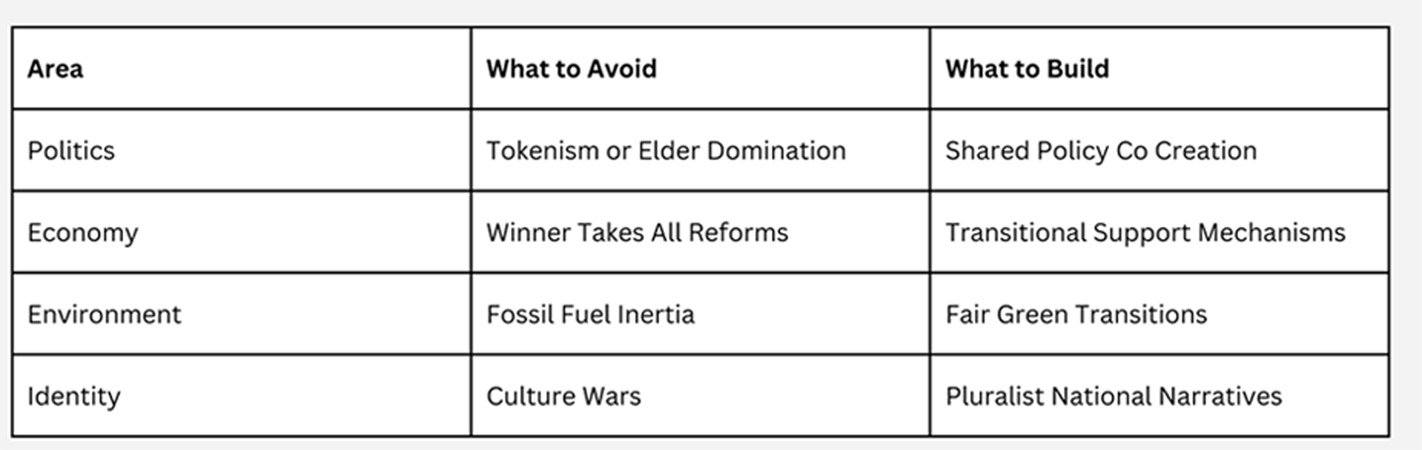
To navigate this divide, democracies must adapt institutions that reflect the urgency of youth and the caution of experience. This includes meaningful youth participation in policy, institutional modernization, new political narratives that move beyond nostalgia or utopia, and long-term frameworks for cooperation on climate, housing, and technology. The goal is not compromise for its own sake, but a sustainable political architecture that is capable of governing across time.
What a Generational Bridge Looks Like
The task is not to restore what was or destroy what is, but to build what can last.
For Policymakers, Journalists, and Educators
This report is intended to inform policy design, institutional reform, and generational dialogue.