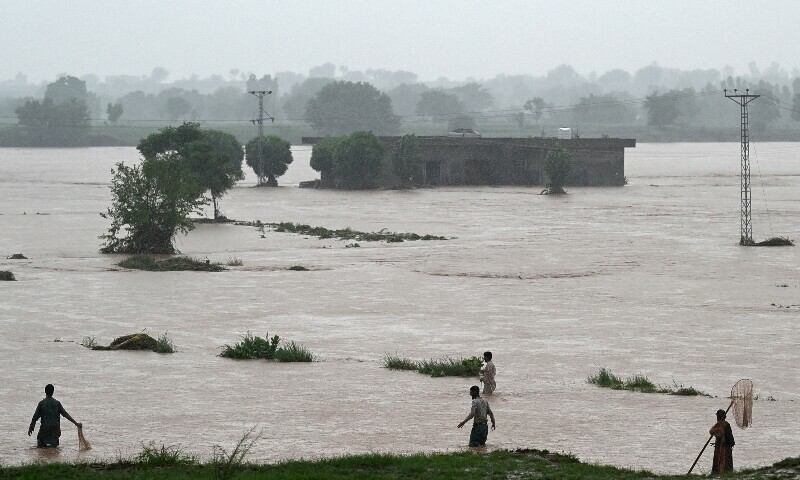
A medium-level flood was reported at Kalabagh on the Indus River in Punjab on Friday, following days of heavy monsoon rains and glacial melting. The Punjab Disaster Management Authority (PDMA) confirmed the flood status and noted low-level flooding at Chashma, Tarbela, Guddu, and Sukkur barrages. Water levels continue to rise in several rivers, raising fears of further damage in the coming weeks.
Rescue operations are underway across Punjab, which has been the worst-hit province. So far, at least 63 people have died in the province alone due to rain-related incidents. The National Disaster Management Authority (NDMA) has warned of five more rain spells, with the next expected from July 21 to 28. Officials say this year’s monsoon has been 60–70% more intense than last year, causing flash floods and widespread damage.
According to official data, 447,941 cusecs of water were flowing into Kalabagh and 440,391 cusecs out, confirming steady flood conditions. While water levels are falling at some sites, including Tarbela and Guddu, they are rising at Chashma and remain steady at Sukkur. Other major rivers like Ravi, Chenab, and Sutlej are currently at normal levels.
The PDMA and Pakistan Army have been actively involved in rescue efforts. Over 1,000 people have been rescued from flood-hit areas across the Potohar Plateau, including Rawalpindi, Chakwal, and Jhelum. Citizens were also airlifted from remote areas where boats couldn’t reach. The PDMA has urged the public to avoid unnecessary travel and stay away from power lines during rain.
Nationwide, monsoon rains since June 25 have killed 181 people and injured nearly 500. Most deaths in Punjab occurred due to house collapses, traffic accidents, and electrocution. With more rains expected, authorities remain on high alert, and Prime Minister Shehbaz Sharif has called for a comprehensive disaster management plan to prepare for future emergencies.