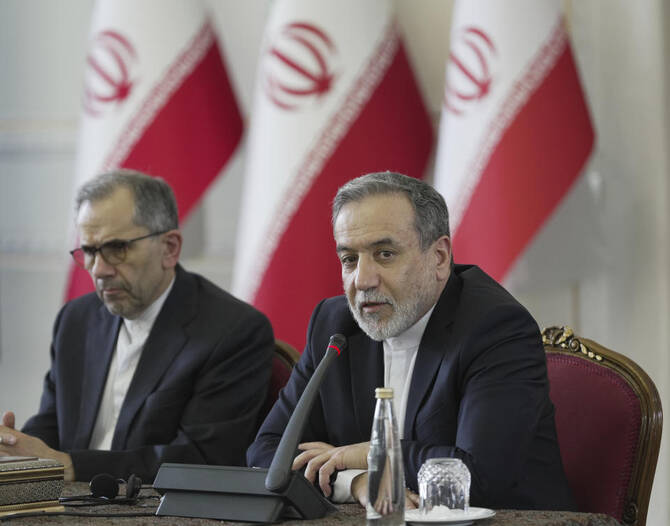
TEHRAN – Iran has announced that its cooperation with the International Atomic Energy Agency (IAEA) will now take a “new form,” signaling a shift in its approach amid ongoing tensions over its nuclear program. Foreign Minister Abbas Araghchi confirmed on Saturday that although cooperation with the IAEA had not stopped, it would be reassessed, and future engagements would depend on safety and security concerns. This move comes after a period of escalating tensions, including a 12-day conflict with Israel that resulted in missile strikes on Iran’s military and nuclear sites.
Araghchi clarified that requests for IAEA access to Iran’s nuclear sites would now be considered on a case-by-case basis. The review process would involve Iran’s Supreme National Security Council, with special attention given to ensuring the safety and security of the country’s facilities. The shift in policy comes after a series of airstrikes by Israel and the U.S., which targeted key Iranian nuclear sites, including Fordo, Isfahan, and Natanz. These attacks, Iran claims, were partly enabled by intelligence provided to Israel by the IAEA, a claim the UN nuclear watchdog has denied.
The announcement follows Iran’s formal suspension of cooperation with the IAEA in early July, a decision that came after Israeli bombings on June 16. These attacks occurred just before a planned meeting between Iran and the U.S. to revive stalled nuclear talks. Tehran has repeatedly denied allegations that it is attempting to develop nuclear weapons, though tensions surrounding its nuclear program have remained a critical issue in international relations.
In response to these developments, Araghchi emphasized that any future talks with the IAEA would focus solely on Iran’s nuclear activities, with the goal of rebuilding trust and securing sanctions relief. He stressed that issues unrelated to Iran’s nuclear program would not be part of the discussions, reaffirming Tehran’s position that its right to enrich uranium for peaceful purposes must be respected. Any agreement reached, he noted, must include provisions that ensure this right under the Non-Proliferation Treaty.
Araghchi also warned that the reimposition of UN sanctions would end Europe’s involvement in the nuclear talks. He specifically pointed to a clause in the 2015 nuclear deal, which allowed for sanctions to be re-imposed if Iran was found in violation of its commitments. The U.S. withdrew from the deal during President Trump’s term, and Iran now faces international pressure to return to the table for negotiations on its nuclear future.
Meanwhile, Russian Foreign Minister Sergei Lavrov expressed continued support for Iran’s nuclear program during the BRICS summit in Rio, stating that Russia would provide technological assistance for uranium depletion. Lavrov’s comments highlight ongoing international backing for Iran’s nuclear ambitions, despite pressures from the West. As the situation evolves, Iran’s approach to the IAEA and its nuclear program remains a critical point of focus in global diplomatic efforts.