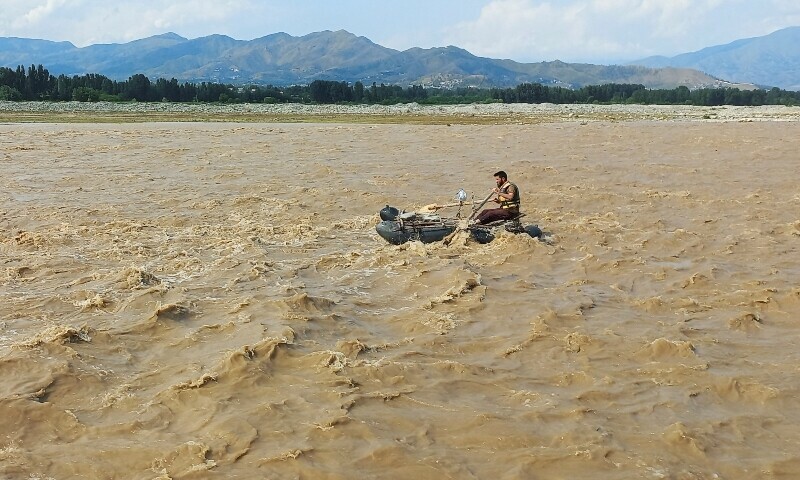
Since June 25, heavy rains and flash floods have caused severe damage in Khyber Pakhtunkhwa (KP), killing 22 people and injuring 11, according to the Provincial Disaster Management Authority (PDMA). Strong winds, landslides, and rising river waters have worsened the situation. The worst-hit district is Swat, where 14 people lost their lives and six were injured. Authorities warn that monsoon rains will continue until July 1, increasing the risk of further flooding and landslides.
The PDMA reported that 75 houses were damaged across multiple districts, with 11 completely destroyed. The victims include men, women, and children, showing the widespread impact on local communities. In response, district administrations have been instructed to provide urgent help to affected families and ensure medical care for the injured. Officials are on high alert and have been urged to take preventive measures to reduce risks.
Rescue teams have continued searching the Swat River for a missing child after 13 tourists were swept away in flash floods last week. So far, 12 bodies have been recovered, and efforts to find the child continue along the riverbanks near Swat bypass, Kanju, and Brikot. Khyber Pakhtunkhwa’s information adviser, Barrister Muhammad Ali Saif, assured the public that those responsible for the tragedy will face strict action.
Public anger has grown over the delayed response from rescue agencies and local authorities. Protests erupted in Mingora, where civil society members demanded better rescue systems, including helicopter support and early flood warnings. Demonstrators also highlighted environmental concerns, such as unchecked riverbed mining, which they say worsens flooding risks and damages the Swat River’s natural flow.
The provincial government has responded by suspending four officials linked to the relief and district administration departments and announcing compensation for victims’ families. Chief Minister Ali Amin Gandapur ordered a probe into the incident. Meanwhile, officials stressed the challenges of rescue operations, explaining that helicopters could not be deployed due to poor weather and lack of proper equipment, raising calls for improved disaster preparedness in the region.