
 This is the 20th article in a special series by Ally Adnan that brings to life memorable incidents from the rich and fascinating life of Hazrat Amir Khusrau, whose timeless legacy continues to inspire the world
Nizamuddin Auliya used to regularly perform the Sufi chillaah, a 40-day ritual of seclusion marked by complete silence, intense meditation and constant prayer, with very little sleep and food.
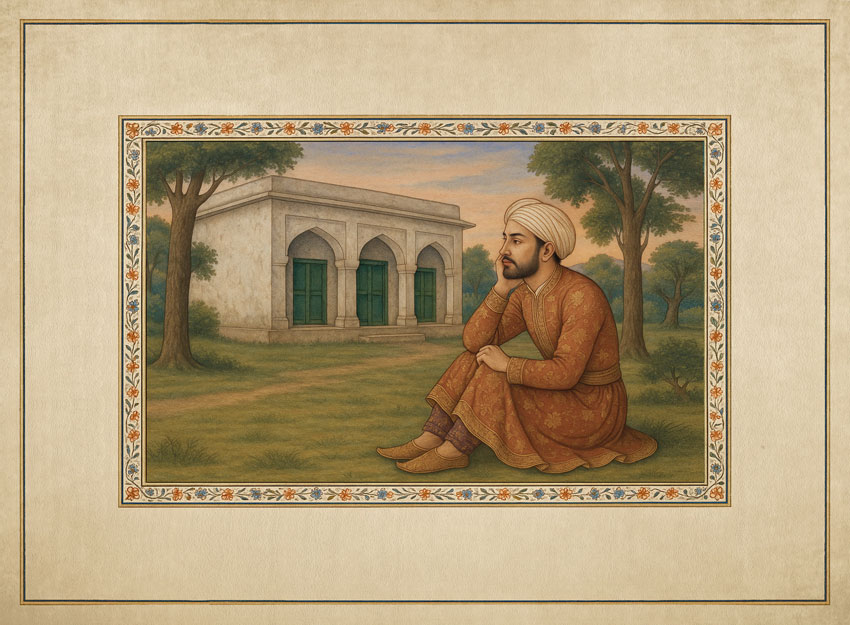
The saint’s chillaah-gaah was a modest, whitewashed structure with weathered arches and green doors, nestled in the quiet wilderness of Ghayaspur. Khusrau found these periods of time unbearable and would sit outside the chillaah-gaah for hours, with his eyes transfixed on the closed doors and his heart heavy with the pain of longing. He missed his master terribly and found it difficult to function without being able to spend time in his company.
During one chillaah, Khusrau composed the renowned ghazal Zehaal-e-Miskeen Makun Taghaaful to give voice to his pain, sorrow and longing. The first misra of each couplet in the ghazal was in Persian and the second in Hindavi. The poetic device, known as sanat-e-talmee, allowed Khusrau to speak simultaneously in two languages, one refined and courtly and the other lyrical and intimate. The poem vividly evokes the pain of separation and captures the full spectrum of emotions experienced by a lover unable to be with his beloved. It is Khusrau’s most famous ghazal and its popularity has continued to grow over the past seven centuries.
The writer is based in Dallas, Texas and writes about culture, history and the arts. He tweets @allyadnanjanjua and can be reached at [email protected]