
 This is the 15th article in a special series by Ally Adnan that brings to life memorable incidents from the rich and fascinating life of Hazrat Amir Khusrau, whose timeless legacy continues to inspire the world
Nizamuddin Auliya’s fame spread far and wide during the 13th century. People from across the region regularly visited his khanqah in search of spiritual solace, blessings and guidance. The growing popularity of the Sufi saint had not gone unnoticed by the royal court, which viewed it with suspicion. Sultan Jalaluddin Khilji, the founder and first ruler of the Khilji dynasty, wished to meet Nizamuddin Auliya in order to personally gauge his spiritual prowess and understand the nature of his remarkable hold over the people. The saint believed that he had little to offer those attached to worldly power and was famously reluctant to engage with royalty. The reputation led the Sultan to plan an unannounced visit to the Sufi saint. He shared his intention with Amir Khusrau, his court poet and instructed him to keep it secret. Khusrau chose to disclose the Sultan’s intentions to his master, who left the khanqah before the Sultan’s arrival, retreating to a distant place to avoid the meeting.
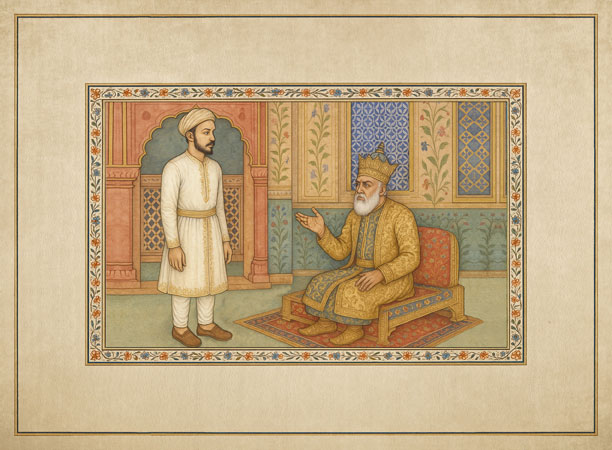
When Jalaluddin Khilji arrived and found the saint absent, he realised that Khusrau had shared his plans with Nizamuddin Auliya. The Sultan wanted an explanation and summoned Khusrau to his court. “Why did you betray me?” he asked. “Did I not instruct you to keep my plan a secret?”
“Disobeying you would have endangered my life, but disobeying my master would have endangered my faith and afterlife,” Khusrau replied with great conviction and without hesitation.
The Sultan was impressed by Khusrau’s moral clarity and loyalty to his spiritual guide. He chose not to punish Khusrau, who continued to serve in his court until the end of the Sultan’s reign.
The writer is based in Dallas, Texas and writes about culture, history and the arts. He tweets @allyadnanjanjua and can be reached at [email protected]