
 This is the 14th article in a special series by Ally Adnan that brings to life memorable incidents from the rich and fascinating life of Hazrat Amir Khusrau, whose timeless legacy continues to inspire the world.
Mahafil-e-Sama were held regularly at Nizamuddin Auliya’s khanqah. Dancing was discouraged at these gatherings, which were meant to foster reflection, introspection and contemplation to enable spiritual growth and not to serve as a form of physical expression.
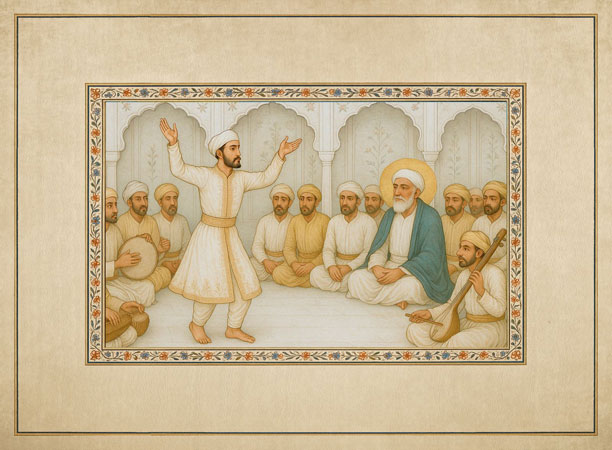
On one occasion, however, Amir Khusrau, moved by the music and verse of qawwali, and overwhelmed by the presence of his master, became lost in ecstasy and began to dance. Nizamuddin Auliya gestured for him to stop and sit down, reminding him that he lived among kings and princes and had not yet relinquished the trappings of the material world and was therefore not yet ready to dance in the manner of a true renunciate.
The Sufi saint did not believe in losing oneself in physical expression without the right intention, spiritual maturity and self-awareness that comes from true detachment from the world. Recognizing the sincerity and elevation of Khusrau’s state, Nizamuddin Auliya chose to instruct his beloved disciple on the proper way to dance, should one feel compelled to do so. He told Amir Khusrau, “If you must dance, then dance in such a manner that your hands rise to the heavens as if calling upon God, and your feet strike the earth as though you renounce it.”
In that moment, Nizamuddin Auliya defined a new expression of devotion, raq?-e-rava, the permissible dance. It was not dance for its own sake, but an important ritual symbolizing the soul’s yearning for the divine and the rejection of earthly ties.
The writer is based in Dallas, Texas and writes about culture, history and the arts. He tweets @allyadnanjanjua and can be reached at [email protected]