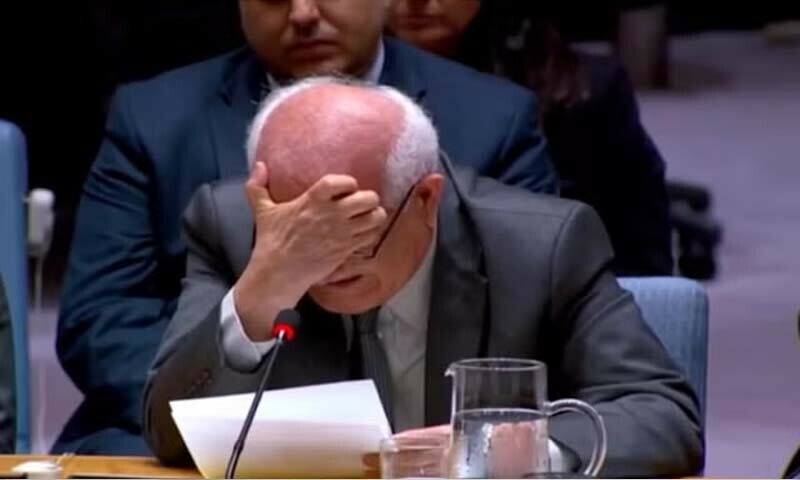
Palestinian Ambassador to the United Nations, Riyad Mansour, broke down emotionally during a Security Council meeting while recounting the unbearable suffering of children in Gaza. Mansour, speaking with deep emotion, shed tears as he described the dire situation facing Palestinian children, especially in Gaza. His words highlighted the severity of the humanitarian crisis and the impact of ongoing violence on innocent lives.
Meanwhile, UN Special Coordinator for the Middle East, Sigried Kaag, addressed the Security Council, stressing that Palestinians in Gaza deserve more than just survival; they deserve a future. She pointed out that the situation in Gaza has deteriorated rapidly since the resumption of clashes. The health system in Gaza has been systematically destroyed by ongoing military campaigns, and the human toll continues to mount.
Kaag warned that the aid reaching Gaza is insufficient, comparing it to a life raft given after a shipwreck. She added that sustainable peace in the Middle East cannot be achieved without resolving the Israel-Palestine conflict. She also mentioned the precarious situation in the occupied West Bank and called for global action at the upcoming high-level conference to breathe new life into the two-state solution.
In her emotional plea, Kaag reminded the council that the loss of life is not just numbers; it represents real individuals—mothers, daughters, and children whose futures have been shattered. She emphasized that words of sympathy, solidarity, and support for Gaza have lost their meaning amidst such overwhelming suffering.
Dr. Firoz Saidha, an American surgeon who had recently returned from Gaza, also testified before the council, sharing his firsthand experience of the devastation. He described how Gaza’s medical system was not just overwhelmed, but deliberately destroyed through continuous military operations. Most of his patients were children, severely injured by explosions, with many dying, and those who survived were dealing with the trauma of losing their entire families.
Dr. Saidha also shared alarming statistics, revealing that nearly half of Gaza’s children are experiencing suicidal thoughts. He recounted the harrowing question many of them ask: “Why didn’t I die with my family?” His testimony brought a powerful reminder of the human cost of the ongoing conflict.