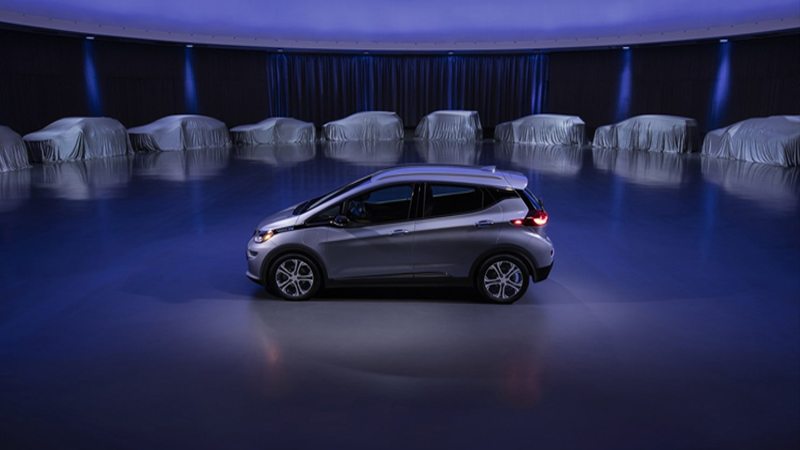
 Bending metal, slapping on chrome and marketing an empowering product and status marker that mesmerized 20th-century America, the automobile industry typified the Old Economy, of which General Motors was emblematic. As was its bankruptcy. Today, GM chief executive Mary Barra is wagering that the industry soon will be manufacturing New Economy products. They will incorporate technologies that will entice buyers whose sensibilities and expectations have been shaped by the kind of empowerment delivered by their smartphones, which arrived just 10 years ago.
GM’s electric self-starter, which replaced hand cranks, was the last century’s most transformative innovation. It arrived in 1912. Today, Cadillac offers hands-free driving, with advanced GPS mapping. An eye-tracking camera on the steering column monitors driver alertness, and the car nags the distracted driver back to attentiveness, which makes this technological marvel less of a convenience than the self-starter. Still, Barra is attempting an audacious balance between the demands of present consumers and radically different future demands. Or, more accurately, a future that governments, hostile to consumer sovereignty, intend to dictate.
China has announced, as have Britain and France, plans to ban, at an undetermined date, sales of vehicles powered by fossil fuels in their tanks. (Electric vehicles will be powered mostly by fossil-fuel-generated electricity.) In Shanghai in mid-September, Barra dissented: “I think it works best when, instead of mandating, customers are choosing the technology that meets their needs.” But governments, and not just dictatorships, like to dictate, and companies must accommodate: GM sells more cars in China than in the United States (it sold about 1.2 million Buicks last year, about a million of them in China, where elites drove them decades before communism arrived), and China manufactures more cars than the United States and Japan combined. As GM promises two new electric vehicles in the next 18 months, and a total of 20 by 2023, one of Barra’s executives speaks of GM “driving increased usage and acceptance of electric vehicles,” but governments are at the wheel. Without subventions from Washington, Tesla’s market capitalization never would have even briefly exceeded GM’s.
Barra foresees a fast-unfolding future of “zero crashes” (salvation through software: Auto-crash fatality rates are rising for the first time in years, and 94 percent of crashes are caused by human error), “zero emissions” (zero from tailpipes, much from smokestacks in an all-electric future) and “zero congestion” (with more ride-hailing services and car-sharing fleets, less individual car ownership and less urban land devoted to parking lots).
Ford, too, is anticipating a future replete with electric, semi-autonomous, driverless and shared cars: Two years ago, it announced a $4.5 billion investment in electric vehicles. But to pay for this speculation (electrics are 1 percent of US car sales, despite tax incentives to buy what the government prefers), Ford is diverting $7 billion from cars to vehicles for which there actually is demand – SUVs and trucks. (Its F-Series pickup has been the United States’ best-selling vehicle since 1982 .)
The automobile industry is precariously poised between a glamorous past and a future as opaque as it was when Henry Ford supposedly said that if he had begun by asking customers what they wanted, they would have answered, “A faster horse.” Or when the company he founded produced a car named for his son Edsel.
“This is a long-lead-time business,” says Barra, as she tries to peer over the horizon to develop products for a public that increasingly can work and shop without leaving home, and that decreasingly vacations as it was exhorted to by the theme song of “The Dinah Shore Chevy Show” (1956-63): “See the USA. in your Chevrolet.” The torrid romance that was America’s car culture has cooled (the percentage of 12th-graders with a driver’s license has declined from 88 to 73 since 1978), the sedan (Chevrolet’s Impala has been around since 1958) is an endangered species, and car companies are preparing for a future in which the crucial metric is not the number of vehicles sold to consumers but the number of miles traveled by consumers.
Barra, 55, whose father was a die-maker for Pontiac for 39 years, remembers when auto dealers covered their showroom windows with paper to build excitement for the first glimpses of new models. She is banking on a more sophisticated kind of excitement for smartcars. They will be designed for customers who in 2006 did not know that soon they would not be able to imagine living without the smartphones that in 2006they could not imagine.
Published in Daily Times, October 16th 2017.