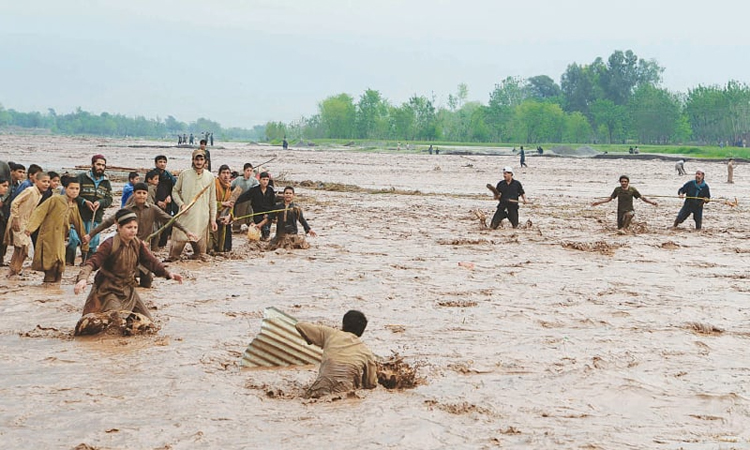
 Continuously rising temperature, floods and droughts have pushed Pakistan among the top vulnerable countries hit by climate change with the phenomenon having serious impacts on its economy, habitat and agriculture sector.
Smothering summers with extreme humidity and unbearable temperature result in heat strokes and other diseases and thereon causing unprecedented precipitation most often resulting in severe flooding inflicting loss of billions of dollars to our economy.
The 2022 floods are a stark reminder of the vulnerability of this South Asian nation to climatic disruptions, being among the worst in country’s history with unprecedented monsoon rains causing colossal loss to millions of people across Sindh, Balochistan and Punjab provinces.
The country found itself on mercy of extreme weathers as these floods affected over 33 million people with approximately 1,739 fatalities, over 12,000 injuries, 1.1 million destroyed houses, submerged vast tracts of agricultural land and significant losses to livestock.
As these catastrophic floods underscored an urgent need for climate action highlighting broader implications for a country already grappling with economic and social challenges, the experts have warned of further aggravation in this situation.
“Pakistan is the least contributor of emissions (less than one percent) but facing the worst consequences of climate change,” remarked CEO, Resilient Future International (RFI), Aftab Alam Khan. “It is a blatant injustice that the world community must realize. We are not alone saying this. The world is also echoing this fact as the Vulnerability Index indicates Pakistan among the leading climate vulnerable nations.”
Aftab Alam also mentioned to 2022 floods that inflicted massive losses and said, “we are also victim of inaction of the global community who must take adequate and urgent measures to curb their GHG emissions to control climate change.”
He said Pakistan is also victim of delay in operationalization loss and damage fund to rehabilitate affected communities. “Pakistan must be provided adaptation funds to help strengthen its capacity at all levels for climate adaptation and avoid future impacts of climate change.”
Pakistan, a country known for its diverse topography and climatic regions and sandwiched between two emerging economies India and China, has increasingly found itself at the mercy of extreme weather events attributed to climate change.
It has experienced exceptional heavy monsoon, with some regions recording 600% more rains than the average downpour, overwhelming river systems and drainage infrastructures. Rising temperature also accelerates glacial melting in northern regions with increased flow of water contributing to river swelling and compounding flooding caused by heavy rains.
“Heat waves and Floods are indicative of the broader impacts of climate change that Pakistan will continue to face in future as well,” said Dr. Asif Khan, a climate scientist at Pakistan Meteorological Department. “The frequency and intensity of extreme weather events in Pakistan had increased significantly over the past decade and is expected to continue if an urgent global climate action is not taken.”
Widespread deforestation and inadequate land management practices have reduced the land’s ability to absorb rainwater, increasing surface runoff, leading to more severe flooding. Rapid urbanization without proper planning and infrastructure has resulted in clogged drainage systems and increased vulnerability of urban areas to flooding.
Economically, the floods caused losses estimated at around $30 billion. Agricultural damage, in particular, was severe, with key crops like cotton, rice, and wheat being destroyed. This not only impacted local food supply but also affected Pakistan’s export revenues. Infrastructure damage including roads, bridges, and power supplies, hindered economic activities and slowed down recovery efforts.
The cumulative impact of climate change and subsequent floods and droughts reckons in billions of dollars loss every year in terms of human ailments, damages to agricultural land and production, loss of livestock and infrastructure damages.
Pakistan has been continuously raising this issue on different international forums with its respective governments and experts forcefully pursuing the carbon emitting countries to find a panacea to the injuries of vulnerable countries. But their hue and cry always goes in vain amidst the world nations struggle for industrialization and progress that affects poor countries and make them to pay for the follies, they have never committed.
Scientists and experts from these countries had always been emphasizing on the developed and carbon emitting countries to financially help the developing nation to promote adaptive strategies and invest in climate-resilient infrastructure and effective disaster management systems.
These experts also believed in adopting a multi-faceted approach and international support to vulnerable countries in terms of funding and technology transfer to help them mitigate climate impacts and take adaption measures.
As this phenomenon continuously goes, there is also a dire need for developing robust flood defenses, improving drainage systems, ensuring resilient construction practices, promoting afforestation and sustainable land management practices to absorb most of rainfall.
With the 2022 floods providing as a grim reminder of Pakistan’s vulnerability to climate change, there is also an urgent need for individual actions to mitigate future risks besides urging the global community to understand the challenges faced by poor and developing nations in Asia and African region and equip them with latest technologies and finances to avert the climate change inflicted damages in future.