 With country’s population crossing over 220 million figures, mounting pressure on water resources dropped down Pakistan’s per capita water availability to 908 cubic meters ringing alarm bells for policy makers, also posing serious challenges of food security.
Non-construction of new mega water reservoirs after Tarbela and Mangla, changing weather pattern as well as natural hazards had seriously impacted our economy, agricultural produce, livelihood, lifestyle and social fabric.
As per the data of Population Census Organization Pakistan per capita water availability of 5,260 cubic meters in 1951 had dropped down to 2129 cubic meter in 1981, 1611 cubic meters in 1991 and then 908 cubic meters in 2016.
Besides, non-availability of required water reservoirs, the population that rose to 220 million in 2022 from 34 million in 1951, could be another mattering factor in drop of per capita water availability with years from 1991 to 2016 witnessing massive population growth from 111 million to 197 million respectively.
Lack of water reservoirs also resulted in severe floods and droughts inflicting losses of billions of dollars on poor people as experts urged to devise a concrete plan to roll out a water pricing regime to address the water scarcity issue.
“Every year we waste around 29 million acre-feet (MAF) water due to absence of storage facilities as no mega project was built after commissioning of Tarbela and Mangla dams in 1970s,” stated former WAPDA Chairman Shams ul Mulk. “If wasting one MAF cost us Rs six billion, then one can easily understand what could be magnitude of our loss in terms of water wastage.”
Shams ul Mulk has cautioned that unchecked population growth, lack of water conservation and storage facilities would be bringing about much harder days ahead.
Former Chairman Pakistan Council of Research in Water Resources, (PCRWR) and Water expert Dr Muhammad Aslam Tahir also regretted non-construction of mega dams. “China, India, Japan and Iran constructed so many dams but unfortunately we could not build more mega dams like Tarbela and Mangla even after lapses of decades.” He pleaded that shrinking river water resources and massive pumping out of groundwater was another challenge that needed long term planning and implementation of proper policies. “If groundwater depletion continues at current rate, we shall face widespread water scarcity in future. Therefore, efficient water management should be at the heart of our policies in developing agricultural and industrial sector projects.”
As the situation aggravated with every passing year and respective government strived hard to cope with looming water scarcity challenge, the desired results are yet to be achieved.
“We need timely steps to ensure water management in agriculture, domestic and industrial sectors through an awareness campaign, adoption of technology and imposing restrictions,” suggested Dr. Muhammad Ashraf, former Chairman PCRWR.
He advocated to control our population and water wastage by using the latest technologies and said, “if our population continues to grow at the same pace and water resource remains constant, we would be touching absolute water scarcity level by 2025.”
Dr. Ashraf said, widespread urban sprawl and erasing water shed areas was also resulting in diminishing rains and urban flooding. “Therefore, we direly need strict water conservation strategies and charge consumers as per water usage. “
“For me, water is gold. Everything has an alternate except water and we shall have to conserve it today for our better tomorrow,” he remarked. “At this moment 60% of our population lacks access to quality drinking water with the country fearing 30% further water downfall by 2030.”
Dr Ashraf recommended agricultural zoning for irrigation, improve on-farm water usage efficiency, governance and legislation, site-specific solutions and mainstreaming of youth.
According to Pakistan Water Gateway, a non-governmental water-research portal, groundwater levels in the country were also dropping by a meter per annum. “If groundwater depletion continues at this rate, the country would surely head towards widespread water poverty in next few years.”
Water Gateway recommended planning for water resource management through broader coordination and cross-sector policies and projects.
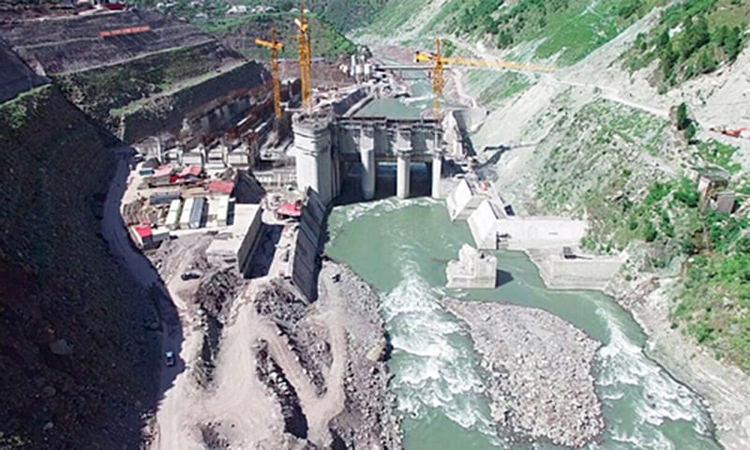
While the experts are drawing attention of the state organizations towards is fast approaching challenge, the Spokesman of Water and Power Development Authority (WAPDA) mentions to implementing the largest development portfolio comprising eight mega projects in water and hydropower sectors.
“These projects would revolutionize economic landscape of the country with much needed water and economical hydel power,” he said and mentioned to under-construction projects including Diamer Basha Dam, Mohmand Dam, Dasu Hydropower Project, Tarbela 5th Extension, Kurram Tangi Dam Stage 1, Nai Gaj Dam, Kachhi Canal Extension and Greater Karachi Bulk Water Supply Scheme (K-IV).
Scheduled for completion in a phased manner from 2024 to 2029, the WAPDA statistics reveal that these projects will double its hydel generation from 9,500 MW to 19,500 MW with an addition of around 10,000 MW clean, green and low-cost hydel electricity to National Grid. These projects will also add 9.7 Million Acre Feet (MAF) to gross water storage, sufficient to irrigate another 3.9 million acre land and provide 950 million gallons per day for drinking purpose to Karachi and Peshawar besides generating around 35,000 job opportunities.