 In the words of Bertrand Russell “Among human beings, the subjection of women is much more complete at a certain level of civilisation than it is among savages. And the subjection is always reinforced by morality.” His keen observation implies the notion that with the progress of human civilisation the subjugation of women paradoxically becomes more definite.
The oppressive treatment is not only afforded to homemakers or non-working women. Should a woman dare to embark on the journey of socioeconomic independence, she is burdened with mental and physical strains, giving rise to dissonance within her individuality—an affliction known as Work-Family Conflict (WFC) or Family-Work Conflict (FWC). Coined by Green Hauls and Beutell in 1985, Work-family conflict is a form of inter-role conflict in which the demands of work and family roles are incompatible, making participation in one role more difficult due to participation in the other role.
This conflict can take two forms: work-to-family conflict, in which the demands of work make it difficult to perform family responsibilities, and family-to-work conflict, in which family demands limit the performance of work duties. Although these two forms of work-family conflict are moderately correlated, work demands are generally associated with work-to-family conflict, whereas family demands are the major cause of family-to-work conflict.
WFC and FWC can affect any age group or any gender as it encapsulate the clash between work and family roles; still, it more strikingly affects the female population as it is exacerbated by cultural biases that burden women with domestic responsibilities and child-rearing duties. Studies illuminate the disproportionate burden borne by women, negatively impacting various facets of life i.e. work outcomes (inadequate performance), family outcomes (irritable behavior at home), and personal outcomes, both physical and psychological (physical and mental health issues). —The hydraulic pressure exerted on today’s working women emphasizes the challenges emanating from our country’s intersection of work and family.
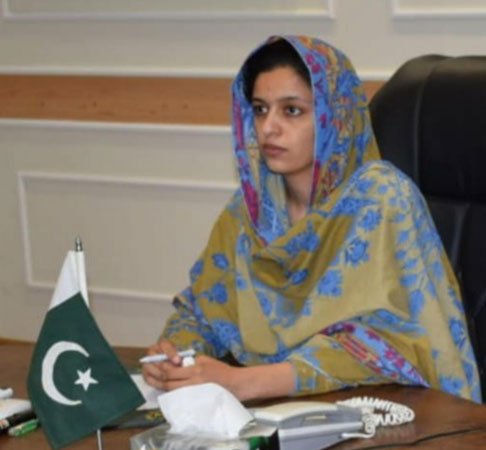
Regrettably, in the contemporary landscape of Pakistan, those women who join professional careers are under constant discouragement and threat. They face workplace harassment with very little legal protection irrespective of the plethora of relevant but less enforced laws. Furthermore, working women are provided with poor communication facilities which hinder mobility in an already hard-to-walk-alone society. There are inadequate childcare facilities/daycare centers, especially for the lady workers of low-income groups. Another problem is inconsiderate healthcare facilities i.e. limiting health care to only reproductive health and not giving it a full scope of other physical and mental health issues.
Studies show that educated and working mothers, due to more control over resources, knowledge of pre and post-natal care and child nutrition, and management of the size of the household, bear healthier children. The general notion in Pakistan about educated and working mothers is that they are incapable or neglectful mothers or can’t handle their children properly, which leads to constant psychological pressure or mothers’ guilt in working mothers.
Notably, another factor is the non-cooperative behavior of male counterparts which aggravates the challenge. We have heard a lot of hues and cry over simple slogans like “khana khud garam kro” or “apny mozy khud dhondo.” In a culture where a woman cannot ask for such simple domestic help without resistance, it is very hard for her to excel professionally and personally. Men in our society utterly fail to understand that their involvement in child rearing or household is not a beneficence to their female partner but more than that it is an emotional investment that would pay them back in later years of life in the shape of strong familial bonds _which they mostly lack.
All these challenges hinder women’s natural growth of talent and adversely affect their upward mobility in any organization. Society, after all this prejudice and an unleveled playing field, describes women as less profitable hires or incompetent in comparison to their male counterparts. We can’t judge women unless we provide them equal opportunities with men. Stuart’s words echo, “Until the condition of equality exists, no one can assess the natural difference between women and men.”
We, working women, should voice our needs to society outside so that we may garner substantial support for ourselves. The tapestry of our national social fabric needs to be unravelled and rewoven so that we may establish future norms on a more just and equitable basis. We, as working women, need not have cultural bias or baggage; we need cultural rights. We, as a society, should not abandon the privilege or reverence our culture provides to women, but we should abandon what is unjust or regressive in our culture. If any discrimination should exist, that should only exist for the betterment of humanity. We need reverse discrimination or positive discrimination that may help working women.
Yet, in any case, a spirited debate is the need of the hour. This society needs a debate on every important matter indeed. The educated and the youth champion women’s empowerment, presenting a thesis that can only lead to synthesis. The silver lining lies in the dialectical tension that arises from the clash of opposing views. Educated men and women, armed with wit and intellect, welcome the opposition as it provides an opportunity for a more reasoned discourse, propelling the cause of gender equality forward. In the face of adversity, we hail the opposition, recognizing it as more grist to the wind—an inevitable force propelling the inevitable triumph of equality.
The writer is a civil servant serving as an Additional Deputy Commissioner for Relief and Human Rights, Abbottabad