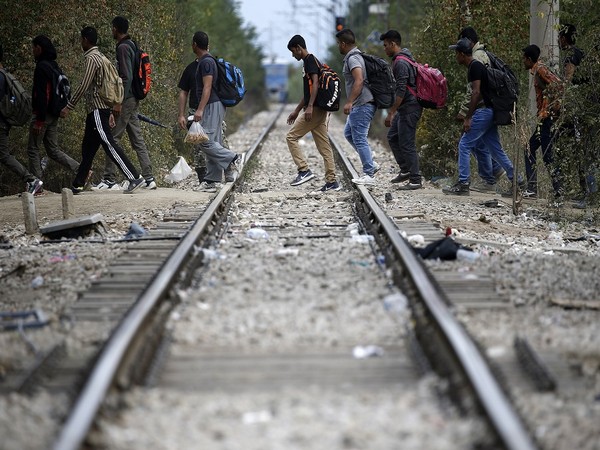
A deal Canada struck this year to stem the flow of asylum seekers entering from the U.S. was, at first glance, a quick success: Within days, the number of people caught at unofficial crossings along the border dwindled to a trickle.
But five months later, the overall number of people filing refugee claims in Canada has risen instead of falling. Many now come by air, while others sneak across the border and hide until they can apply for asylum without fear of being sent back, people working with migrants told Reuters.
The numbers show how hard it is for countries to shut the door on desperate people and the challenge unexpected numbers of asylum seekers can pose: In Toronto, hundreds slept on the streets this summer as they struggled to find beds.
“The basic reality is that closing a border doesn’t do anything to solve the need for protection,” said Shauna Labman, an associate professor and acting director of the Human Rights Program at the University of Winnipeg.
“It only increases the desperation.”
Canada prides itself on welcoming immigrants and aims to bring in a record half a million new permanent residents in 2025 to deal with an acute labor shortage. But it has sought to discourage those applying for asylum, chiefly through an agreement with the U.S. under which each country turns back asylum seekers.
Still, last year alone, more than 39,000 asylum seekers entered Canada via unofficial crossings – mostly into Quebec via a dirt path off Roxham Road in New York, prompting the province to complain it could not handle the arrivals. Asylum seekers are drawn by Canada’s reputation for swifter processing and greater acceptance of asylum applications compared to the U.S.
In response, Canada and the United States in March amended their two-decade-old asylum-seeker pact, the Safe Third Country Agreement. The agreement now applies to the length of the countries’ 4,000-mile land border, rather than just at ports of entry.
The expanded pact led to a dramatic drop in the number of people intercepted at informal crossings – down to double digits in April through July from 4,173 in March.
But overall, the number of asylum seekers entering Canada has surged. The total number of refugee claims made in Canada rose in July to 12,010 – the highest monthly total since at least January 2017 – and up from 10,120 in March, according to data from the immigration, refugees and citizenship department.
DEMAND FOR SAFETY
Some of the higher numbers are being driven by more people filing refugee claims at airports or local immigration department offices – often days, weeks or months after arriving in the country, government data shows.
People applying at airports comprised about a third of all refugee claims made in July, up from about 16% in March. Those filing claims at immigration offices accounted for about 54% of July’s total, up from about a third in March. The top five countries that claimants came from in the first half of the year were Mexico, Haiti, Turkey, Colombia and India – though the numbers include those who applied before the expanded U.S. pact.
At least part of the reason for the latest influx is that Canada is among a shrinking group of countries seen as offering safe harbor while pressures of war, climate change and human rights violations force a greater number to flee, some migrant experts say.
The European Union, for example, recently introduced an asylum seeker pact allowing nations to more quickly send back some migrants. Britain’s government is pushing forward on a law making it easier to send asylum seekers to Rwanda, while U.S. President Joe Biden’s administration has introduced a rule making it harder for migrants to receive asylum if they cross U.S. borders illegally.
“If you’re a person who’s trying to make this set of decisions, then Canada becomes a more likely option,” said Craig Damian Smith, a research affiliate at the Centre for Refugee Studies at York University.
“The world is facing unprecedented flows of migrants and refugees, and Canada is not immune to these trends,” Remi Lariviere, a spokesperson for the department, said in a statement.
Lariviere said Canada amended the deal with the U.S. to address “irregular” crossings and that the expansion “does not mean that claims for asylum will not be made in Canada at all.”
‘BAD ACTORS’
People working with migrants say some of the people filing claims days or weeks after they arrive in Canada are hoping to skirt a clause in the expanded agreement with the U.S. that says any asylum seeker apprehended within two weeks of crossing the border will be turned back unless they meet a narrow exemption.
That has prompted some to cross over undetected, sometimes with a smuggler’s help, and hide until the two-week period elapses.
The Refugee Centre in Montreal says it helped four families in one day last week who had been in hiding for a fortnight after crossing overland into the country.
“Unfortunately this is not a very safe avenue for them,” Executive Director Abdulla Daoud told Reuters. “It promotes bad actors who take advantage of these individuals.”
At the FCJ Refugee Centre in Toronto, about 20% to 30% of recent arrivals say they crossed into Canada undetected and hid with a smuggler’s help, Executive Director Loly Rico said.
Reuters spoke with 10 people seeking refugee status who recently arrived in Toronto, Canada’s largest city. They came from Sudan, Uganda and Mexico, among other places. All arrived by plane, with valid visas in hand. Some filed refugee claims days or weeks after their arrival.
Though they left for reasons ranging from domestic violence to war, the common draw for all was Canada’s reputation for protecting human rights and providing refuge.
“It is the first country that I thought about,” said Hana Bakhit. The 35-year-old from war-torn Sudan says she applied for a visitor’s visa in May, flew to Canada in July and filed a refugee claim two weeks later.
She has been sleeping in a mosque and a church, calling Toronto’s central shelter daily for a bed, only to be told there are none available. Still, she considers herself lucky to be in Canada.
With Canada’s land border largely closed off, the asylum system now favors people like Bakhit who can get a visa and plane ticket, refugee lawyer Maureen Silcoff said.
“Some of the most vulnerable people remain barred from accessing Canada’s system and I think we have to reflect on the inequity of that development,” Silcoff said.
Grace Nanziri, 42, was among those with the comparative privilege of being able to get a visa and flight ticket: she applied for a Canadian visitor’s visa when her LGBTQ advocacy made her a target in her home country, Uganda.
After waiting a year for the visa, she flew to Toronto in August – drawn by Canada’s reputation of protecting human rights, she said.
“They wanted to kill me,” she said. “That’s why I came to Canada.”