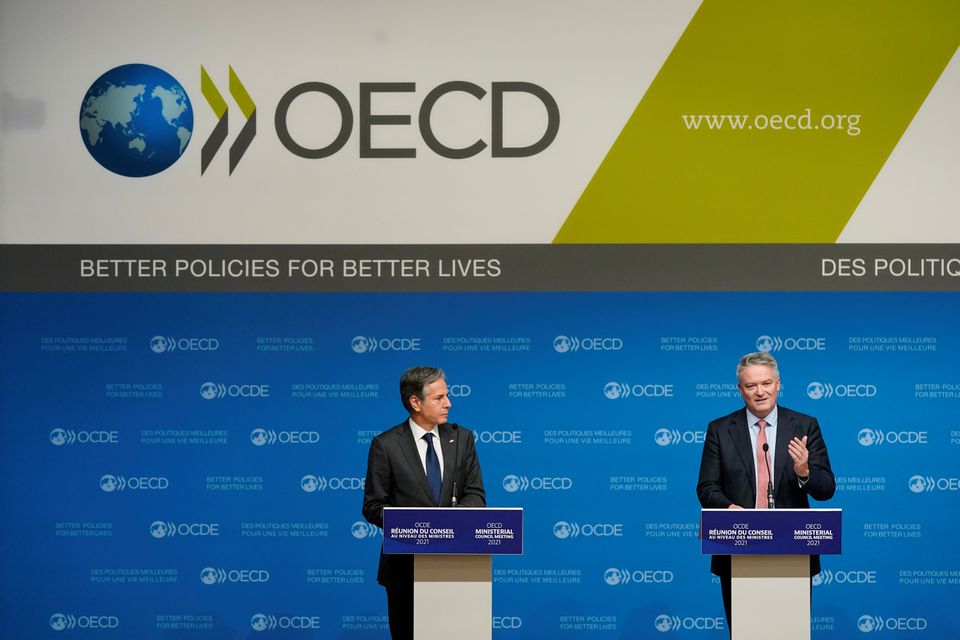
A group of 136 countries on Friday set a minimum global tax rate of 15% for big companies and sought to make it harder for them to avoid taxation in a landmark deal that U.S. President Joe Biden said levelled the playing field.
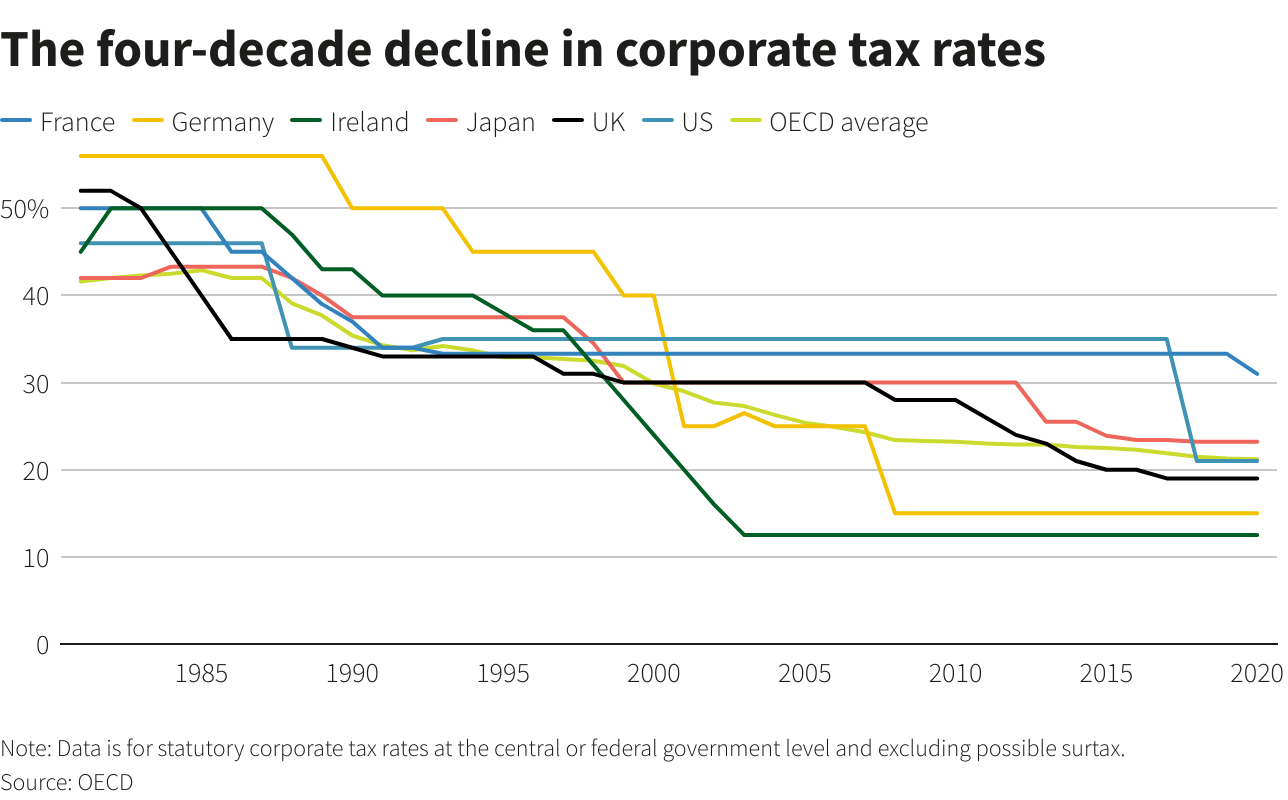
The deal aims to end a four-decade-long “race to the bottom” by setting a floor for countries that have sought to attract investment and jobs by taxing multinational companies lightly, effectively allowing them to shop around for low tax rates.
Negotiations have been going on for four years and while the costs of the coronavirus pandemic gave them additional impetus in recent months, a deal was only agreed when Ireland, Estonia and Hungary dropped their opposition and signed up.
Moreover, the 15% floor agreed is well below a corporate tax rate which averages around 23.5% in industrialised countries.
“Establishing, for the first time in history, a strong global minimum tax will finally even the playing field for American workers and taxpayers, along with the rest of the world,” Biden said in a statement.
The deal aims to stop large firms booking profits in low-tax countries such as Ireland regardless of where their clients are, an issue that has become ever more pressing with the growth of “Big Tech” giants that can easily do business across borders.
Out of the 140 countries involved, 136 supported the deal, with Kenya, Nigeria, Pakistan and Sri Lanka abstaining for now.
The Paris-based Organisation for Economic Cooperation and Development (OECD), which has been leading the talks, said that the deal would cover 90% of the global economy.
“We have taken another important step towards more tax justice,” German Finance Minister Olaf Scholz said in a statement emailed to Reuters.
“We now have a clear path to a fairer tax system, where large global players pay their fair share wherever they do business,” his British counterpart Rishi Sunak said.
But with the ink barely dry, some countries were already raising concerns about implementing the deal.
The Swiss finance ministry demanded in a statement that the interests of small economies be taken into account and said that the 2023 implementation date was impossible, while Poland, which has concerns over the impact on foreign investors, said it would keep working on the deal.
‘INCREASED PROSPERITY’
Central to the agreement is a minimum corporate tax rate of 15% and allowing governments to tax a greater share of foreign multinationals’ profits. read more
U.S. Treasury Secretary Janet Yellen hailed it as a victory for American families as well as international business.
“We’ve turned tireless negotiations into decades of increased prosperity – for both America and the world. Today’s agreement represents a once-in-a-generation accomplishment for economic diplomacy,” Yellen said in a statement.
The OECD said that the minimum rate would see countries collect around $150 billion in new revenues annually while taxing rights on more than $125 billion of profit would be shifted to countries where big multinationals earn their income.
Ireland, Estonia and Hungary, all low tax countries, dropped their objections this week as a compromise emerged on a deduction from the minimum rate for multinationals with real physical business activities abroad.
Reuters Graphics
‘NO TEETH’
But some developing countries seeking a higher minimum tax rate say their interests have been sidelined to accommodate the interests of richer countries like Ireland, which had refused to sign a deal with a minimum tax rate higher than 15%.
Argentine Economy Minister Martin Guzman said on Thursday that the proposals forced developing countries to choose between “something bad and something worse”.
While Kenya, Nigeria and Sri Lanka did not back a previous version of the deal, Pakistan’s abstention came as a surprise, one official briefed on the talks said. India also had qualms up to the last minute, but ultimately backed the deal, they added.
There was also dissatisfaction among some campaign groups such as Oxfam which said that the deal would not end tax havens.
“The tax devil is in the details, including a complex web of exemptions,” Oxfam tax policy lead Susana Ruiz said.
“At the last minute a colossal 10-year grace period was slapped onto the global corporate tax of 15 percent, and additional loopholes leave it with practically no teeth,” Ruiz added in a statement.
Companies with real assets and payrolls in a country can ensure some of their income avoids the new minimum tax rate. The level of the exemption tapers over a 10-year period.
The OECD said that the deal would next go to the Group of 20 economic powers to formally endorse at a finance ministers’ meeting in Washington on Oct. 13 and then on to a G20 leaders summit at the end of the month in Rome for final approval.
There remains some question about the U.S. position, which depends in part on domestic tax reform negotiations in Congress.
Countries that back the deal are supposed to bring it onto their law books next year so that it can take effect from 2023, which many officials have said is extremely tight.
French Finance Minister Bruno Le Maire said Paris would use its European Union presidency during the first half of 2022 to translate the agreement into law across the 27-nation bloc.