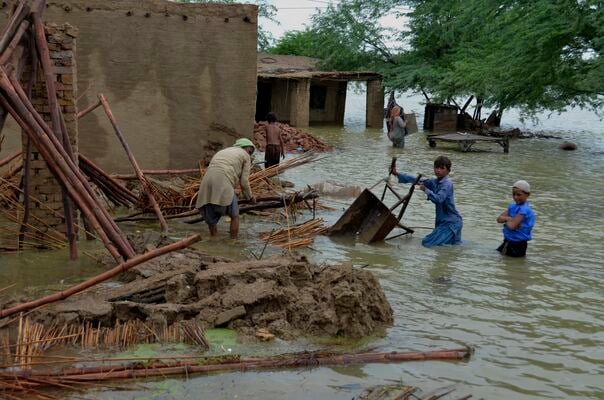
The devastating floods that struck Pakistan in 2025 inflicted economic losses estimated at Rs822 billion and claimed the lives of more than 1,000 people, according to the Economic Survey 2025-26.
The survey described the floods as one of the most significant natural disasters of the year, forcing the government to revise its economic growth projections. As a result of the widespread damage, the country’s real GDP growth target was lowered from 4.2 per cent to a range between 3.5 and 3.9 per cent.
The disaster was triggered by exceptionally heavy monsoon rains between July and September 2025. Average rainfall reached 172.8 millimetres during the period, approximately 23 per cent above normal levels. The situation worsened in late August when intense rainfall combined with accelerated glacier melting, causing severe flooding in major river systems including the Sutlej, Ravi and Chenab.
Punjab emerged as the worst-affected province, accounting for Rs631 billion in losses, representing more than three-quarters of the nationwide damage. The province also recorded the majority of flood-related deaths and displacement cases.
Infrastructure suffered heavily, with losses estimated at Rs307 billion. Roads sustained the greatest damage, while housing, bridges, water supply systems and energy infrastructure were also severely affected. More than 229,000 homes were either destroyed or extensively damaged during the disaster.
The agriculture sector experienced the largest economic impact, with losses reaching Rs430 billion. Crop damage accounted for most of these losses, particularly affecting cotton and rice production. The floods also disrupted livelihoods, leaving more than 200,000 people unemployed.
Despite the destruction, the agricultural sector recorded growth of 2.89 per cent during fiscal year 2026, supported by recovery efforts and government assistance programmes. Relief operations provided financial aid to thousands of affected families while reconstruction initiatives focused on restoring infrastructure and strengthening disaster preparedness.
The government says future efforts will prioritise climate resilience, flood protection projects and improved planning to reduce the impact of similar disasters in the years ahead.