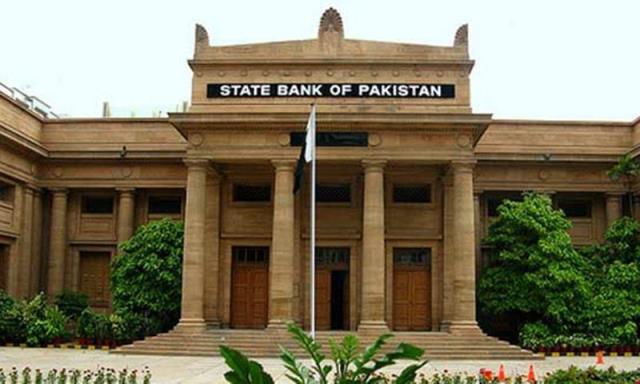
ISLAMABAD: The State Bank of Pakistan (SBP) released the second quarterly report for Pakistan’s Economy fiscal year 2020-2021 on Thursday. The report presents how the economy of Pakistan has strengthened since the first quarter, and how it has recovered. The rate of recovery is evident from the rapidly growing industry, the outcome of major Kharif crops, with the exception of cotton, along with the boost in the service sector.
Large scale manufacturing has increased by 7.6 percent during the first half FY21, with its growth in the second quarter reaching up till 10.4 percent. This is the highest growth rate seen since Q4-FY07. Construction and food processing industries have generated expansion in the industrial activity.
The construction industry sought benefits from the policy environment, including the government’s fiscal incentives. These were allotted through the construction support package, the Naya Pakistan Housing Scheme, along with some financial measures by the State bank. Financial support for the housing and construction sector has mostly remained negligible in the credit portfolios of banks in Pakistan, as compared to other developed or developing countries. The state bank has taken certain measures since July 2020 to support them, along with giving incentives and targets to banks.
Most of the Kharif crops have performed better since the previous year, mainly due to the increase in their areas under cultivation. The support package for Rabi crops by the government, consisting of subsidies on key inputs, along with the increase in the price of wheat has led to the growth of the overall sector.
The recovery was made in a timely manner with a well iterated policy response by the SBP and the government to counter the Covid-19 wave. The SBP policy response gave liquidity support through the continuation of low policy rate, loan deferments and restructuring, and refinancing schemes for payroll support, the healthcare sector, and firms looking to undertake capital expenditures. Government support measures include direct cash support for economically vulnerable segments, with tax relief for the construction sector, expediting disbursement of outstanding refunds of exporters; concessionary energy prices, duty concessions on important raw materials, subsidies and
higher minimum support prices to increase agriculture.
The economic pace picked up as the country rapidly navigated through the second wave of Covid without resorting to strict mobility restrictions. Firms’ demands for credit nearly doubled on YoY basis during H1-FY21. SBP’s concessionary refinance schemes, especially the Export Finance Scheme, the Long-Term Financing Facility (LTFF) and the Temporary Economic Refinance Facility (TERF) were given a specific part of the credit, as firms went through with capacity expansion and Balancing, Modernization and Replacement (BMR) activities.
Specifically, the approved financing under the TERF scheme reached Rs 435.7 billion as of 31st March 2021. House building loans also increased, after SBP set the mandatory target for banks to increase their housing and construction loans to 5 percent of their overall private sector credit portfolios by the end-December 2021.
In the external sector, the current account posted a surplus of US$ 1.1 billion during H1-FY21, driven by record-high workers’ remittances and reductions in the services and primary income deficits. Remittances rose from all the major corridors, with strong growth recorded from the advanced economies as well as from the GCC. Proactive policy measures by the government and SBP to encourage more inflows through formal channels, curtailed cross-border travel in the face of Covid-19, altruistic transfers to Pakistan amid the pandemic, and orderly foreign exchange market conditions have contributed to the strength of remittances. With the current account in surplus and sufficient external financing available, the SBP’s FX reserves increased by US$ 1.3 billion and its net forward liabilities also reduced by US$ 1.2 billion during H1-FY21. Moreover, the PKR appreciated by 5.1 percent against the US Dollar during the period. Meanwhile, the newly launched Roshan Digital Accounts (RDAs) were eagerly received by overseas Pakistanis, as inflows into these accounts crossed the US$ 1.0 billion mark in April 2021.
Meanwhile, overall national CPI inflation fell to 8.6 percent during H1-FY21, from 11.1 percent in the same period last year. This outcome largely reflected the weakening in core inflation across both urban and rural areas, which was enabled by the presence of spare capacity in the economy, a reduction in energy prices and a relatively stable exchange rate during the period.
On the fiscal side, tax collection was higher compared to last year, while non-interest expenditures declined, resulting in a primary surplus for H1-FY21. The fiscal deficit as a percent of GDP remained at a similar level as last year.
Notwithstanding these positive developments, the report flags three areas that merit continuing vigilance by policymakers. First is the burden of debt servicing. Despite a relative improvement in revenue generation, the bulk of interest payments during H1-FY21 was financed via the issuance of new debt. Second, while national CPI inflation declined during H1-FY21 on YoY basis and stayed within the SBP’s projection for the full year, the prices of food items remain vulnerable to supply-side pressures in recent months. Third, with the domestic economic activity recovering and global commodity prices rising, import pressures are resurfacing. Moreover, these pressures have been accentuated by the domestic supply-side challenges for major agricultural commodities like cotton, sugar and wheat, which necessitated their imports.
Finally, the report features a special section on the domestic LNG market, which discusses the challenges in the planning, purchasing, and supply of the imported commodity, and contextualizes these challenges within the current regulatory and operational framework. Going forward, the government’s decision to allow greater involvement of the private sector in LNG import has the potential to address many of these issues, and ultimately enhance the share of the relatively cheaper fuel in the economy’s energy mix.