• Skip to primary navigation
  • Skip to main content
  • Skip to primary sidebar
  • Skip to footer
Trending:
  • Kashmir
  • Elections
Saturday, June 6, 2026

Daily Times

Your right to know

  • HOME
  • Latest
  • Iran-Israel war
  • Gilgit Baltistan Election
  • Pakistan
    • Balochistan
    • Gilgit Baltistan
    • Khyber Pakhtunkhwa
    • Punjab
    • Sindh
  • World
  • Editorials & Opinions
    • Editorials
    • Op-Eds
    • Commentary / Insight
    • Perspectives
    • Cartoons
    • Letters to the Editor
    • Featured
    • Blogs
      • Pakistan
      • World
      • Lifestyle
      • Culture
      • Sports
  • Business
  • Sports
  • E-PAPER
    • Lahore
    • Islamabad
    • Karachi

APP

CPEC provides new opportunities to boost industrial cooperation with Pakistan

Published on: June 1, 2021 5:31 PM

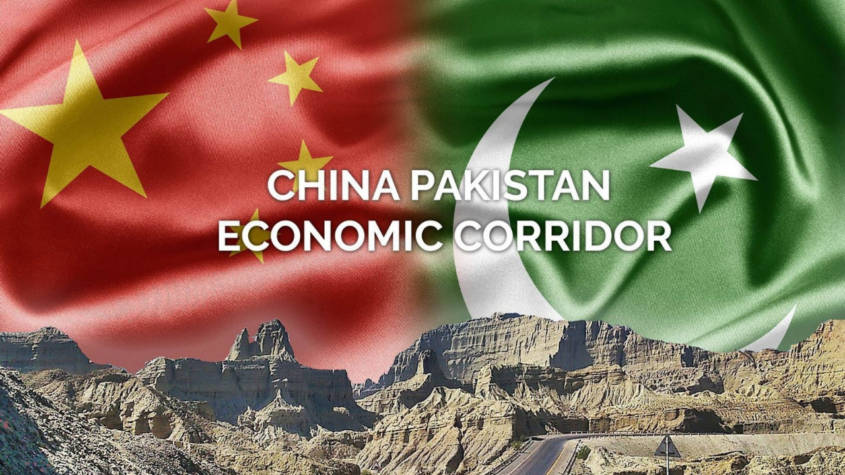
ISLAMABAD: Since being officially launched in 2015, the China-Pakistan Economic Corridor (CPEC), the Belt and Road Initiative’s (BRI) flagship project, has begun to bear fruit.

As the CPEC project enters a new stage, Pakistan is facing new opportunities to fast-track the development of its industries which can help it compete globally.

At the early stage of the project, there were many issues such as energy supply shortage, infrastructure deficiency and inefficient implementation of the incentive policies. In addition, Pakistan lacked a clear understanding of the direction of industrial development.

However, Pakistan has started the process to promote economic liberalization and to open up the economy. Joining the BRI and CPEC is part of the country’s effort in doing the same. In these couple of years, the country focused on industrial park construction while trying to enhance industrial relocation from China.

Although Pakistan has largely surpassed India in many aspects, yet its economic growth has not substantially accelerated. There are a few reasons for this.

Pakistan has yet to realize significant achievements in industrial development.

Historically, the mainstay sectors of Pakistan’s economy have been the consumer non-durable goods and the light industry. High-Tech and Modern industries such as iron and steel, metallurgy, heavy machinery, and petrochemical industries have not been in the focus.

In addition, industries such as cement and automobile manufacturing have long been overly protected, some analysts say.

Another reason for relatively slow growth is because Pakistan’s economic development relies heavily on external markets and its dominating export, textile goods, do not contribute substantially to the growth prospects.

Low domestic saving rates and low domestic investment rates have also hindered opportunities. The Pakistani government attaches great importance to attracting and utilizing foreign investment, but failure to address security concerns inside the country scare away potential foreign investors.

Low fiscal revenues and heavy external debt burdens have also been major problems in Pakistan’s economic development, limiting the government’s ability to invest.

Since the COVID-19 outbreak, CPEC has become a key highlight for the country’s economic development. The construction of the mega-project will eventually play a supporting role in economic recovery in the post-pandemic era.

However, Pakistan must seize the opportunity to formulate scientific development plans to equip domestic industries with competitive advantages.

Speaking of China-Pakistan industrial cooperation, agriculture is the sector that could help Pakistan consolidate its industrial chain and quickly earn foreign exchange earnings through exports. At the same time, China should open its market to Pakistani agricultural products and fruits to expand imports of Pakistani agricultural and industrial products.

The textile industry is a traditionally strong industry in Pakistan. When China’s textile industry is shifting outward due to labor price rises, Pakistan should seize the opportunity to upgrade its own industry and accept orders from the super power.

Since 2020, affected by India’s increasingly hostile attitude towards Chinese companies, many Chinese mobile phone brands in India have begun to move their factories to countries like Vietnam, the Philippines, and Indonesia. This is also a great opportunity for Pakistan.

Filed Under: Business, Pakistan, Top Stories Tagged With: Belt and Road Initiative (BRI), China-Pakistan Economic Corridor (CPEC), Headline, industrial export, industrialist growth

Submit a Comment


Primary Sidebar


Latest News

Pakistan rejects India’s comments on Gilgit-Baltistan elections

US and Iran exchange strikes near Strait of Hormuz

Alexander Zverev eases past Jakub Mensik in French Open semifinals

Taylor to face Pili in Croke Park farewell

FIFA bans vuvuzelas from World Cup stadiums

Pakistan

Pakistan rejects India’s comments on Gilgit-Baltistan elections

JAAC declared proscribed party ahead of AJK polls on July 27

Fixed tax scheme for small retailers launched to raise Rs 50bn annually

Govt cuts petrol price by Rs 4 per litre, keeps diesel’s unchanged

Bilawal promises GB voters with land and job rights

More Posts from this Category

Business

SBP’s ‘Go Cashless’ campaign saw Rs 34bn in digital transactions on Eid

Short-term inflation down by 0.56%

Saudi-Pak Business Council shows interest in infrastructure investment

‘Govt, allies united in efforts to craft people-centric budget’

Rupee records gain against US dollar

More Posts from this Category

World

US and Iran exchange strikes near Strait of Hormuz

CENTCOM space post signals wider US military footprint

US official delivers Trump’s “good hello” to Putin

More Posts from this Category


Footer

Home
Lead Stories
Latest News
Editor’s Picks

Culture
Life & Style
Featured
Videos

Editorials
OP-EDS
Commentary
Advertise

Cartoons
Letters
Blogs
Privacy Policy

Contact
Company’s Financials
Investor Information
Terms & Conditions

Facebook
Twitter
Instagram
Youtube

© 2026 Daily Times. All rights reserved.

Manage Consent
To provide the best experiences, we use technologies like cookies to store and/or access device information. Consenting to these technologies will allow us to process data such as browsing behavior or unique IDs on this site. Not consenting or withdrawing consent, may adversely affect certain features and functions.
Functional Always active
The technical storage or access is strictly necessary for the legitimate purpose of enabling the use of a specific service explicitly requested by the subscriber or user, or for the sole purpose of carrying out the transmission of a communication over an electronic communications network.
Preferences
The technical storage or access is necessary for the legitimate purpose of storing preferences that are not requested by the subscriber or user.
Statistics
The technical storage or access that is used exclusively for statistical purposes. The technical storage or access that is used exclusively for anonymous statistical purposes. Without a subpoena, voluntary compliance on the part of your Internet Service Provider, or additional records from a third party, information stored or retrieved for this purpose alone cannot usually be used to identify you.
Marketing
The technical storage or access is required to create user profiles to send advertising, or to track the user on a website or across several websites for similar marketing purposes.
  • Manage options
  • Manage services
  • Manage {vendor_count} vendors
  • Read more about these purposes
View preferences
  • {title}
  • {title}
  • {title}
We use cookies to ensure that we give you the best experience on our website. If you continue to use this site we will assume that you are happy with it.