The UAE’s announcement to normalise relations with Israel reflects a drastic change of diplomacy in the Middle East. While the increasing backdoor diplomacy between the Arabs and Tel Aviv was an open secret, the official endorsement was unexpected at this stage.
Pakistan’s ties with the Saudi-led Arab powers are historic, and undoubtedly, beyond just strategic interests. For the average Pakistani, standing up with the Arabs is considered a religious duty owed to the “original Muslims.”
Thus, for long enough, Pakistani foreign policy on Middle Eastern affairs has largely been influenced by Saudi Arabia and its allies.
In adherence to this policy, Pakistan followed a course set by Arabs and never recognised the State of Israel.
Apart from the endorsement of their political narrative, Pakistan provided military and financial support to its Middle Eastern allies in Arab-Israeli wars.
Pakistan’s Entanglement with the Changing Political Landscape in the Middle East
However, the radical change of this political landscape has caused a spur of sentiments beyond the Arabian Peninsula.
With the growing romance between the former Middle Eastern enemies out in the open, the question of whether Pakistan will continue to maintain its cold-shoulder stance on Israel or reorient its policy following the lead set by its traditional allies is becoming a hot topic for debate.
While using a subdued tone, proponents of Israeli recognition in Pakistan argue that the country must put its national interests first and consider the strategic benefits that Israel has to offer. Primarily focusing on trade and gaining political leverage over Israel’s all seasonal ally and Pakistan’s hostile enemy India, such a move will also re-affirm Pakistan’s commitment to its Arab allies, they claim.
Pakistan’s national interest foremost lies in maintaining its sovereignty and ideological front. Ever since its birth, the country has been fighting for the Indian-occupied Kashmir to have the right of self-determination.
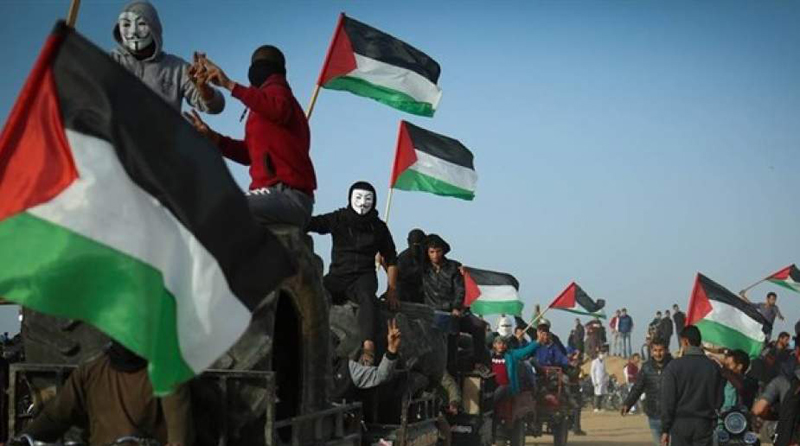 Last summer, the BJP-led Indian government revoked Kashmir’s special status and imposed a curfew that continues to date and, as per the Pakistani authorities, paving the way for the displacement of the Muslim masses by creating settlements from the rest of the country.
This strategy is similar to the one used in the establishment of Israel following the collapse of the Ottoman Empire. The country was established by mass displacement of the Arabic-speaking Palestinian locals and subsequent occupation by Zionist Jews migrating from European countries.
The oppression of Palestinians in Israel continues even today, and the seeds for a similar outcome have been sowed in Kashmir.
Pakistan’s founder, Jinnah, remarked that his state would never recognise Israel until a peaceful settlement is offered for the Palestinians; a sentiment that was also echoed by the current Pakistani Prime Minister in a recent interview. Calling to recognise Israel in such a circumstance not only sabotages Pakistan’s cause for Kashmir but also compromises the very ideological narrative that Pakistan has upheld. How can a country backtrack its founding principles and justify ruthless imperialism in one part of the world but condemn it in another?
On the other hand, when India went forth with its Palestine-styled imperialism in Kashmir, Arab allies of Pakistan ignored its requests to unite on Kashmir and went on forging ties with India. The UAE termed it an internal Indian issue while Pakistan’s closest ally, Saudi Arabia, decorated the Indian premier Narendra Modi with its highest civilian award. Pakistan completely revamping its foreign policy only to appease the Arabs, despite their inadequate support, effectively signifies the surrender of its sovereignty.
The Arabs are crucial allies to the Pakistani state not just because of religious bondage but the many common national interests. International relations are not a one-sided romantic affair. For countries to co-operate, there must be a mutual benefit for both parties.
As far as the notion of trade ties and gaining political leverage is concerned, such an outcome is far from translating into reality, even if Pakistan recognises Israel. Israeli relations with India are at an all-time high. How can it be expected that Israel will favour Pakistan only to disrupt its diplomatic ties with India?
Former Prime Minister and founding father of Israel once allegedly stated: “The world Zionist movement should not be neglectful of Pakistan’s dangers to it. And Pakistan now should be its first target, for this ideological State is a threat to our existence.”
While never verified, this quotation does offer much insight into the sentiments hoisted by the Pakistani and Israeli populace for each other. According to a renowned journalist that maintains ties with the Pakistani establishment, the presence of Mossad in Pakistan is no secret. From terrorism, political instability to separatist movements, Pakistan has already suffered, by a great deal, at the behest of foreign agencies operating within Pakistan. By recognising Israel, Pakistan opens the doors for another hostile foreign agency to have easy access to further disruptions within the country. Keep in mind the close military co-operation between India and Israel, whereas the former’s intelligence agency RAW has been the most significant source of terrorism in Pakistan.
Both Israel and Pakistan are ideological states; finding legitimacy of existence in their respective religions. For Pakistan, as an Islamic country backstabbing the Palestinian Muslim brethren and, at the same time, compromising the Kashmiri cause is an unfathomable idea. Lobbying for Israel’s recognition in Pakistan will boil up the political atmosphere and could cause a potentially violent backlash from the public; thus, no government would take such a disastrous step. Lobbyers, however, argue that the Pakistani public’s devotion to Palestine needs to be toned down as the PLO maintains close ties with India and awarded Narendra Modi with its highest civilian award upon his visit to the West Bank in 2018. Realistically speaking, the PLO is not what could be deemed as a sovereign and functional state. It is merely a representative organisation of a people that have been pressed against the wall. Protesting to the PLO’s appeasement of India, out of desperation is not just an injustice to the idea of Pakistan’s conceptualisation of Muslim brotherhood but an insult to the very concept of human rights.
In any case, Israel, being well aware of the Pakistani sentiment, will never look up to Pakistan as an ally. Perhaps the two states may occasionally co-operate through backdoor diplomacy in areas of mutual concerns as they always have, as per the former President Gen(r) Pervez Musharraf. However, the idea of normalising relations is an outrage unworthy of even holding a parliamentary debate.
Inter-state politics of the region is taking a historical turn. With the Arabs forging ties with Israel on one end and the emergence of a new Islamic bloc dominated by Turkey on the other, Pakistan’s situation in the domain of foreign relations has become extremely complicated. A pro-Palestine activist once said to me that political powers will even backstab their brethren and side with the imperialists if it benefits the bourgeoisie. The recent developments are a reflection of these all-time relevant words. Thus, Pakistan needs to be wary of compromising its narratives under pressure, while at the same time maintaining its historical ties with the Saudi led Arabs. Nevertheless, also at the same time, the country needs to safeguards its national interests and move on pursuing them “with” or “without” the support of the traditional allies.
The writer is currently pursuing his bachelors at York University Canada where he also serves as the Pakistani community director. He frequently writes on politics, current issues and history. He tweets @Khan__Bahadur.