In Pakistan, every year, over 8,300 women die during pregnancy and childbirth. These deaths are avoidable yet are not prevented by the country’s healthcare system. One cause for these preventable deaths is the absence of women’s feedback on the reproductive healthcare services they receive. Birth Spacing Programs, for instance, which revolve around women, are usually designed without obtaining or incorporating their opinion. To improve healthcare services and create sustainable outcomes that will reduce maternal deaths, feedback from the primary recipients on such services is essential. Listening to women about their priorities and demands is the basic step towards ensuring that the country’s health care system delivers on improved health outcomes for women and their families.
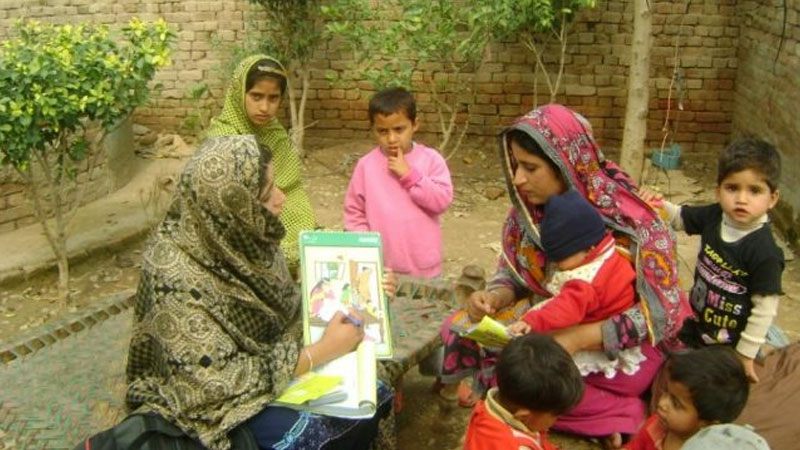 The key to the success of any birth spacing program lies in information and awareness-raising. Past information dissemination attempts succeeded in emphasising the significance of birth spacing, but women in the country still lack the necessary information on suitable modern methods of birth spacing. The patriarchal structure of the society makes things worse; husbands play an essential role in decision-making regarding the size of family, and in most cases, mothers-in-Law and other women of the family also influence such decisions. It is, therefore, not surprising that women want their family members to be a part of any health and family planning literacy campaign. Women want information for themselves. For their family members, they want sensitisation to gain their support for their birth spacing decisions.
There is also a strong desire amongst women to educate society, as a whole, on birth spacing. Relatives and peers often pressure couples to have more children. Similarly, some religious leaders have banished the practice of reducing the size of the family from societal norms. This issue was raised at the 2018 Population Symposium- held after the then Chief Justice took Suo Moto on the country’s booming population-two years ago. The importance of family planning for public health and the economy needs to be consistently reiterated, despite the symposiums and speeches by the political leadership. Such information must be communicated using mainstream and social media along with a door-to-door campaign.
Better access for women to family planning services is another area that requires attention. According to the Pakistan Demographic and Health Survey (PDHS) 2017-18, seven out of 10 women have reported at least one barrier in accessing maternal healthcare services for themselves. This inaccessibility comes in various forms like geographic distance from a healthcare facility, or a lack of transport making it arduous for women to access a reproductive health service; social conditions like the role of the husband in decision-making further restricts women from birth spacing. In other instances, financial constraints bar many women from enjoying healthcare services-their fundamental right.
The importance of family planning for public health and the economy needs to be consistently reiterated, despite symposiums and speeches by the political leadership
Consequently, even in this day and age, women in Pakistan lack access to basic healthcare and birth spacing services. The Lady Health Worker (LHW) program-initially created to provide primary healthcare and family planning services-is burdened with other responsibilities distracting it from its central focus: providing women in their communities with birth spacing services. This situation has led to not only Pakistan missing its family planning targets but also many women facing health injury or death.
For women, the solution to this situation is the provision of family planning services and products at their doorstep or directly in their villages or neighbourhoods. According to PDHS 17-18, the unmet need for family planning in the four provinces, ICT and FATA, is 17.3 per cent, whereas it is 21.9 per cent in AJK and 26 per cent in GB. These figures indicate a shortfall in the supply of family planning services as compared to the demand. Women also require more lady healthcare providers, and this demand resonates with the available statistics as well. According to the PMDC website, there are some 15,498 registered female doctors in Pakistan. The 2017 population census provides the figure of 101,314,780 as the total female population of the country. Resultantly, there is one registered lady doctor per 6,537 women in Pakistan. Women in Pakistan have long been demanding more doctors, beds, and medicine, but the nation has only realised the intensity and urgency of this demand due to COVID-19.
Finally, women want an improved quality of healthcare services, especially family planning services. They would like government hospitals to resemble the private ones in the country, with better facilities and specialised services. However, most government hospitals-that are often the most affordable option for women with already limited access- are in deplorable conditions. Covid-19 has proved that health deserves more funds and the government’s attention for health preparedness rather than crisis management.
Access to family planning is the most cost-effective investment that a country can make. Successive governments in Pakistan have made various family planning policies and programs however, without bringing the primary recipient i.e. the women on board. Women are the main stakeholder of any family planning program. No triumph in these programs can be achieved without listening to women’s voices, valuing their inputs and experiences as evidence, and ultimately meeting their demand. The sooner the country’s decisionmakers reach this realisation and take action, the better for all.
The writer is a policy consultant at the Forum for Safe Motherhood.