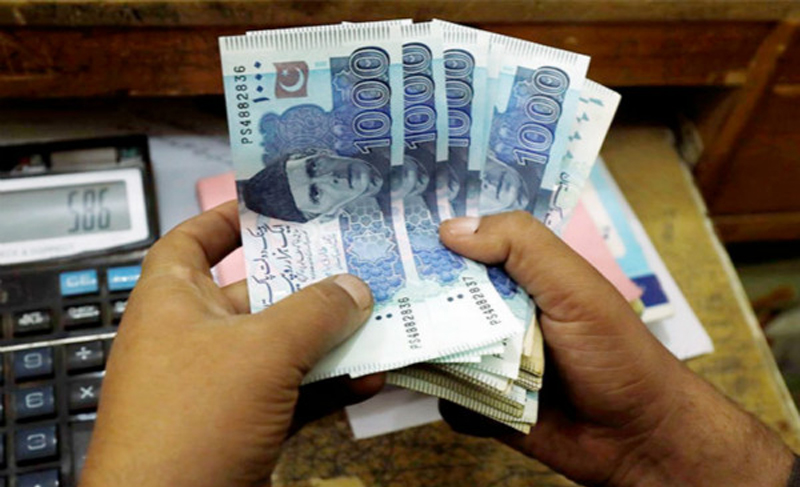
The many problems of Pakistan-political, economic, social, security-areas old as the country itself. Since its inception to date, they are the same challenges with merely changed dimensions. Octogenarians and nonagenarians must have a feeling of déjà vu regarding the country’s economic ills. Presently, our country is undergoing a depressing economic state of affairs. Many issues like the fiscal deficit, trade deficit, skyrocketing debt and servicing, mounting circular debt, and rupee devaluation are indeed the result of the past economic mismanagement, which has worsened the situation.
 The regional economies are growing at a satisfactory level; on the other hand, our economy has moved on a downward trajectory. Indian and Bangladeshi economies have above six percent growth rate while Pakistan’s GDP growth rate remained 3.3 percent against the target of 6.2 percent. This is almost half of the target. This was indeed the first time in the last five years that the country’s economy grew by less than four percent. The World Bank in its recent report “South Asia Economic Focus, Exports Wanted” has predicted that the “Pakistan’s GDP may further decelerate to 2.7 percent during the current fiscal year.”
The IMF loan is not that huge an amount. Consider six billion dollars divided over three years, and that means around $1.9 billion each year
Additionally, the fiscal deficit of 6.6 percent of GDP is a worrisome situation, particularly for a country whose 64 percent of population is below 30 years of age. Due to these trends, many people are rendered jobless by various organisations. If this dangerous trend continues, Prime Minister Imran Khan’s promise of five million houses and 10 million jobs-that means one million houses and two million jobs every year-is unlikely to be realised as the completion of the first parliamentary year is already on the horizon.
Debt to GDP ratio has ballooned to dangerous levels. Also, these debts are regressive in nature as they are not for investment purposes; rather, the country often has to seek new loans for debt servicing. During the last fiscal year, Pakistan has paid Rs 1,987 billion in debt serving. According to the State Bank, the total debt and liabilities has reached Rs 35,094.5billion. The incumbent PTI government has added six trillion rupees in nine months; this is half of the amount that the PPP government borrowed in its full five-year term, 2008-2013. The global credit rating agency, Fitch, in June 2019, estimated that the debt to GDP ratio would rise to 77.4 percent, which currently is 74.2 per cent of GDP. Contrarily, this is the violation of the Fiscal Responsibility and Debt Limitation Act, 2005, which has set the limit of debt to 60 percent of GDP. Pakistan has exceeded the threshold by 14.2 percent.
According to an economic survey of Pakistan, the current circular debt stands at Rs 1,200 billion and Rs 26billion are added each day. This everyday add-on is seriously irritating the power sector, which has a domino effect on all other sectors. Power outages hurt industry; industrial products have become less competitive than other regional competitors, resulting in decreased exports, which further creates a trade deficit). Then the government is forced to devalue the currency in order to reduce imports and promote exports. This vicious circle is costing the country enormously.
We are indeed caught between the devil and the deep blue sea in the context of managing the economy. The government had no option but to visit the International Monetary Fund (IMF) to get some breathing space. This is the 13th time Pakistan has sought an IMF loan under different agreements. The IMF has approved a six billion loan over three years. Many sceptics have unleashed their criticism for seeking an IMF loan. Unfortunately, they fail to realise the bigger picture. Imagine a country like ours under huge debt fails to pay back the principal amount and debt-servicing to creditors in a timely manner, and is declared defaulter. Even in that situation, Pakistan has to seek a loan in order to come out of that dreadful situation. Meanwhile, the economic system of Pakistan will come to a standstill. Countries and organisations avoid dealing with defaulters. That means loans would be costly with stringent conditions, transferring monies to our loved ones abroad will be costly too, and citizens like me would not able to withdraw cash from an ATM. It reminds me of the Greece economic crisis.
According to an economic survey of Pakistan, the current circular debt stands at Rs 1,200 billion and Rs 26 billion are added each day
The IMF loan is not that huge an amount. Consider six billion dollars divided over three years, and that means around $1.9 billion each year. That amount is not going to resolve the economic troubles that the country is currently facing. In fact, successful negotiations with the IMF grant a sort of blank cheque, and every other creditor would offer a loan at a minimal interest and lenient conditions. Surprisingly, the IMF is not less than a blessing. Afterall, it is we who are seeking their help, not the other way around; they have not forced us to do so at gunpoint!
Henceforth, it is important to plug these deficits in a systemic manner. For this purpose, it is important to plug the rising debt and liabilities, and trade and fiscal deficits. Currently, exports are paying for only 38 percent of imports. This puts huge pressure on the foreign exchange reserves. Broadening of tax base and extension of the amnesty scheme along with protection from harassment to those who are declaring these assets and to give confidence to those aspiring to benefit from such a schemeis necessary. Implementation of the Fiscal Responsibility and Debt Limitation Act, 2005, and reduction of debt to GDP ratio to prescribed threshold of 60 percent is much needed. Economic self-reliance is now needed more than ever before, particularly in the ever-changing geopolitical dynamics. The world is more attracted towards geo-economics than geo-politics.
Pakistan, thus, is left with no option but to wholeheartedly focus on economic woes that have continued since 1947. Indeed, the economic crisis of the country is creating an existential problem.
The writer is a development sector practitioner